
Enyuan Kobayashi is a Michelin-starred traditional kaiseki restaurant located in the Gion district of Kyoto. Enyuan Kobayashi is very unique and is renowned for its tempura. The building is very traditional, with wood walls, floors, and ceilings, as well as being adorned with many types of plants and flowers. Enyuan Kobayashi boasts an open kitchen, in which you can watch the chef fry the tempura and cut the sashimi right in front of you. There are two places you may be seated in the restaurant: the high top, which has eight seats, or the private dining room, which has four seats. The high-top seating wraps around the open kitchen, where you can watch your food being prepared, while the dining room is more private and personal.
Enyuan Kobayashi is a kaiseki restaurant, which means that the chef chooses what you eat based on what is fresh. The menu changes with the seasons to ensure they use the freshest fish, vegetables, and meats.
When we entered the restaurant, we were greeted warmly by the kind staff, who escorted us to our seats at the high top. Upon sitting down, we were given a drink menu and told that the chef would prepare our meal with the finest ingredients. Soon after sitting down, the chef started preparing the tempura batter and cutting the vegetables. We were able to watch his precision and skill as he masterfully fried the tempura and served us our first dishes.
On this night, the chef prepared many different tempura dishes. Each was served with soy sauce, lemon, salt, and daikon radish as a palate cleanser. Some of these dishes included tempura asparagus, shrimp, onion, taro, sweet potato, and white fish.
Asparagus:
The asparagus was cut by the chef, then dunked in the tempura batter and deep fried. The asparagus was coated just enough so that you could see the green from the outside, but not too much, which would have made it too oily and greasy. There was a nice crunch when biting into it, and the asparagus flavor wasn’t overpowered by the tempura, which was very nice and refreshing. The added saltiness and acidity of the lemon, salt, and soy sauce brought out the delicious flavors of the asparagus.
Shrimp:
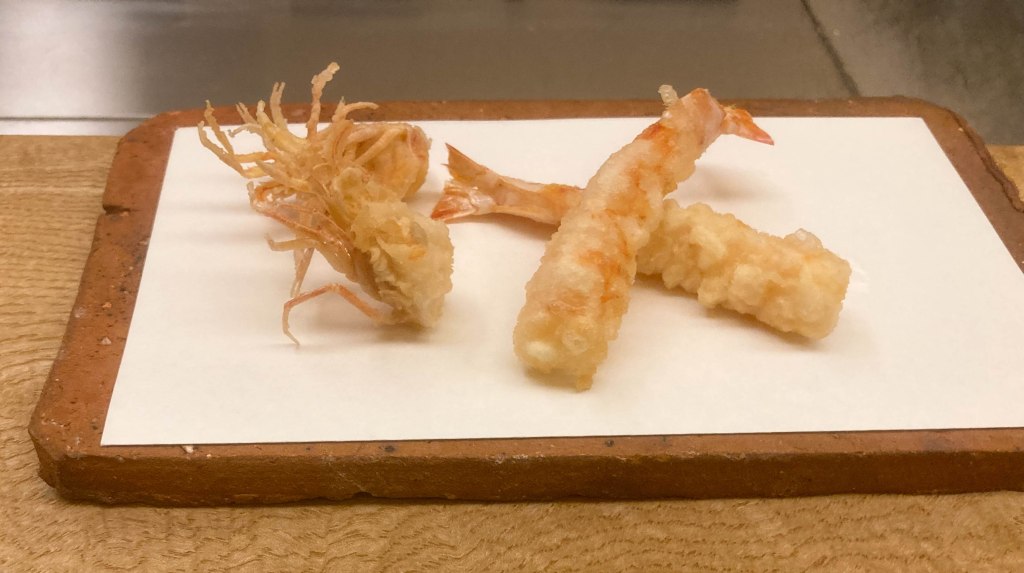
The shrimp was fried up and served with the head and legs still attached, which was very cool (and a bit creepy). Once you remove the head and legs, you can see the red and pink inside of the shrimp, and the smell wafts out from the inside. The tempura was nice and crispy, and the shrimp was perfectly chewy and flavorful. The textures worked very well together, and so did the mild flavors that came from the tempura batter and the shrimp.
Onion:
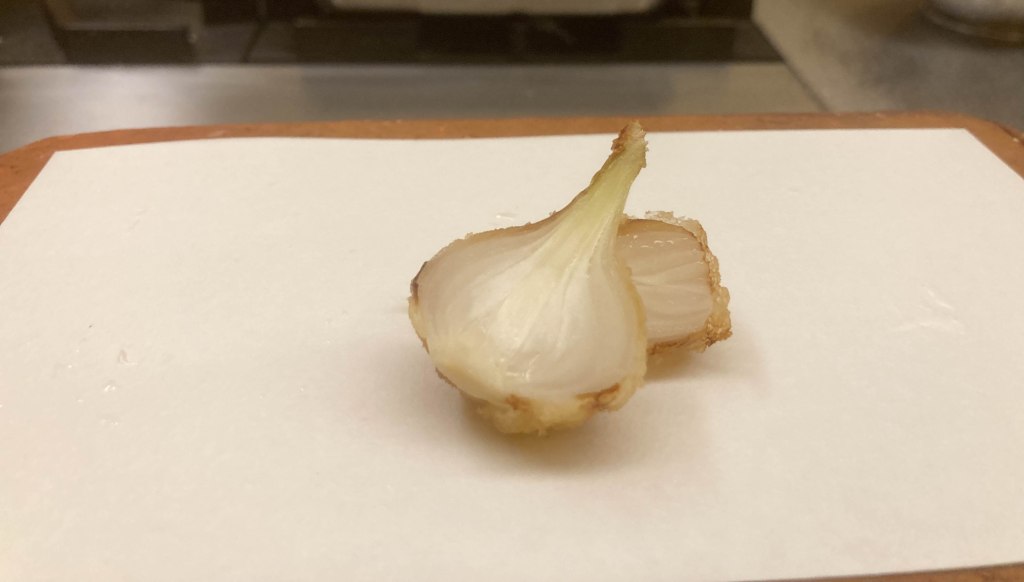
The onions that were used were very petite, almost like babies, which allowed for a better onion-to-tempura ratio. The tempura was crispy, and the onion had great flavor. The layers of the onion separated upon biting it, allowing more flavor to burst inside your mouth. The onion paired very well with the saltiness and acidity of the lemon and soy sauce that accompanied it.
Taro:
The taro was freshly cut right in front of us, then battered and fried into perfect tempura discs. The taro had a nutty and earthy flavor to it, like a potato, and held its shape very well during frying. The tempura was crispy on the outside and warm on the inside. The ratio of tempura to taro was perfect, which allowed the delicate flavors of the taro to stand out and not be masked by the tempura.
Sweet potato:
The chef peeled and cut the sweet potato into discs, then battered, fried, and served them to us. The tempura on the outside was crispy, but the sweet potato on the inside was soft and smooth, making for a great contrast in textures. The sweetness that came from the sweet potato and the acidity and saltiness of the soy sauce made for a unique and surprisingly tasty combination.
White fish:
The chef cut, battered, and fried the fish, then served it to us as our final tempura dish of the night. The fish smelled amazing, and the tempura was so crispy. Biting into it, you feel the crunch of the tempura, then the soft, tender, pillowy texture of the fish. The combination of crispy and soft adds so much depth to the dish. The tempura fish almost tasted like a Japanese version of fish and chips, but when you add the lemon and soy sauce, it makes the tempura feel so much more fancy and elegant.
Sashimi:
Sashimi is a staple in kaiseki meals and is served just after finishing the tempura dishes. The sashimi was fresh and very delicious, pairing very well with lemon and soy sauce. Even though Enyuan Kobayashi doesn’t specialize in sashimi, the chef is still very skilled at making it.
Veal:
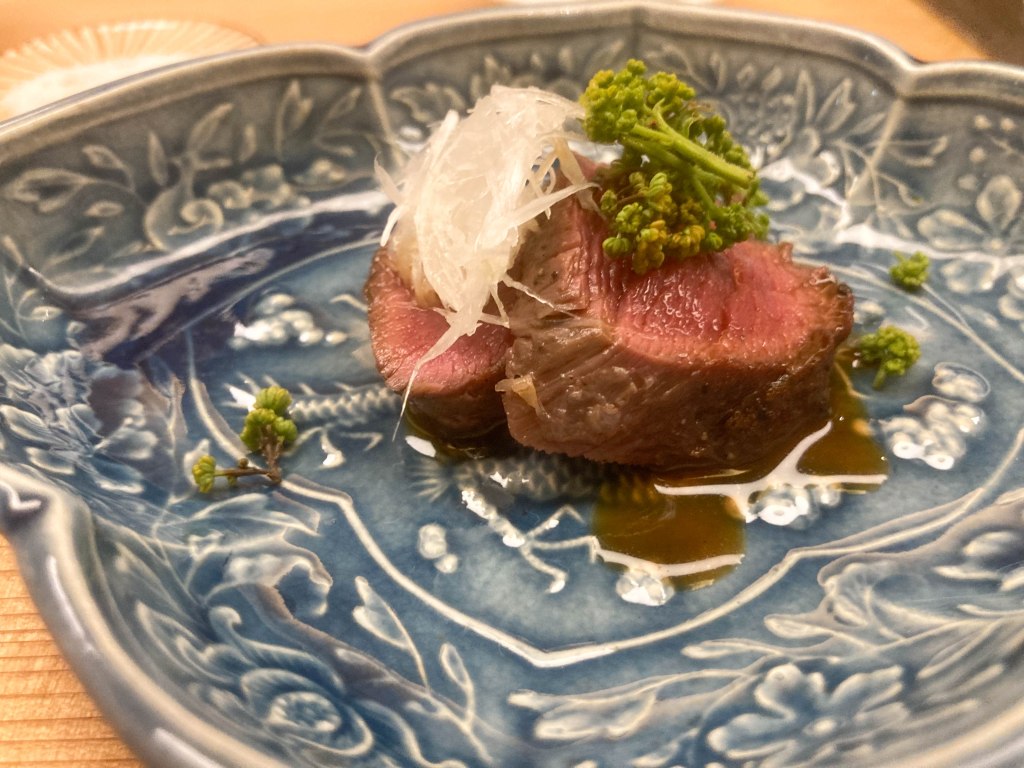
The final dish of the night was veal, served with daikon radish and accompanied by lemon, salt, and soy sauce. The veal was cooked to a perfect medium rare and bursting with juices and flavor. The daikon complimented the very meaty veal with hints of earthiness and freshness. Overall, Enyuan Kobayashi lives up to the hype and deserves their Michelin star for their professional quality of food. If you ever visit Kyoto, Enyuan Kobayashi should definitely be on your bucket list.
 Hidden Gem Restaurant Review