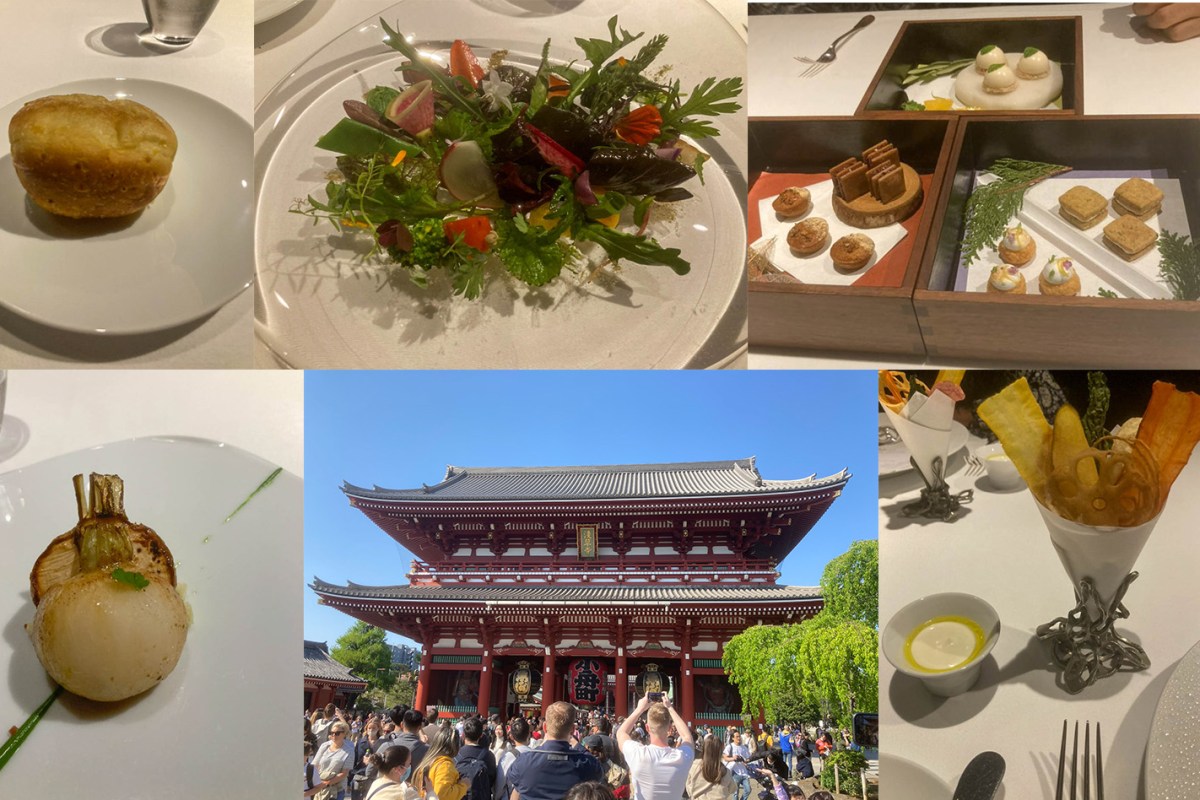
L’Effervescence is a Michelin-star restaurant located in Tokyo, Japan. L’Effervescence is one of only 29 Michelin star restaurants in Japan that holds 3 Michelin-stars. The restaurant serves contemporary French cuisine under head chef Shinobu Namae. Chef Namae opened L’Effervescence in 2010 and gained his first Michelin star 2 years later in 2012. He earned his second Michelin star in 2015, and his third in 2020, quickly becoming one of the most respected chefs in the region.
L’Effervescence takes great care in ensuring the quality of every ingredient served to the guests. On their website, you can find a list of every artisan they get ingredients from. Everything from the asparagus to the eggs, and even the water comes from the highest quality artisans around Japan. L’Effervescence even highlights the architects and designers for their work on the restaurant, which is very unique. It is very reassuring to know exactly where your ingredients are coming from, which distinguishes L’Effervescence from other Michelin-starred restaurants.
L’Effervescence is located in just outside the center of Tokyo, in the city of Shibuya. Upon arrival, you are greeted outside the restaurant and led in by the staff. The restaurant has a classic French fine dining atmosphere, with a white tablecloth, fancy cutlery, and dark lighting. We were led to our table, and given a copy of the tasting menu. The tasting menu had 8 courses, each with a unique name that encapsulates the meaning of the dish. The first course is Welcome, followed by Underwater Forest, Genesis of Civilization Ars longa Vita brevis, Fixed Point, Ocean, Forest, and New Chapter. After reading over the menu for a few minutes, the first bites of food arrived at our table, and the dinner began.
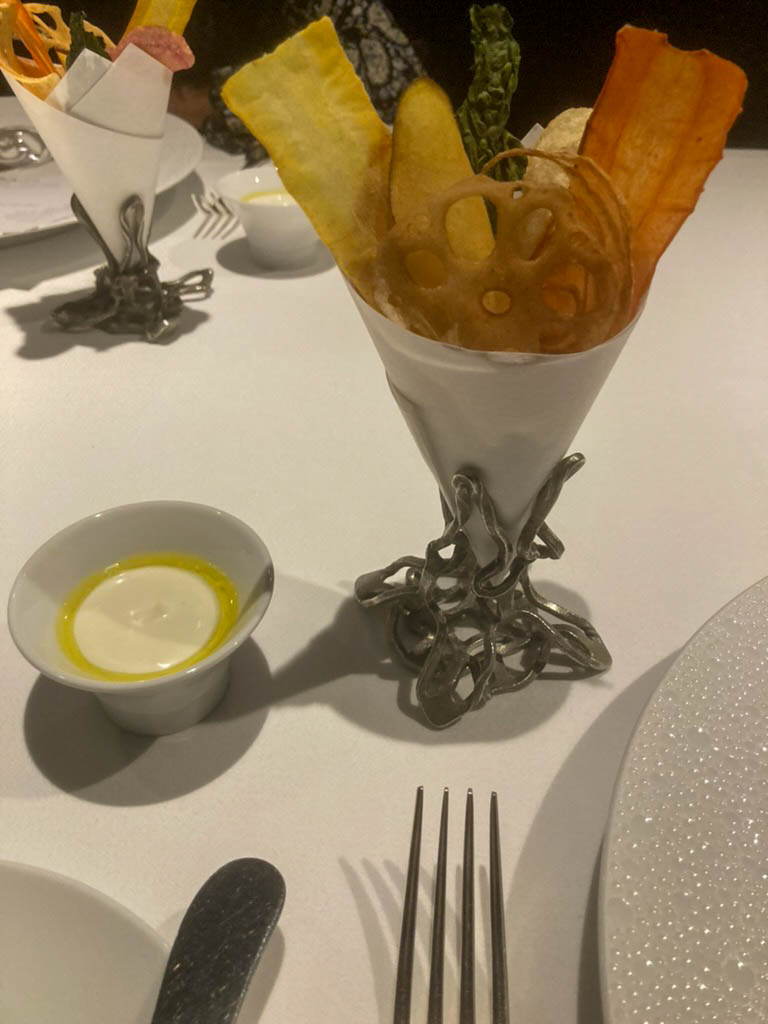
For the first course (welcome), we were served a bouquet of vegetable crisps and a tofu sour cream. The vegetable crisps were so colorful and were very visually appealing. They were super crunch and crisp, with hints of vegetable flavors. The crisps had the perfect amount of salt, which made the flavors tastier. I really enjoyed how the crisp wasn’t too oily, even though it had just come out of the oil. The tofu sour cream was rich and had a nice tang, which paired well with the crunchiness of the vegetable crisps. Overall, this was the first course that was super simple, yet still very tasty, and not too filling.
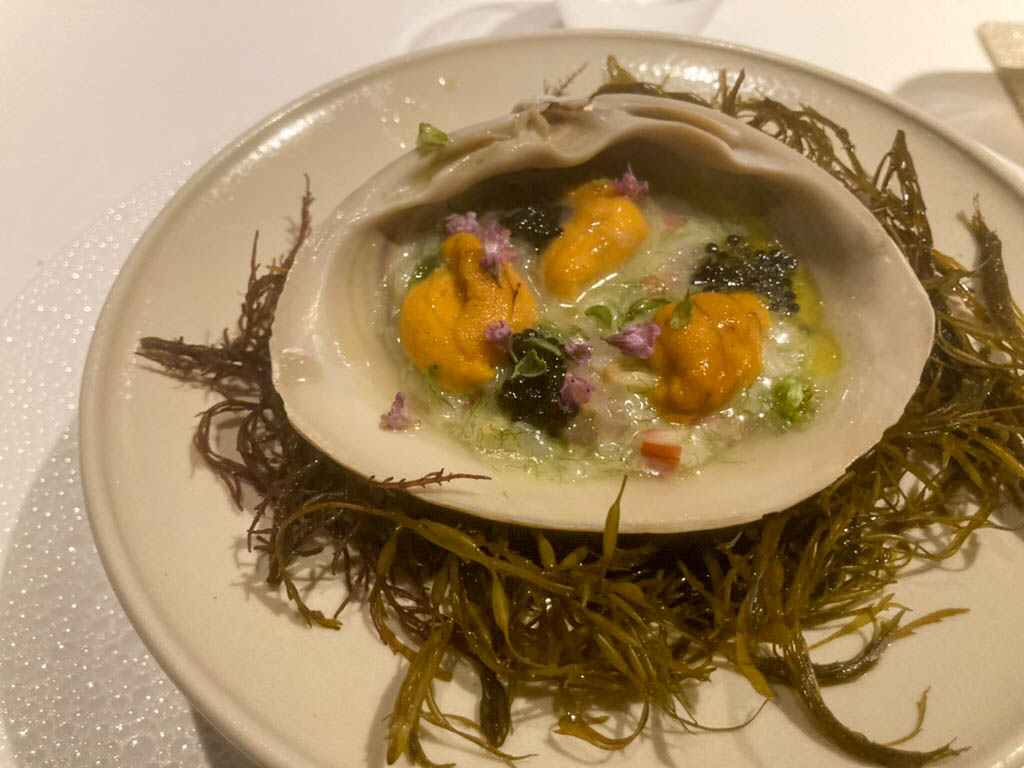
For the second course (underwater forest) Sasanishiki risotto with sea lettuce and hokki-clam, sea urchin, housemade caviar, and shiso flowers. The dish was presented beautifully, with the sea lettuce on the plate, and the risotto in a shell-like dish. The risotto was the perfect consistency and was very flavorful. The clams and sea urchin added added a delicate oceany flavor to the risotto. The caviar gave the dish a hit of saltiness, which added to an undertones of underwater flavor. This dish used so many different ingredients, but they all worked together perfectly and were so delicious.
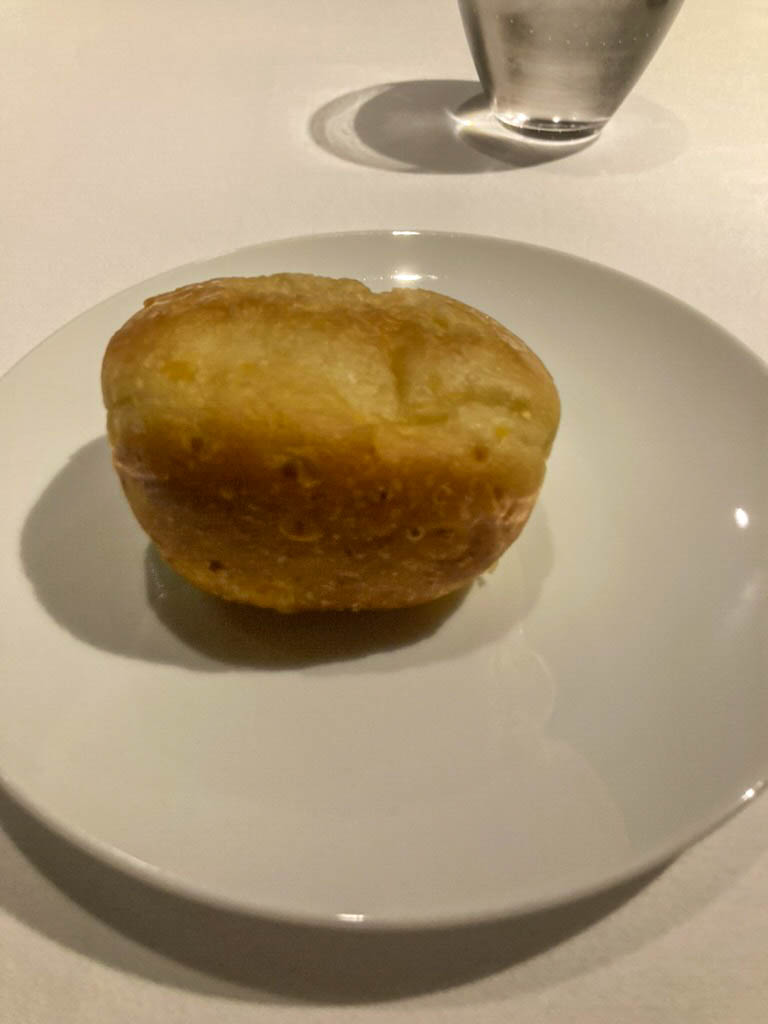
For the third course (Genesis of Survival), we were served potato focaccia bread. The bread was fresh out of the oven and still steaming as it was brought to the table. The bread had a very nice potato flavor, with hints of rosemary and thyme, which made it taste like focaccia. This dish was super simple but was still really delicious, and one of the best bread rolls I have ever had.
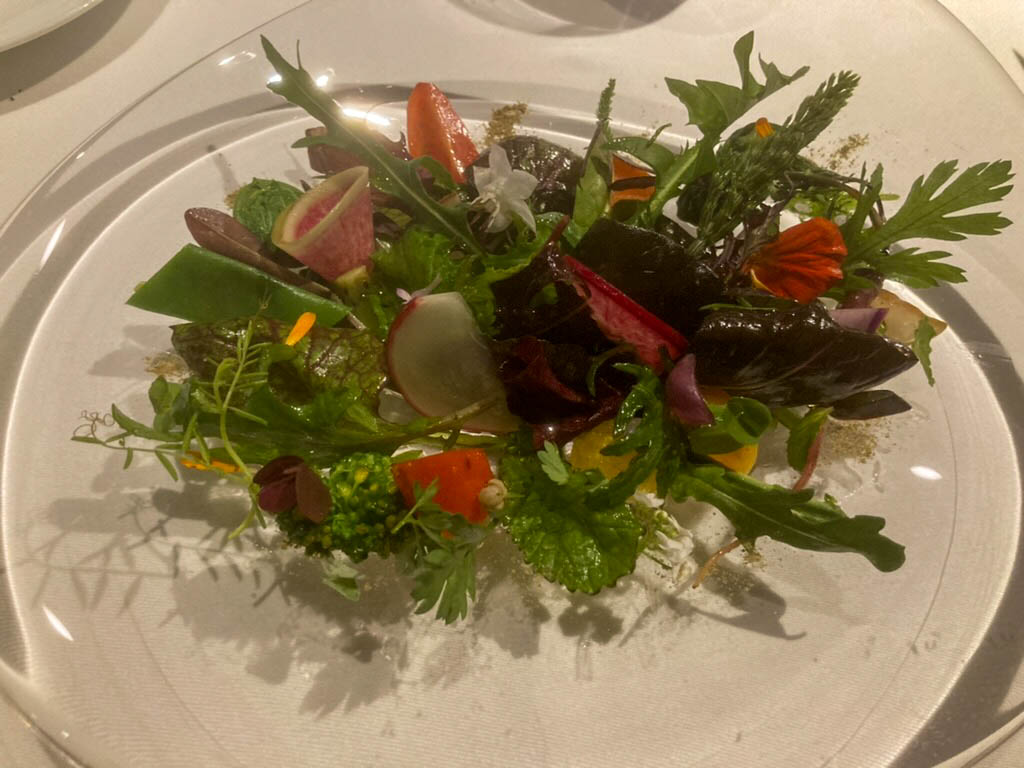
For the fourth course (Ars longa, Vita brevis) we were served artisanal vegetables. The vegetables were brought to our table, and shown to us, then made into a salad. In the salad, the chef used over 40 different vegetables that are native to the islands of Japan. The salad was presented beautifully on a glass plate and was super colorful. There were so many unique earthy tastes from each ingredient, and it was so delicious. There were different types of radishes, carrots, flowers, and many other vegetables. this was truly one of the most amazing dishes I have ever had.
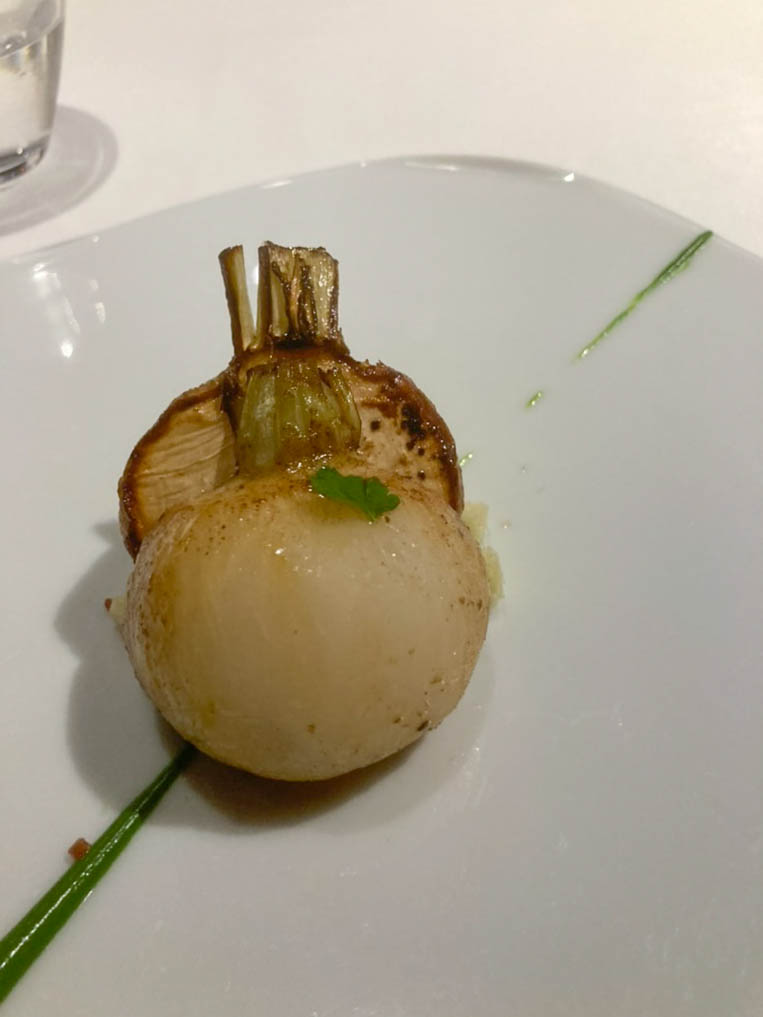
For the fifth course (fixed point) we were served Tokyo turnip, complex and simply. The turnip was presented elegantly and looked delicious. The turnip had a very earthy flavor, with hints of mint laced throughout. The char on the sides of the turnip added another layer of complex flavor, which made the turnip even more enjoyable. This dish was super simple, but had such complex flavors, and was delicious.
For the 6th course (ocean), we were served grouper gently poached in whey, bamboo shoots, green asparagus, and sakura flower beurre blanc sauce. The grouper has a great flavor that wasn’t too fishy but still had a slight ocean flavor. The whey, bamboo shoots, and asparagus gave the grouper an earthy and hearty flavor. The beurre blanc sauce was silky, and creamy, and tied the dish together perfectly. This dish used some very unique ingredients that I would never have thought to put together, like whey and bamboo shoots, but it worked out very well. This dish was super complex and had so many layers of flavors in each bite.
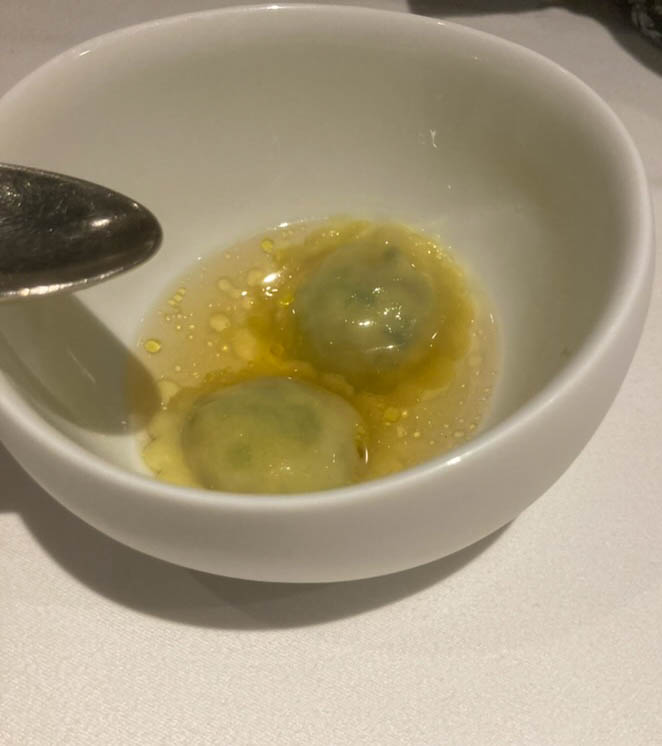
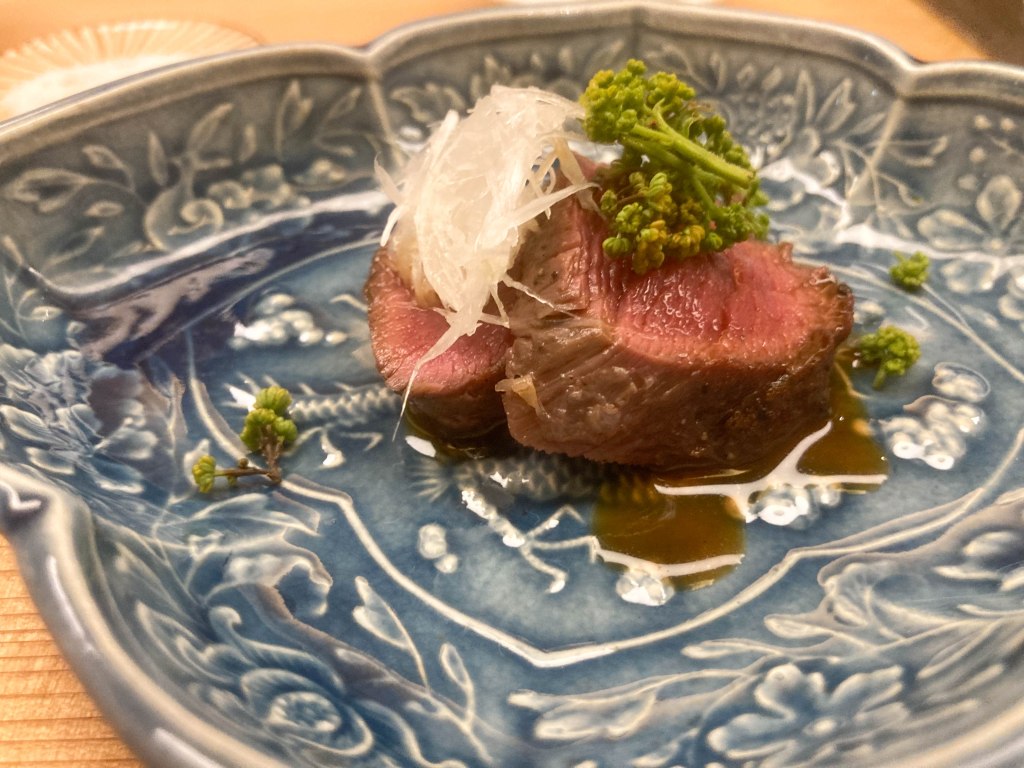
For the 7th course (forest), we were served dessert, which was Kyoto duck wood-fired over local mizunara oak from Hinohara Village in Tokyo, port sauce, beets, spinach, Duck thigh and butterbur shoot ravioli, and duck consommé. The duck inside the ravioli was so tender and juicy and had great flavor. The wood-fired accents gave the ducks a much deeper and complex flavor that I really enjoyed. The beets, spinach, and shoots inside of the ravioli added a bit more earthiness and crunchy texture. The crunchy texture contrasted with the soft exterior of the ravioli and tasted super delicious. Overall, this was a delicious dish with multitudes of complexity sprinkled throughout it.
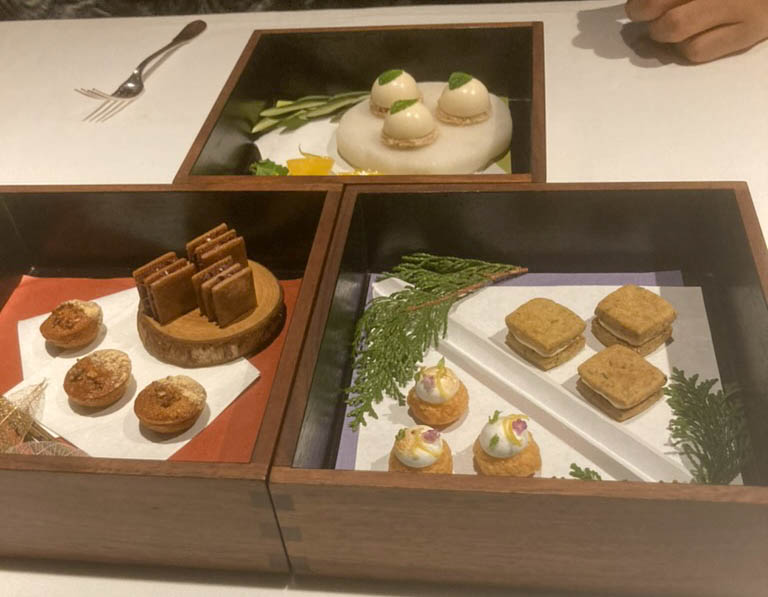
For the 8th course, we were served dessert (new chapter), which was three boxes of sweet bites. Each bite has a unique taste and texture to it. Some were flavored simply with lemon and chocolate, while others had very complex tastes, like matcha, and rosemary. Each bite was unique and flavorful and was a great way to end off a fantastic meal. Our favorite bit was definitely the rosemary cream sandwich, which was earthy, sweet, and refreshing. Overall this was a delicious way to end the meal.
Overall, the dishes at L’Effervescence were extraordinary. They were super delicious and so unique, as well as plated and presented beautifully. If you are in Tokyo, I would highly recommend going to L’Effervescence, which definitely lives up to the 3 Michelin star hype.

 Hidden Gem Restaurant Review