Il Carpaccio

Il Carpaccio is a Michelin one-star restaurant nestled in the heart of Paris, France. Il Carpaccio is in a prime location, sitting only a couple blocks from the famous Arc De Triomphe. Head chefs Oliver Piras and Alessandra Del Favero joined Il Carpaccio in 2021 and helped them earn a Michelin star for their exquisite Italian cuisine. The restaurant is located inside the very upscale Le Royale Monceau hotel. When we walking in, the restaurant was sparsely lit, giving it a very eerie but also formal vibe. I noticed that the decor was very Italian, with silky white tablecloth, and beautifully plush chairs. The air had a slight truffle aroma wafting through the room, which expedited our excitement for the meal ahead.
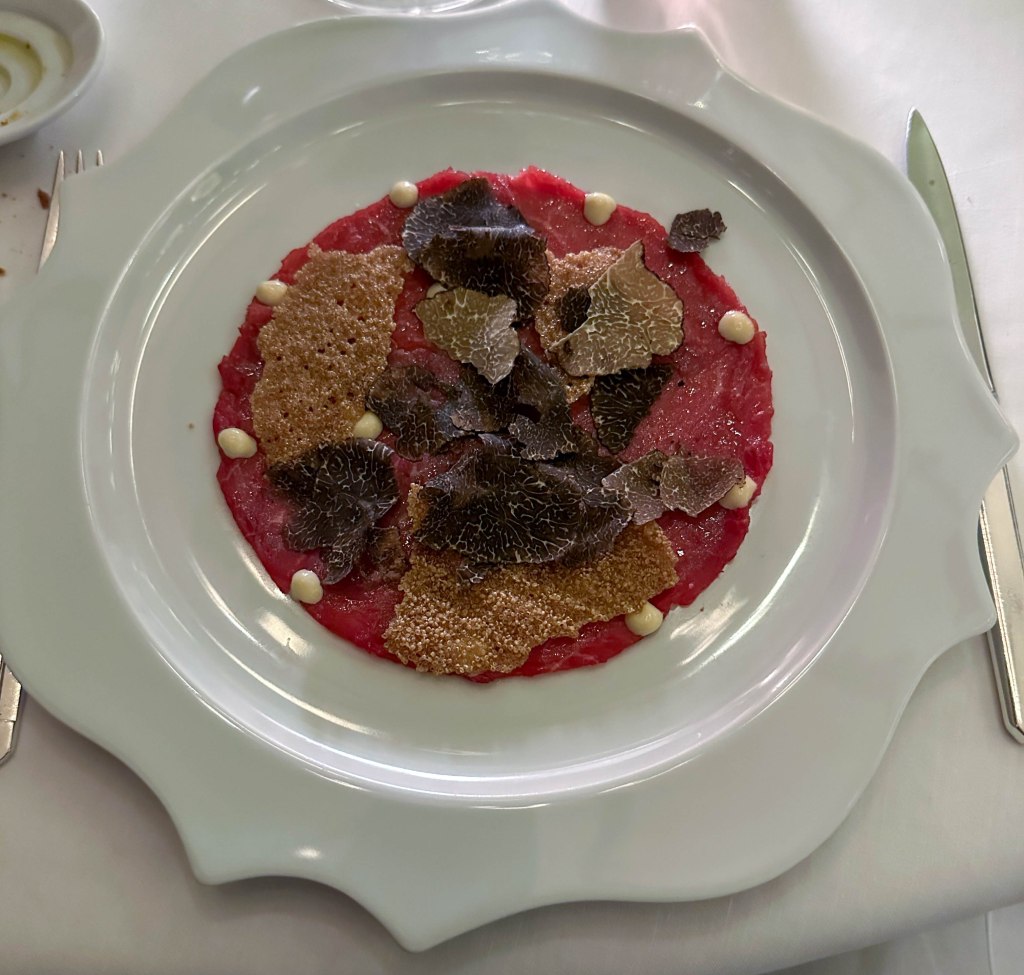
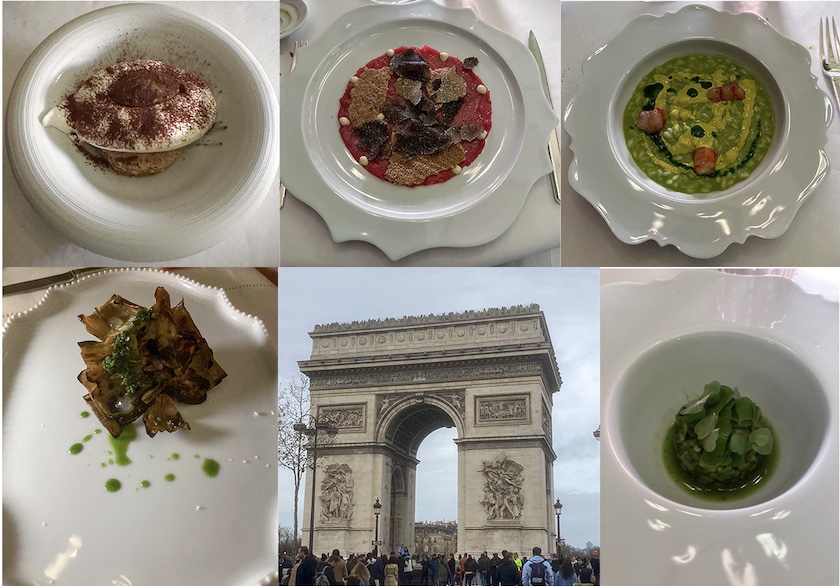
Once we sat down, we were given the set menu, which included 7 unique courses. The first course that was served was a beef carpaccio with black and white truffles. It was a very fitting first dish seen as the restaurant is named Il Carpaccio. I was glad to see that they did not skimp out on the truffles, and instead loaded the carpaccio with so many, it was hard to see the meat underneath. The beef was chewy but at the same time very smooth. There was a unique earthy and peppery flavor that coated the meat and made the flavor much more pronounced. The dollops of sauce on the side of the carpaccio were smooth and tangy and reminded me of a fancier bearnaise sauce. As expected, the truffles had a rich umami taste and were simply spectacular. Overall this was a perfect dish to start the night with. 
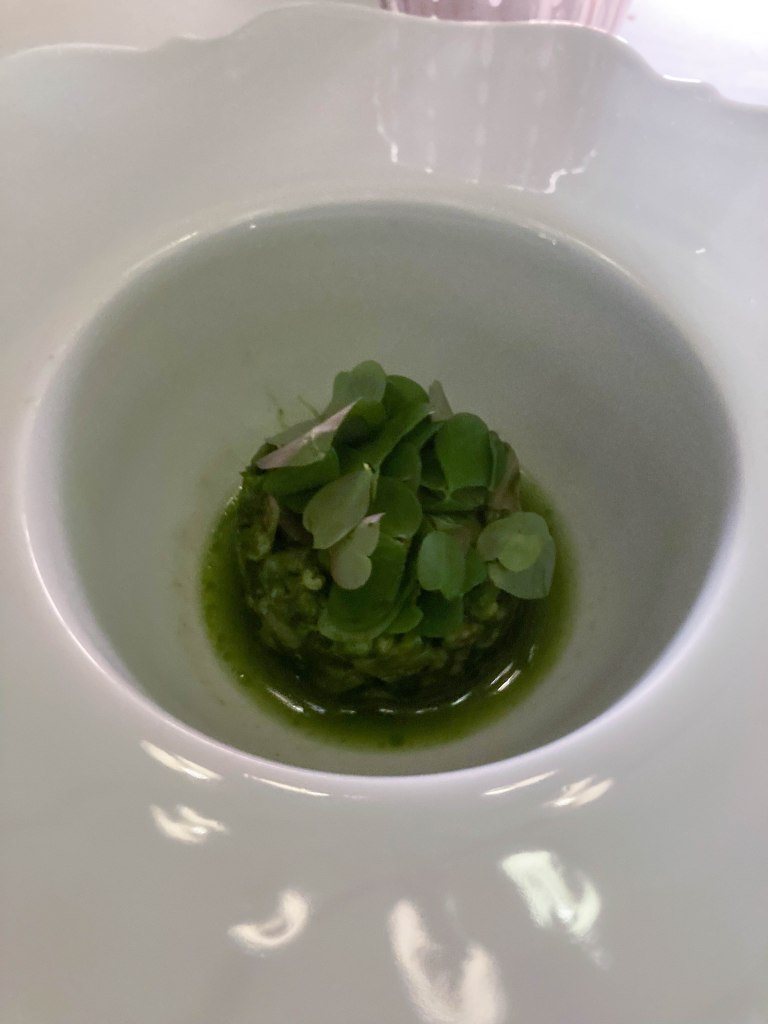

For the second course of the night, we were served a fennel risotto, topped with fresh herbs, and micro greens, and finished with a fennel-infused olive oil. The risotto was cooked perfectly and had just the right amount of bite to it. The fresh herbs and fennel added a floral and earthy taste, which worked well with the rich and decadent oil. The micro greens on the top of the dish were slightly crunchy and cold. I liked how the risotto and the micro greens had opposite textures, which surprisingly, worked really well together and tasted amazing. Overall this was a very unique dish filled with a variety of contrasting flavors and textures, but somehow, they all worked perfectly together. 
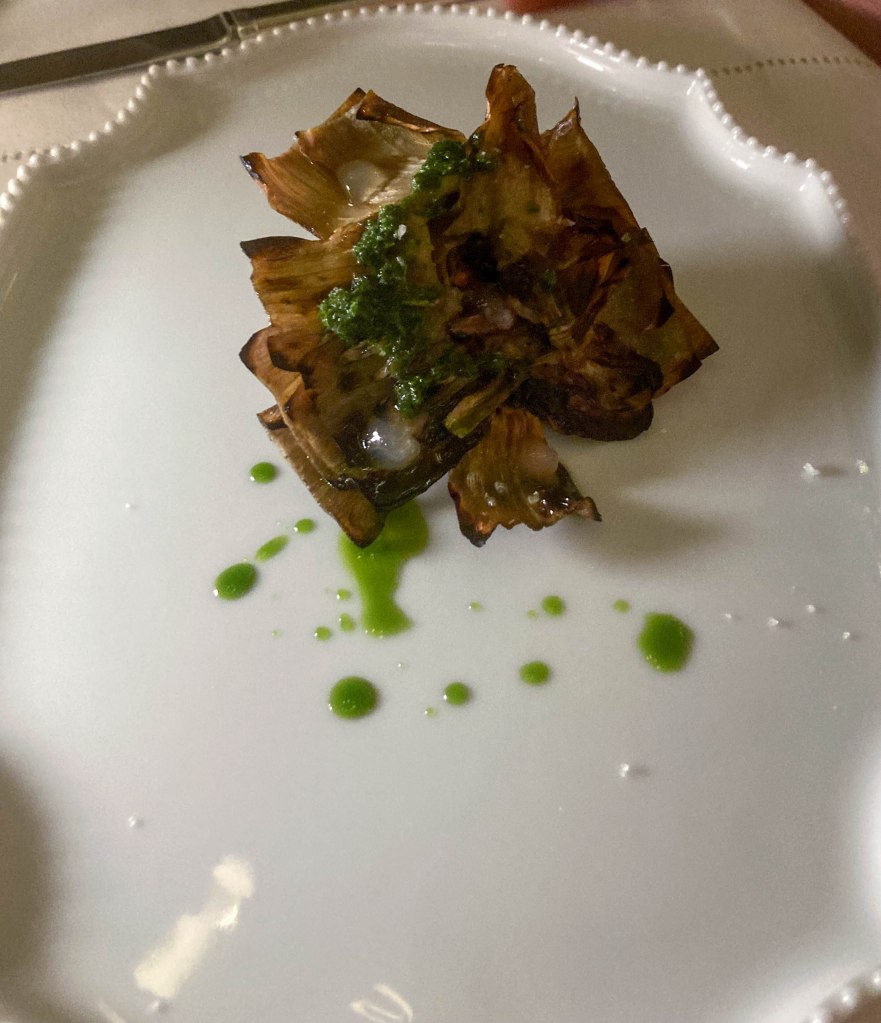

The third course was grilled and roasted artichoke with chimichurri sauce and a herb-infused oil. The artichoke was plated beautifully and the oil splattered around it made the dish look like a piece of art. The artichoke had a smokey smell and flavor, with a rich earthy taste that reminded me of vegetables grilled on a barbecue. The chimichurri was fresh and aromatic, which added another layer of flavor to the dish. Finally, the herb-infused oil on the plate tied the dish together, combining the freshness of the chimichurri, with the earthiness of the artichoke. Overall, this dish was thoroughly thought through and tasted amazing. 
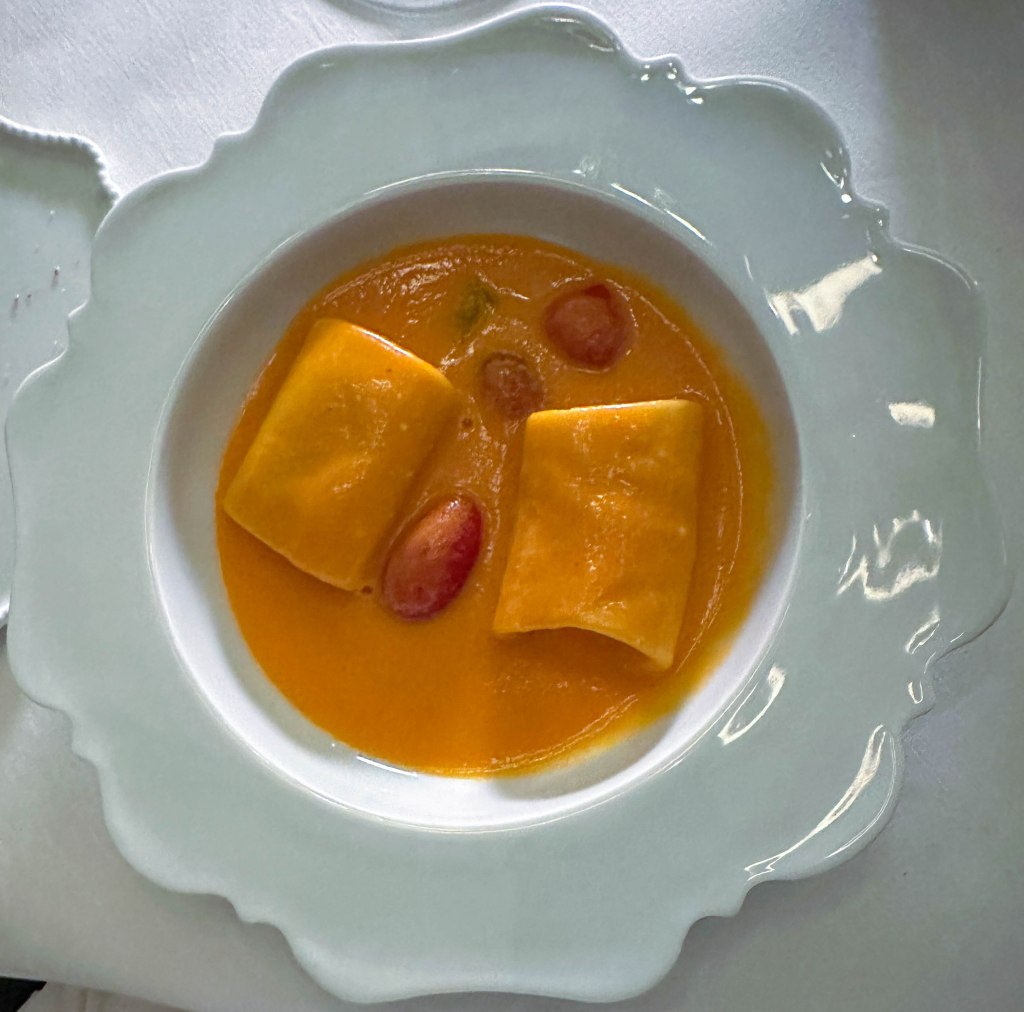

For the fourth course, we were served rigatoni in a tomato vodka sauce. This dish was served in a huge pan and portioned into bowls table side. The vibrant orange color the the sauce was super intriguing, and I thought that it made the dish look very striking and unique. The rigatoni was perfectly cooked and al dente. The shape of the pasta allowed for the sauce to burrow into every nook and cranny and fully coat the noodles. The sauce had a rich tomato flavor with hints of basil and thyme. This dish felt very Italian, especially with the addition of herbs into the sauce. Overall this dish was very simple, but executed perfectly, and made for a perfect course. 
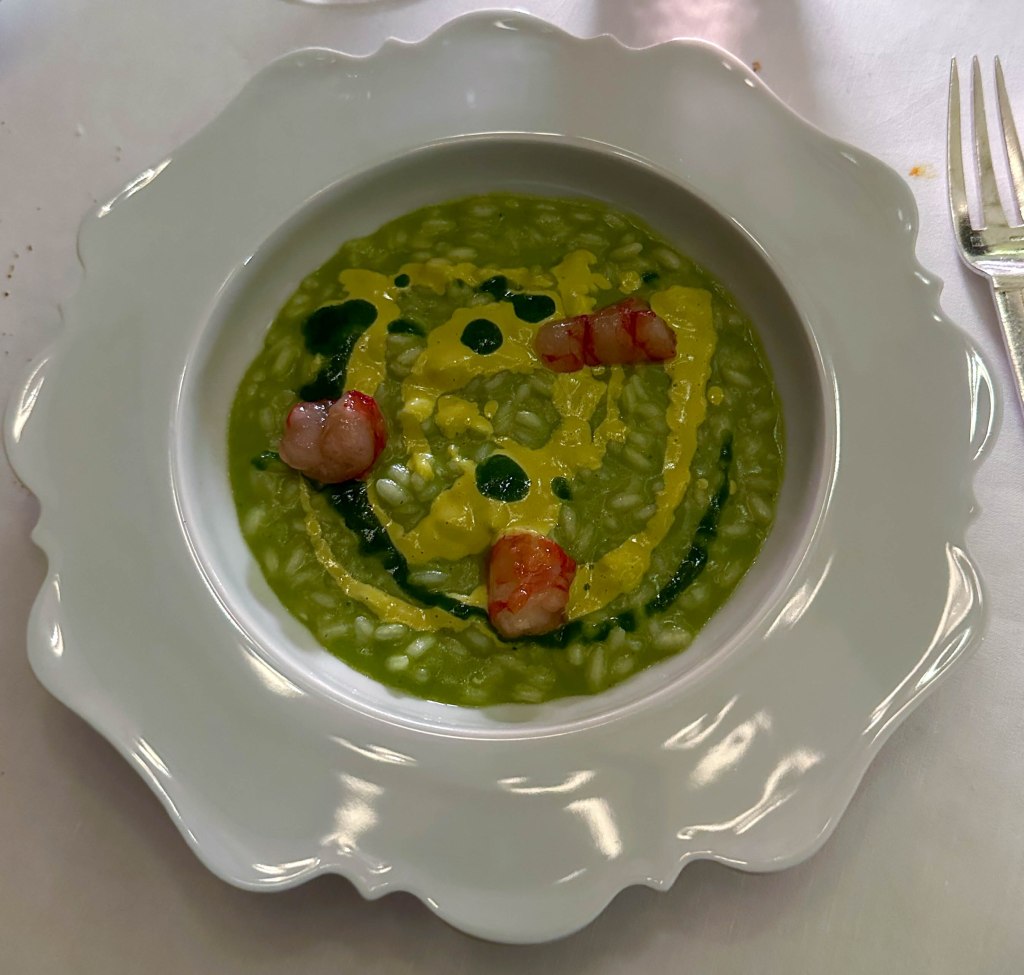

For the fifth course, we were served shrimp risotto with two different green sauces on top. The plating was beautiful and made the dish look like a piece of art. The risotto was soft, but I was glad that the texture of the rice remained. The shrimp had a very pronounced shellfish flavor that I could taste in the risotto, which was delicious. One of the green sauces tasted like the herb oil that was used in many of the prior dishes. The oil added an earthy flavor to the dish, as well as elevating the other flavors around it. The other green sauce tasted earthy as well, with hints of pepper, mint, and spinach. Overall this dish combined many different flavors to create an amazing course. 
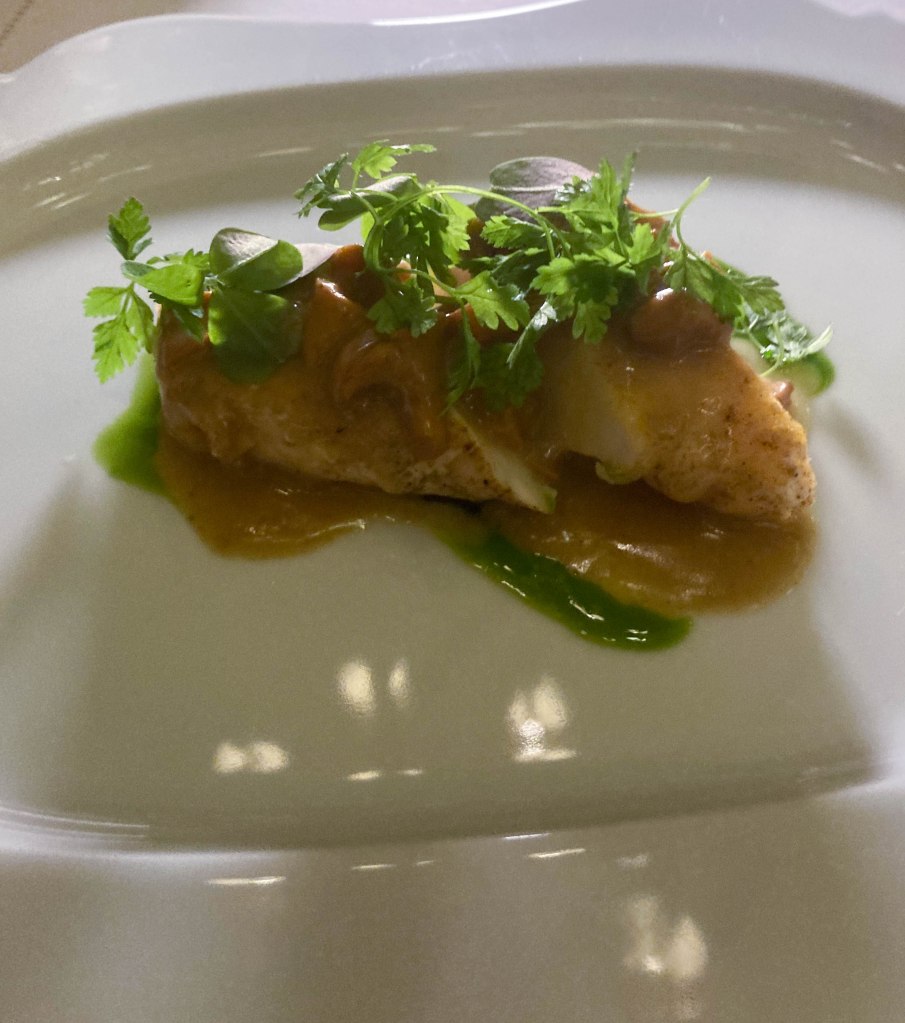

The sixth course of the night was sea bass with a rich gravy, herb-infused oil, and micro greens on top. The plating once again was spectacular, which made the dish look even more delicious. The sea bass was perfectly cooked and wasn’t too chewy. The sea bass had a very mild flavor, which served as a vessel for the much more flavorful gravy that was served atop the dish. The herb oil cut through the richness of the gravy and added balance to the dish. Finally, the micro greens gave the top a good crunch and a fresh taste, which contrasted with the warm and smooth sea bass. Overall this course was simple but very well executed, leading to a spectacular dish.


For our seventh course, we were served a deconstructed tiramisu, with a “ladyfinger biscuit”, mascarpone cream, and espresso powder on top. The ladyfinger biscuit was sweet and soaked in coffee, which gave it an amazing flavor. The mascarpone cream was soft and airy, with a slight sweetness that was not overwhelming. The espresso powder on top was slightly bitter and had an umami flavor, which helped balance the sweetness from the cream and ladyfinger. I enjoyed that instead of just serving regular tiramisu, they added their own twist, which ended up making the tiramisu taste even better. Overall, this dessert was super delicious and the perfect dish to end the night. 


Il Carpaccio had an amazing atmosphere and even better food. The use of simple ingredients and unique cooking techniques created an amazing meal. In addition, the service was impeccable, truly Michelin star quality. If you are ever in Paris, France, I would highly suggest going to Il Carpaccio. 
Mélisse

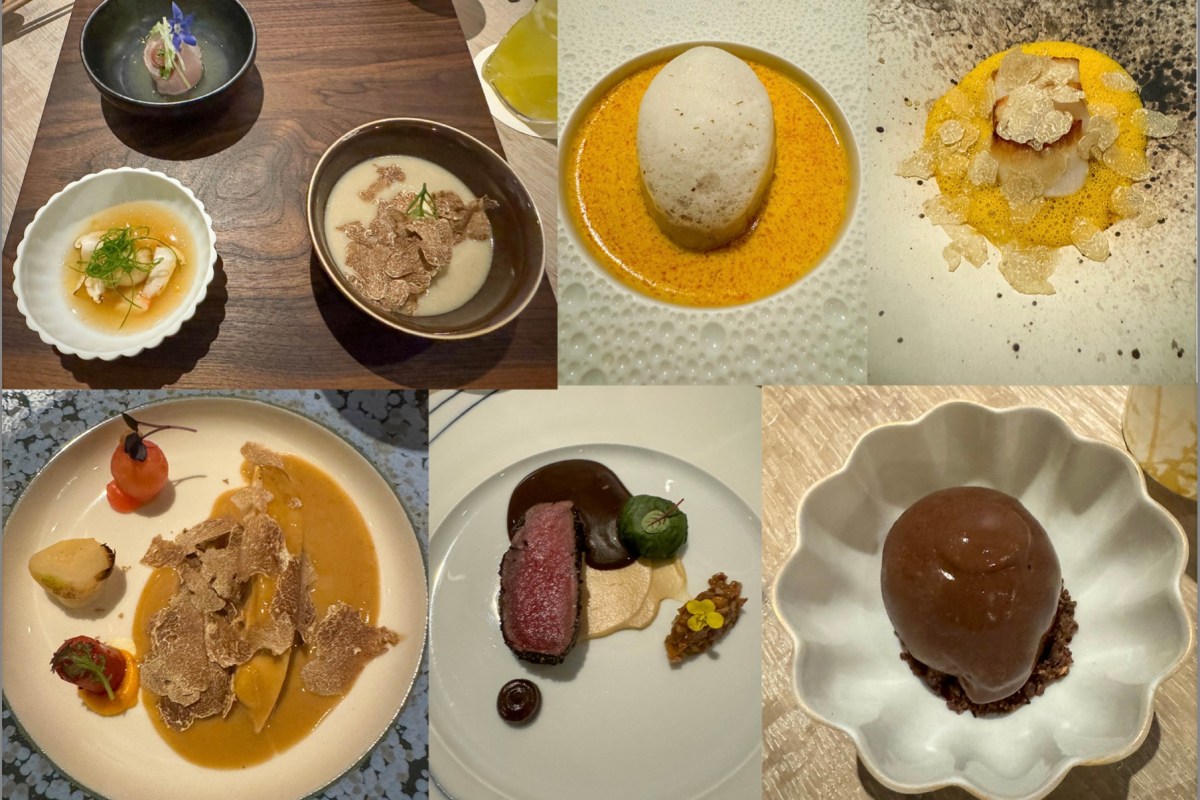
Mélisse is a two-star Michelin restaurant located in the famous Beverly Hills neighborhood of Los Angeles, California. At the helm of the restaurant are chefs Josiah Citrin and Ken Takayama. The chefs combine local ingredients with contemporary and classic techniques to create unique and creative cuisine. Mélisse opened a quarter century ago in 1999 and earned both its Michelin stars simultaneously in 2008. Over the years, Melisse has continually impressed over the years since 2008 and has held onto their stars, an accomplishment that is rare in the realm of high-end restaurants. 

Mélisse has a very small seating area that is only capable of holding 14 people. The restaurant runs two seatings a night, usually starting around 6 and 9 o’clock. On the outside, the building is an unassuming grey and looks like a normal restaurant, but as you walk into the restaurant, the decor and color scheme portray an underlying luxury. The restaurant has a very chill ambiance due to the calming music played by the record player in the front of the restaurant. Mélisse also boasts an open kitchen, which allows you to see the chefs hard at work. 

Once we were seated, we were given the set 10-course menu and the option to also add a mocktail pairing. This was the first time I had ever seen a mocktail pairing at any restaurant, so I decided to give it a try. Soon after being seated, the amuse-bouche arrived at the table. 

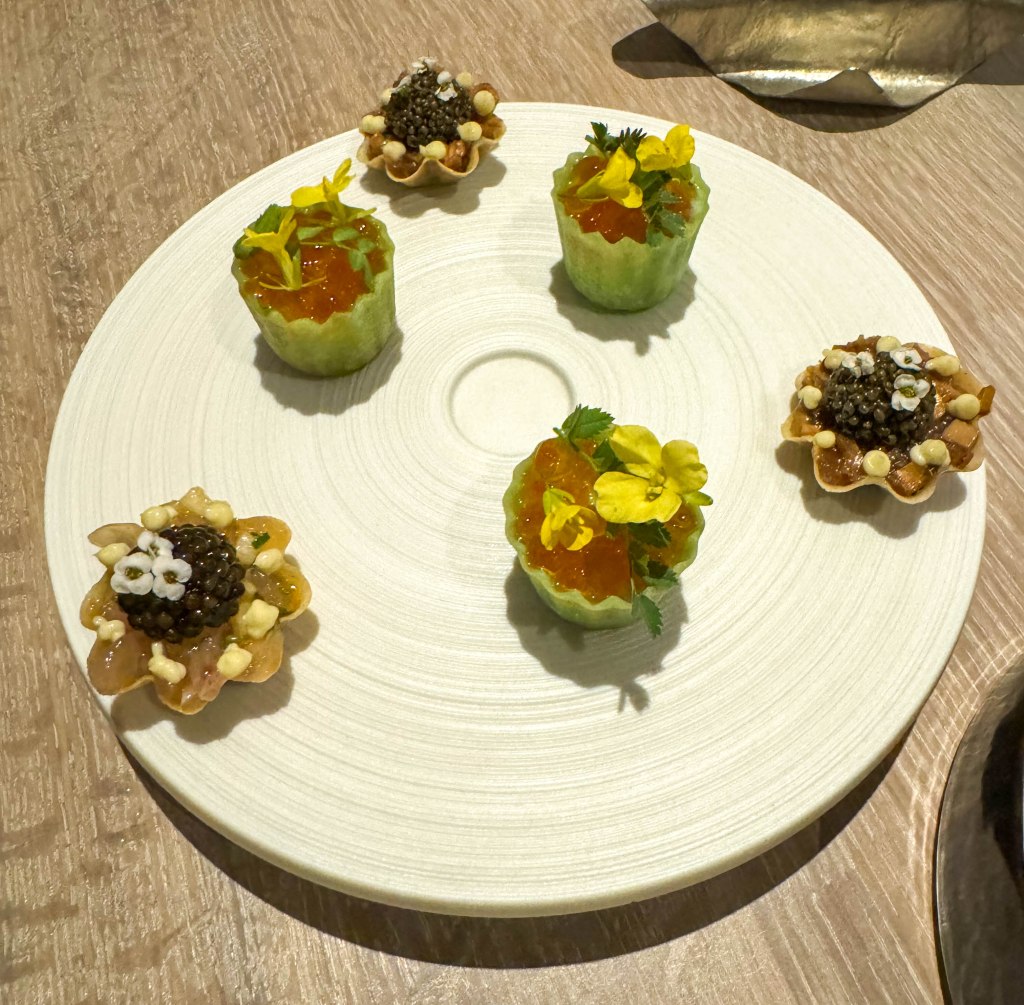
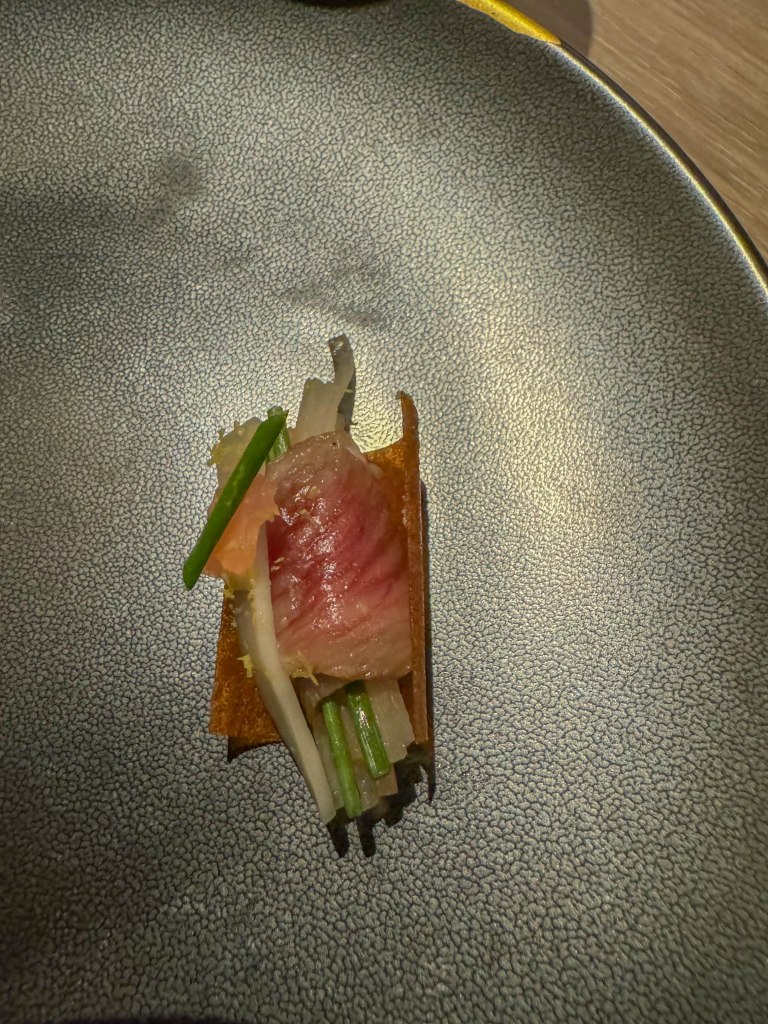
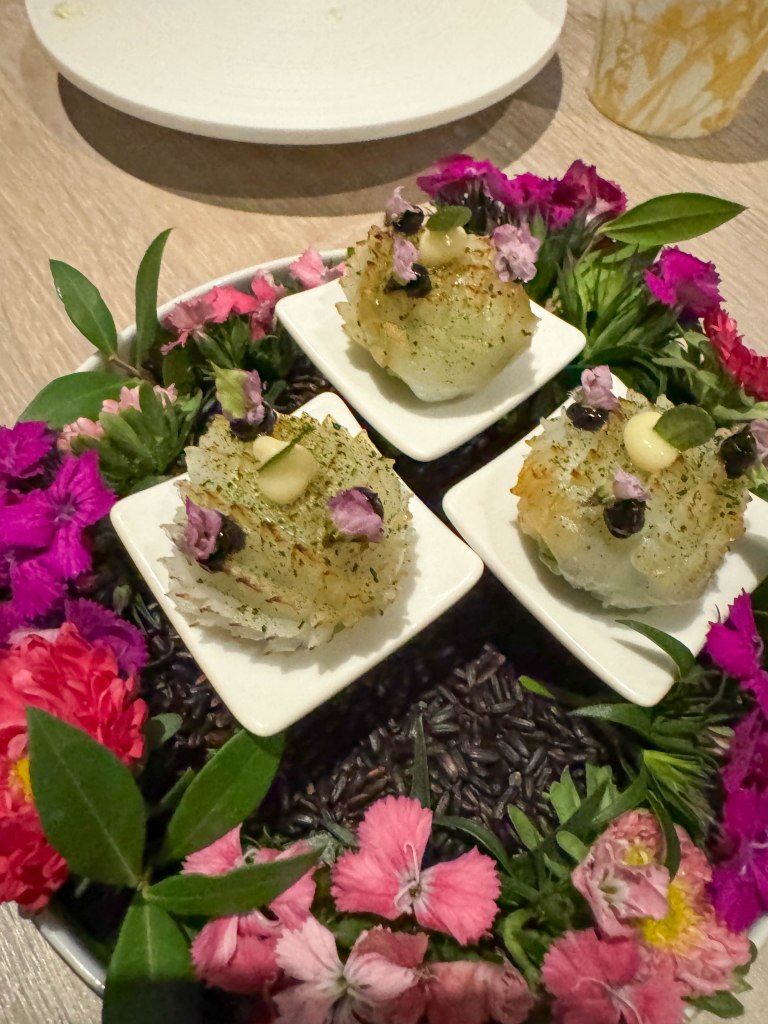
We were served a selection of 4 amuse bouches. The first amuse-bouche was a Japanese A5 wagyu beef, sake leek, enoki mushroom, and potato chip “roll”. The leak surrounding the filling was crunchy and fresh. The freshness of the leak and mushrooms contrasted with the rich buttery flavor of the wagyu beef. The potato added a nice bit of subtle starchiness to balance out the bite. Overall this was one of the best amuse bouches I ever had, and was a perfect balance of many amazing flavors and ingredients. The second amuse-bouche was a aori ika blue squid, and garden rice ball with finger limes. The squid had a very unique presentation and looked like it was going to be spikey when I bit into it. Instead, the squid was soft and tender and was balanced with the perfect amount of rice. The third amuse-bouche was a pear and miso cured salmon roe with cucumber in a tiny green pastry shell. The salmon roe was decadent and savory and was surprisingly not overly salty like most roe. The miso added its delicious umami flavor and combined with the flaky pastry shell, made for a perfect bite. The final amuse-bouche was Kaluga caviar and yuzu and black pepper inside of a shima aji tart. Like the salmon roe, the Kaluga caviar wasn’t overly salty and instead took on a lot of the yuzu and black pepper flavor, which I enjoyed. The yuzu added a citrusy flavor, while the pepper added an earthy undertone, which combined perfectly with the fish-like flavor of the caviar.  


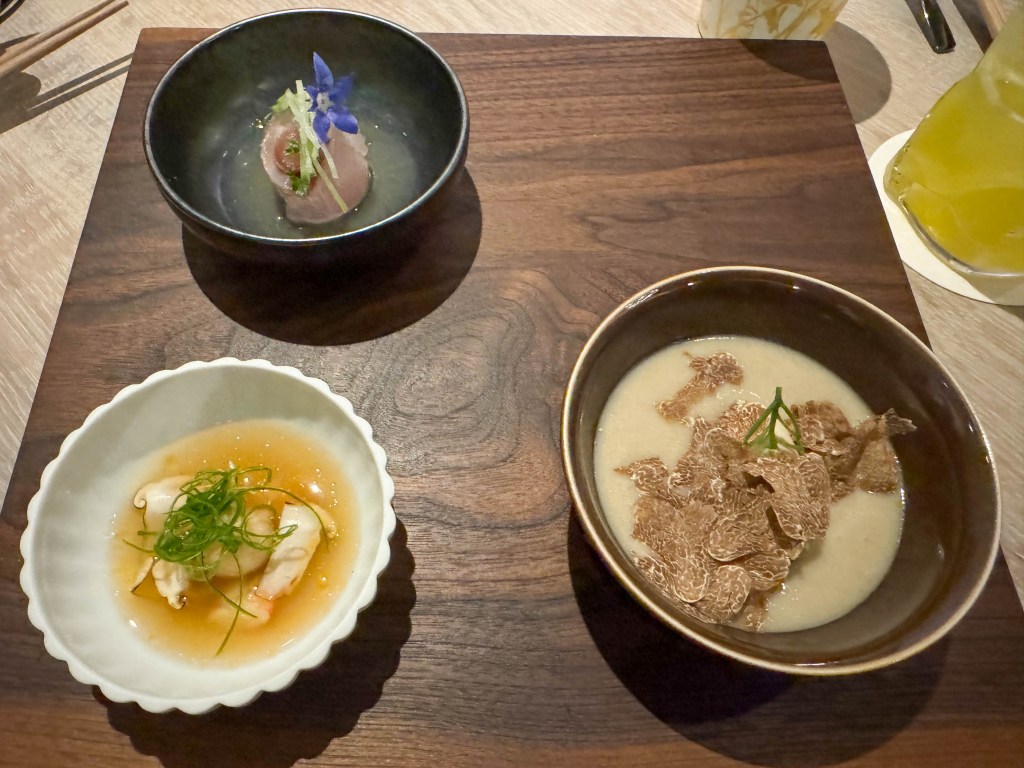
The first course consisted of three small bowls. The first bowl was a rosemary-scented sunchoke soup with abla white truffles. The sunchoke soup had a nice earthy flavor which was exemplified by the addition of rosemary.  The white truffles added a rich and delicate flavor, as well as an additional hit of earthiness. The second bowl was Hokkaido snow crab and sweet shrimp dumplings with a mushroom broth. The snow crab had a super delicate and ocean-like flavor, while the shrimp dumplings had a more dominant sweet flavor, which I liked. The sweet flavor balanced out the salty ocean flavor of the crab and made for a great combination. The mushroom broth gave both the crab and shrimp an umami flavor, which was super delicious. The final bowl was cured itoyori fish with green apple and radish. The itoyori fish was super fresh and not too salty, which allowed its subtle flavors to shine. The green apple and radish were also super fresh and contrasted the meatiness of the fish very well. This course was served with a mocktail pairing which was a cucumber, orange, and yuzu drink. The citrusy flavors were tangy and fresh, which paired amazingly with all three of the bowls. You could tell that there was lots of thought put into the pairing in order to help elevate the flavors of the bowls. Overall this was an amazing first course with so many different flavors and ingredients that worked perfectly together. 


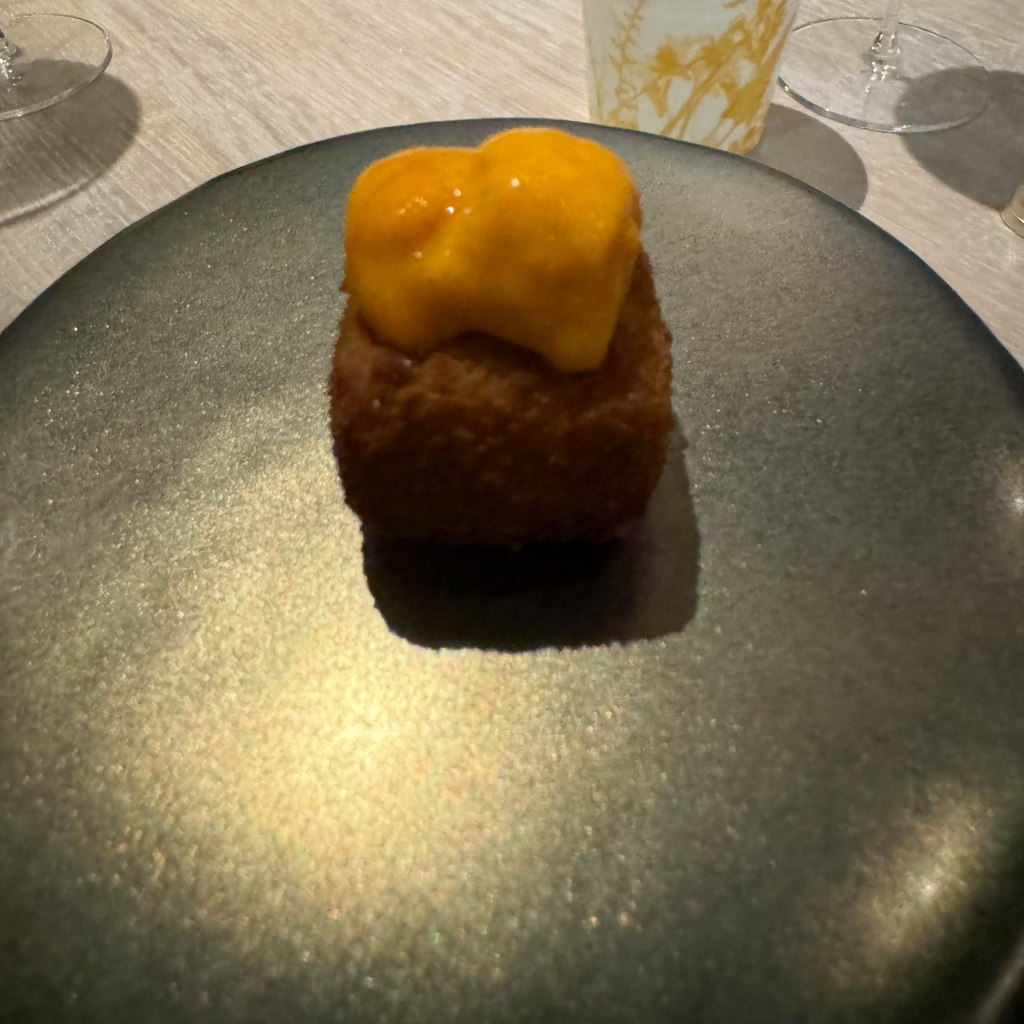
The second course was a sea urchin croquette with fermented yuzu honey. The sea urchin was encased in a fried outer layer which was crispy and crunchy. The sea urchin inside was soft and smooth, creating a nice contrast of textures. The yuzu honey on top was citrusy and sweet, which paired well with the savoriness of the sea urchin croquette. Overall, this was a delicious bite that incorporated so many different flavors and textures, and they all worked perfectly together.


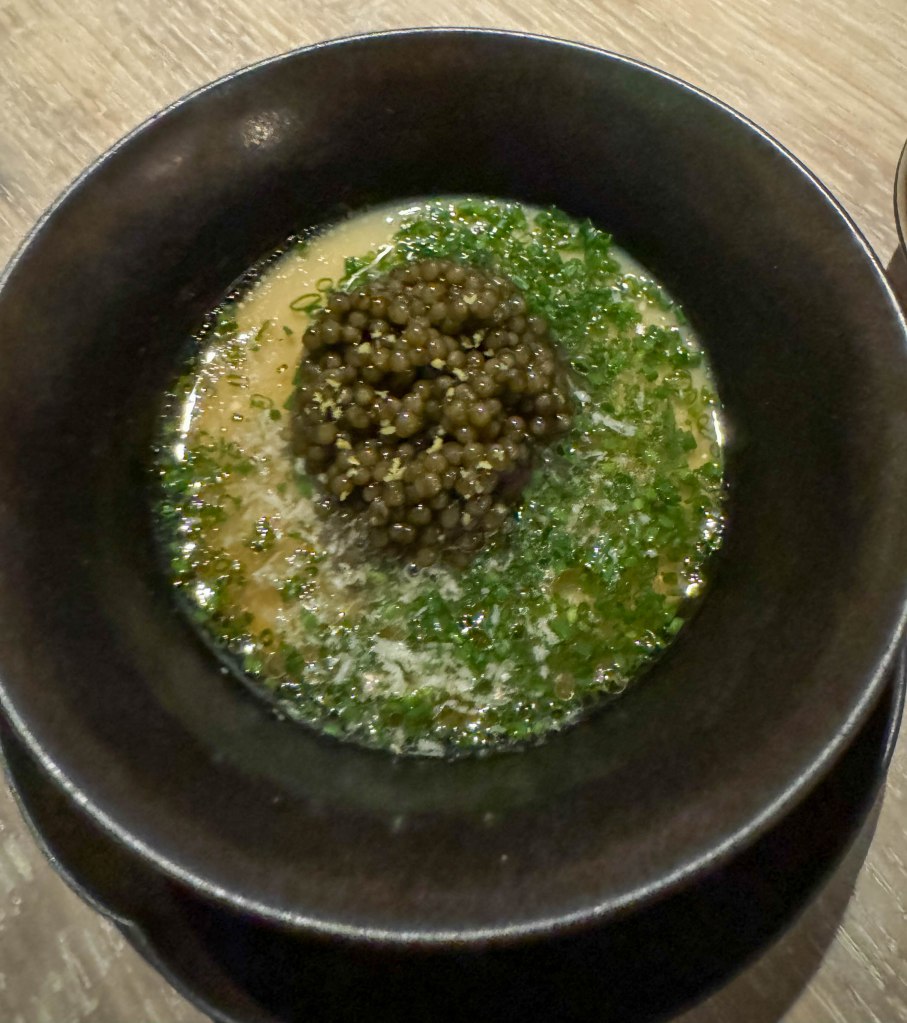
The third course was a walnut, seaweed, and salsify plant soup with royal Osetra caviar. The walnut and salsify plant gave the soup an earthy taste and was very filling. The caviar on top was decadent and gave the soup a salty and savory taste that enhanced the seaweed flavor. This course was served with a green apple kombucha, which helped balance out the saltiness of the dish with freshness. Overall this was a delicious dish that combined both earthy and salty flavors that worked amazingly well together. 


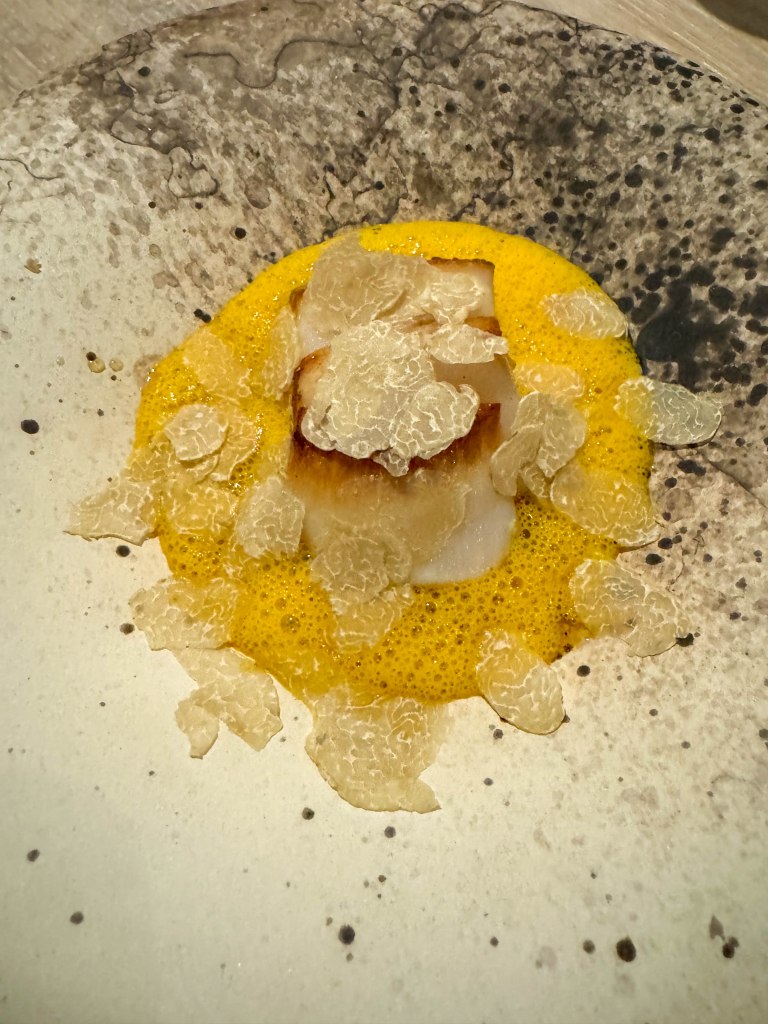
The fourth course was wild Maine scallops with a butternut squash nage (sauce) and alba white truffles. The scallop was cooked to perfection, with the perfect amount of bite and chewiness. The flavor of the scallop was mild with slight hints of fish and seaweed-like flavor. The butternut squash sauce was frothy and sweet and gave the scallops some extra flavor. The white truffles were super decadent and had a delicate umami flavor that elevated the dish to the next level. This course was served with golden beet, dates, and verjus (unripened grape juice) mocktail. The golden beets provided a slightly earthy taste, while the dates and verjus were sweet, and paired well with the butternut squash nage.  Overall this was one of the best scallop dishes I have ever had, and one of my favorite courses from Mélisse. 


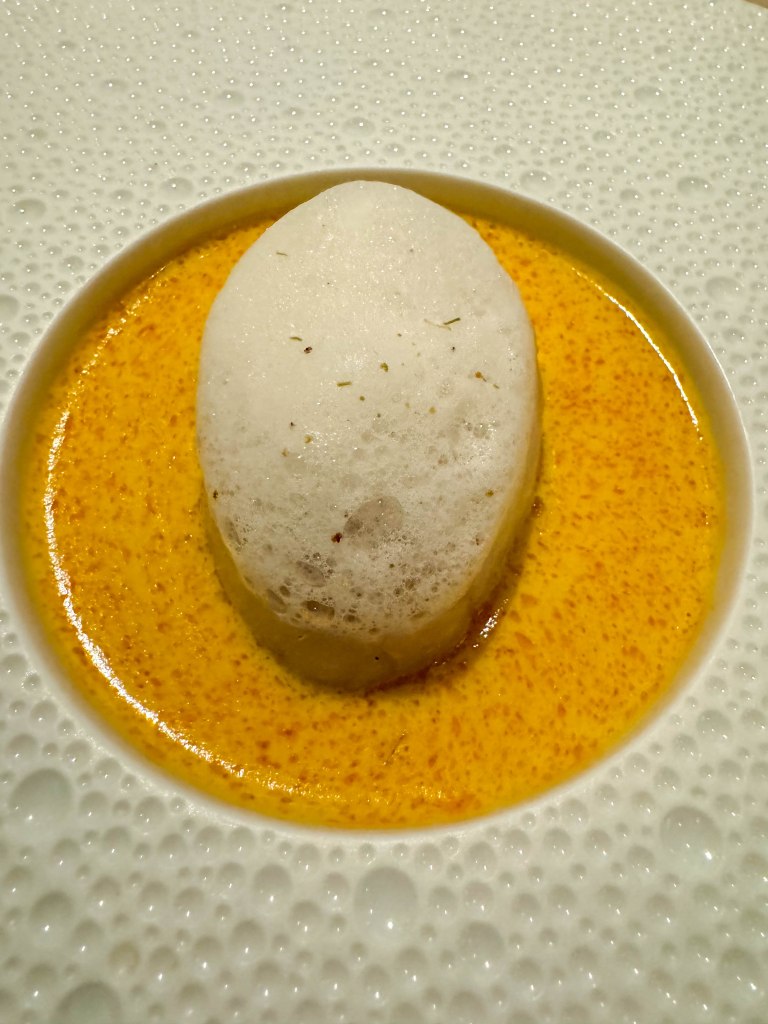
The fifth course was rockfish and scallops with fennel and saffron. The rockfish and scallops were both perfectly cooked. The rockfish was soft, buttery, and flaky, while the scallop was smooth and slightly chewy. The fennel and saffron added some different flavor which helped cut the saltiness of the fish. This course was served with a pomegranate, cinnamon, cardamom, pineapple & angostura (bitters) mocktail. This mocktail had subtle fruitiness and spiced flavors which paired well with the subtle flavors of the dish. Overall this was one of the more simple dishes but was still professionally executed and tasted amazing. 


The sixth course was hay-baked golden chicken with root vegetables and chestnut Carolina rice. Both the white and dark meat were served along with the rice and root vegetables. The chicken was so tender and juicy and was bursting with flavor. The Carolina rice made the dish feel more like a complex version of chicken and rice, which I really enjoyed. The rice was super flavorful and flavored with the juices from the chicken. The root vegetables added a crunch and some earthiness to the dish. This course was served with a smokey jasmine pearl tea. The tea was smokey and earthy and paired exceptionally with the flavorful chicken and rice. Overall this was another simple course that was surprisingly very delicious and was one of my favorite dishes of the night.


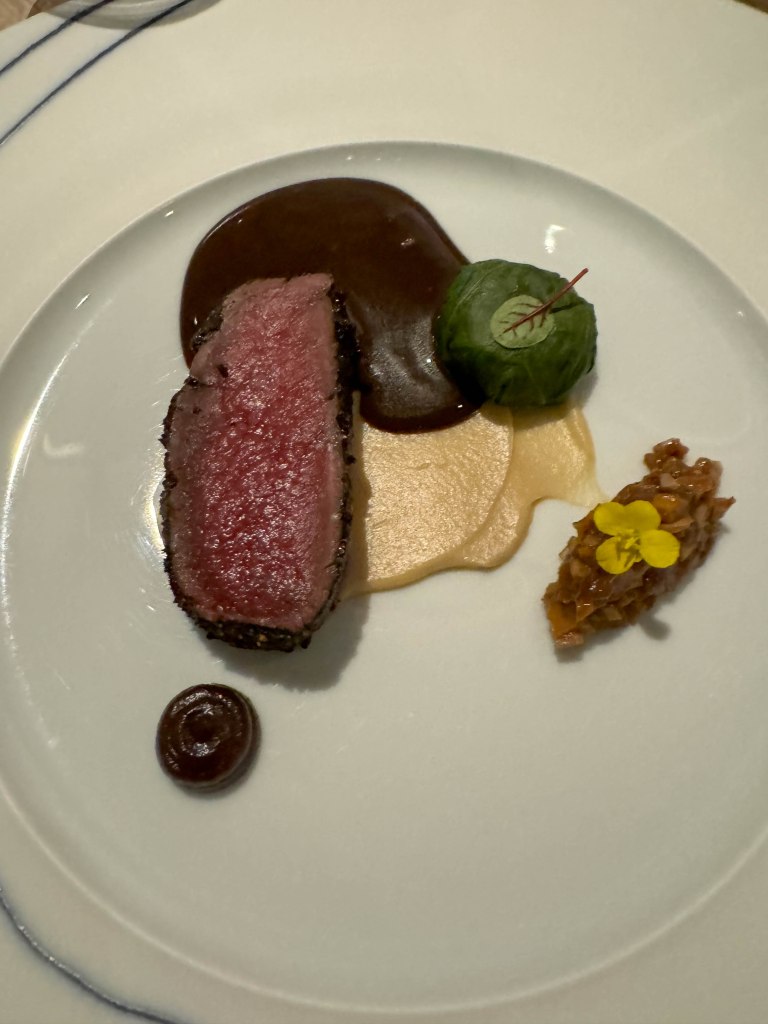
The seventh course was coffee-rubbed venison with Swiss chard and parsnips. The coffee rub was bitter and had notes of chocolate and smokiness. The venison was tender and took on some the the earthy taste of the coffee rub. The Swiss chard and parsnips on the side made for a refreshing bite in between the powerful coffee flavor. This course was served with a non-alcoholic version of Bailey’s Irish cream coffee. The coffee flavors from the mocktail and the dish were perfectly balanced so that they were both equally powerful and you could taste their unique tastes separately. At the same time, the theme of coffee flavors made this course feel very cohesive. Overall this was a very unique dish, incorporating two very different ingredients, venison and coffee, into one course. 


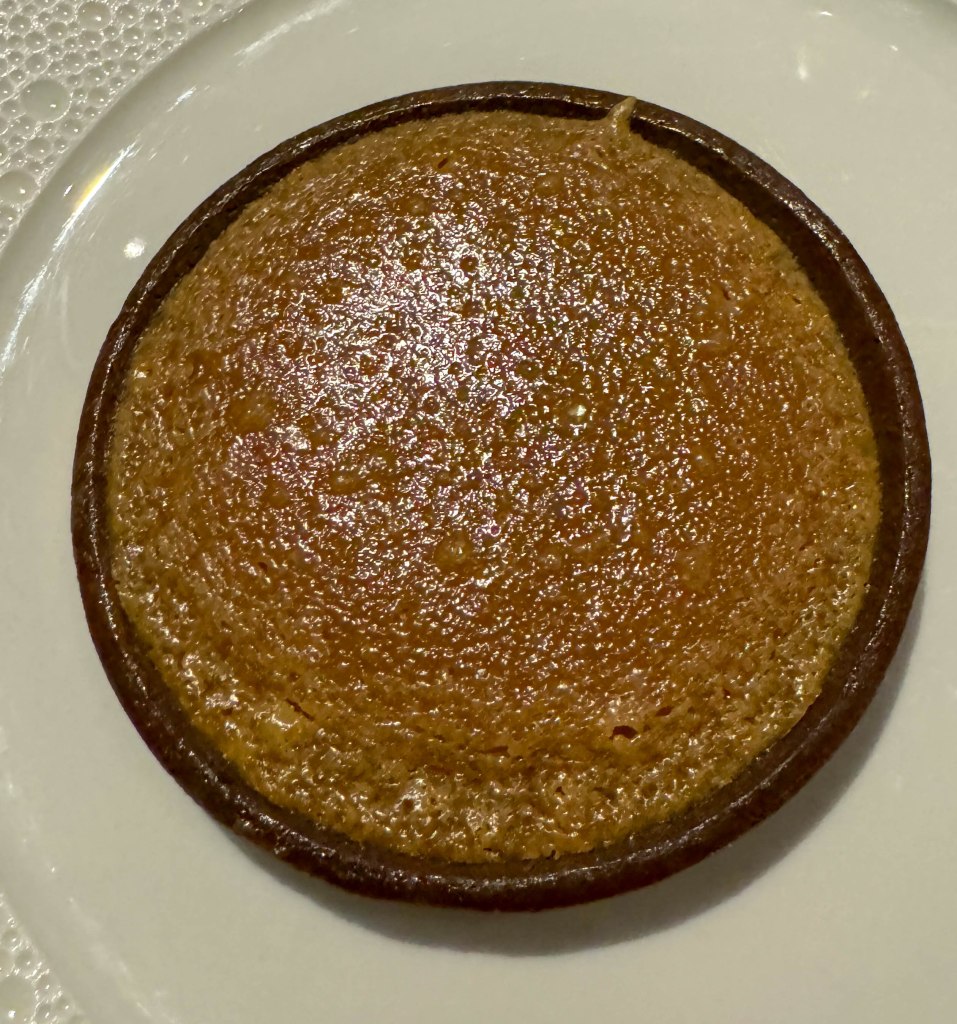
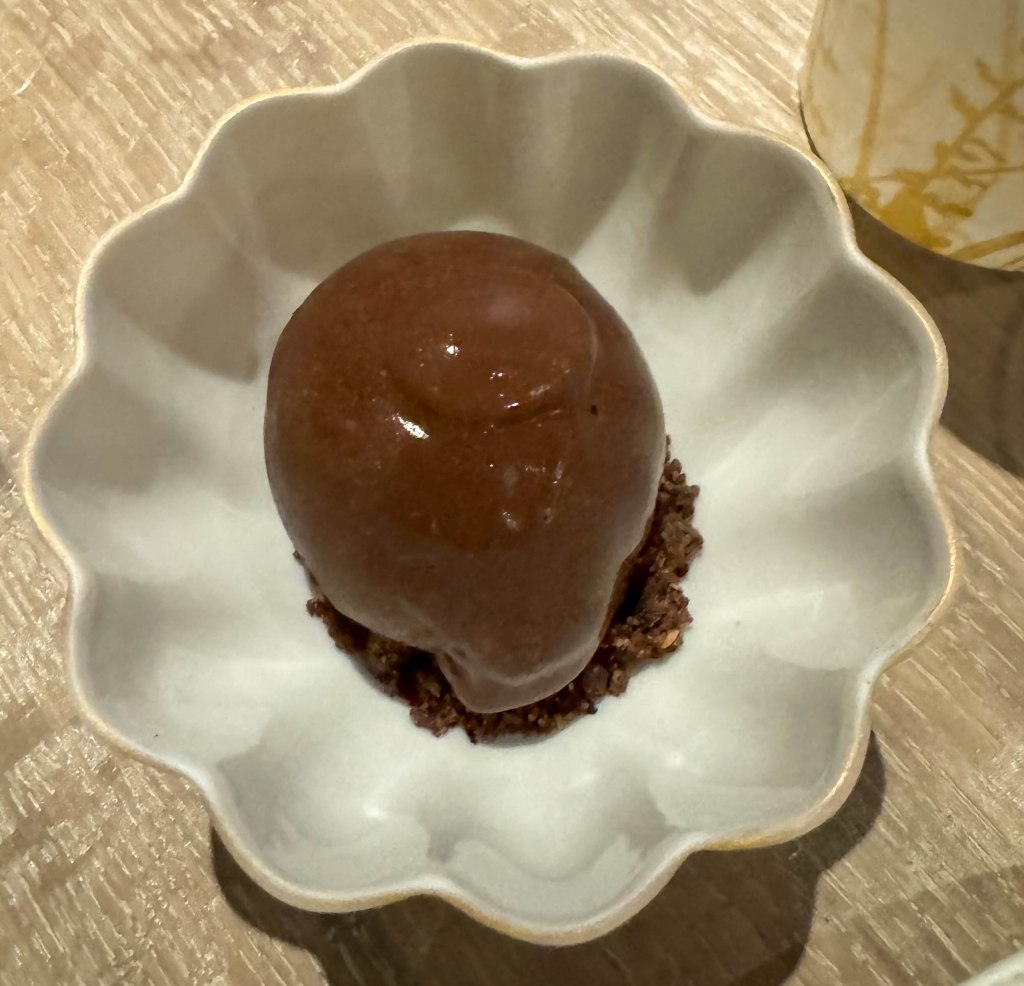
The eighth course was a dulcey ganache tart and dark chocolate sorbet with hazelnuts. The ganache tart had just the right amount of sweetness that did not overpower the chocolate flavor. The tart filling was very smooth and decadent, bursting with so much warmth and aroma. The tart shell was thin and crispy with a slight crunch as you bit into it. The chocolate sorbet was also not too sweet and allowed for the chocolate flavor to shine through. The hazelnuts added a crunch and contrasted the otherwise smooth texture of the sorbet. Overall this was a perfectly executed dish that had just the right amount of sweetness 


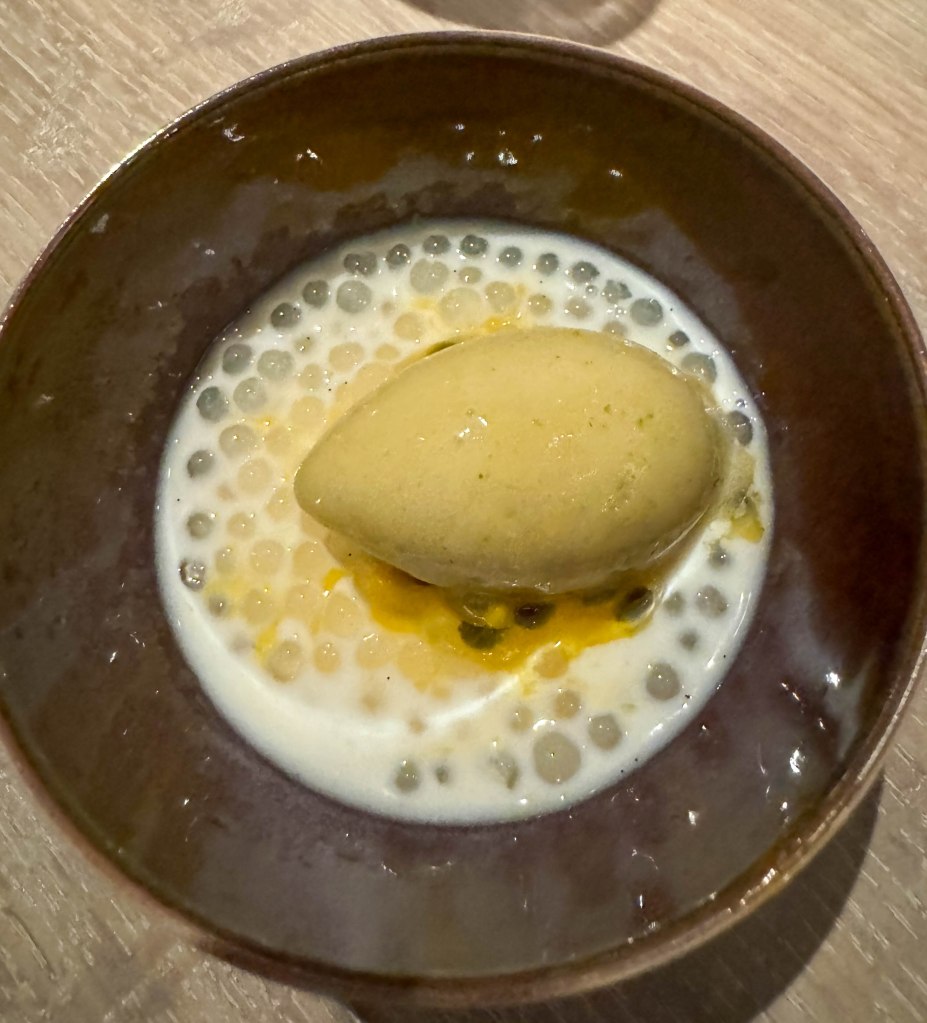
The ninth course was a pineapple and guava sorbet, passion fruit parfait, coconut, and tapioca. The sorbet was citrusy, sweet, and had a slight tanginess to it. It was also super smooth which contrasted with the crunchiness of the passion fruit seeds. The coconut added a rough and chewy texture, while the tapioca balls were more smooth and slimy. This course was served with a pineapple, lemon, grenadine & root beer mocktail. The mocktail wasn’t overpoweringly sweet thanks to the contrast between the lemon and root beer, which I really enjoyed. The tropical flavors from the pineapple matched perfectly with the flavors of the sorbet. Overall this course was a blend of vastly different textures that somehow, when eaten together, tasted like one cohesive and well-thought-out dish. 


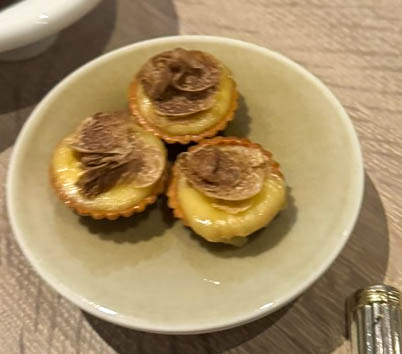
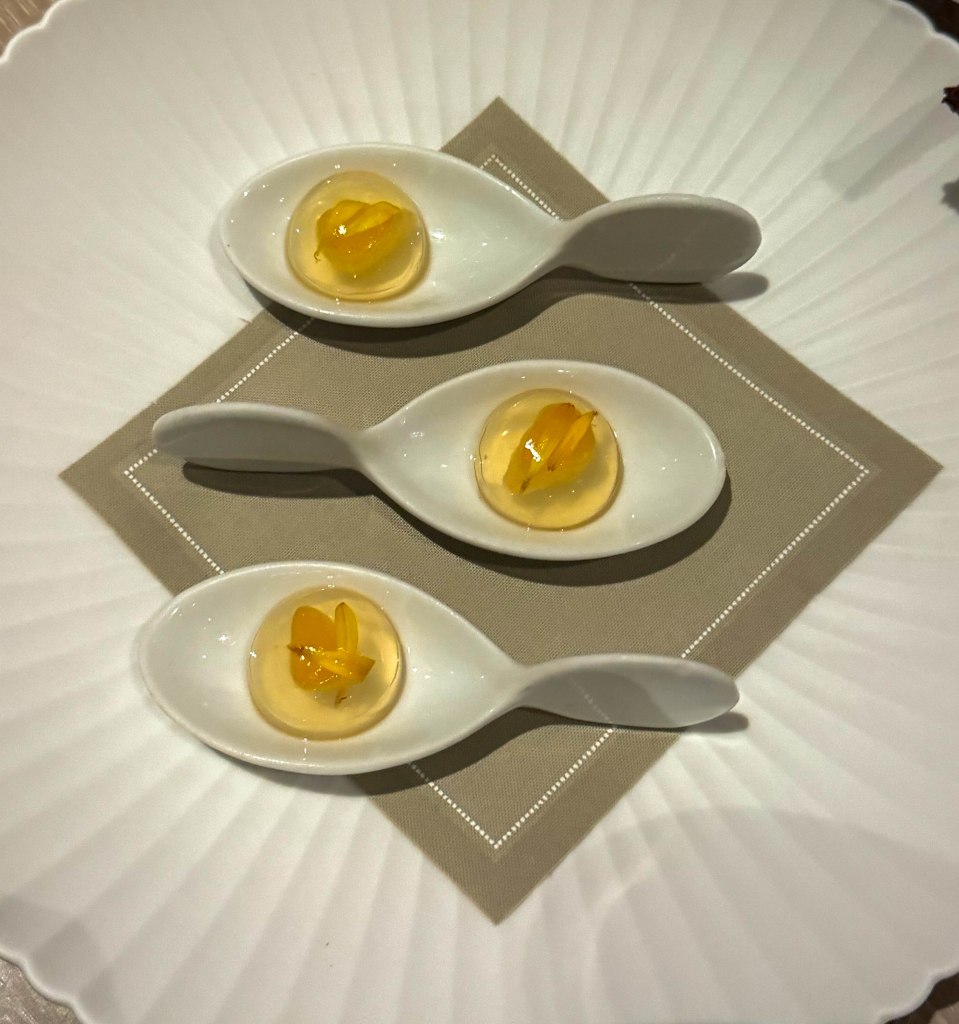
The final course of the evening was a brie tart with alba white truffles and a satsuma jelly pearl. The brie tart was super soft and smooth and the truffle gave it an amazing flavor. The outside of the tart was super flaky and had a pleasant crunch. The satsuma jelly had an amazing fruity flavor as well as a texture similar to a marshmallow. The spoon it was served on allowed you to eat it in a single bite, which allowed all the flavors to shine through at the same time. Overall this was a delicious and perfectly executed course, and was a fantastic way to end the night. 


Mélisse was one of the finest restaurants I have ever been to. From exceptional service and hospitality to professionally executed dishes, Mélisse lives up to its 2 Michelin star hype. If you are ever in Los Angeles and you are looking for the best food in the city, look no further than Mélisse.

L’Effervescence

L’Effervescence is a Michelin-star restaurant located in Tokyo, Japan. L’Effervescence is one of only 29 Michelin star restaurants in Japan that holds 3 Michelin-stars. The restaurant serves contemporary French cuisine under head chef Shinobu Namae. Chef Namae opened L’Effervescence in 2010 and gained his first Michelin star 2 years later in 2012. He earned his second Michelin star in 2015, and his third in 2020, quickly becoming one of the most respected chefs in the region. 

L’Effervescence takes great care in ensuring the quality of every ingredient served to the guests. On their website, you can find a list of every artisan they get ingredients from. Everything from the asparagus to the eggs, and even the water comes from the highest quality artisans around Japan. L’Effervescence even highlights the architects and designers for their work on the restaurant, which is very unique. It is very reassuring to know exactly where your ingredients are coming from, which distinguishes L’Effervescence from other Michelin-starred restaurants. 

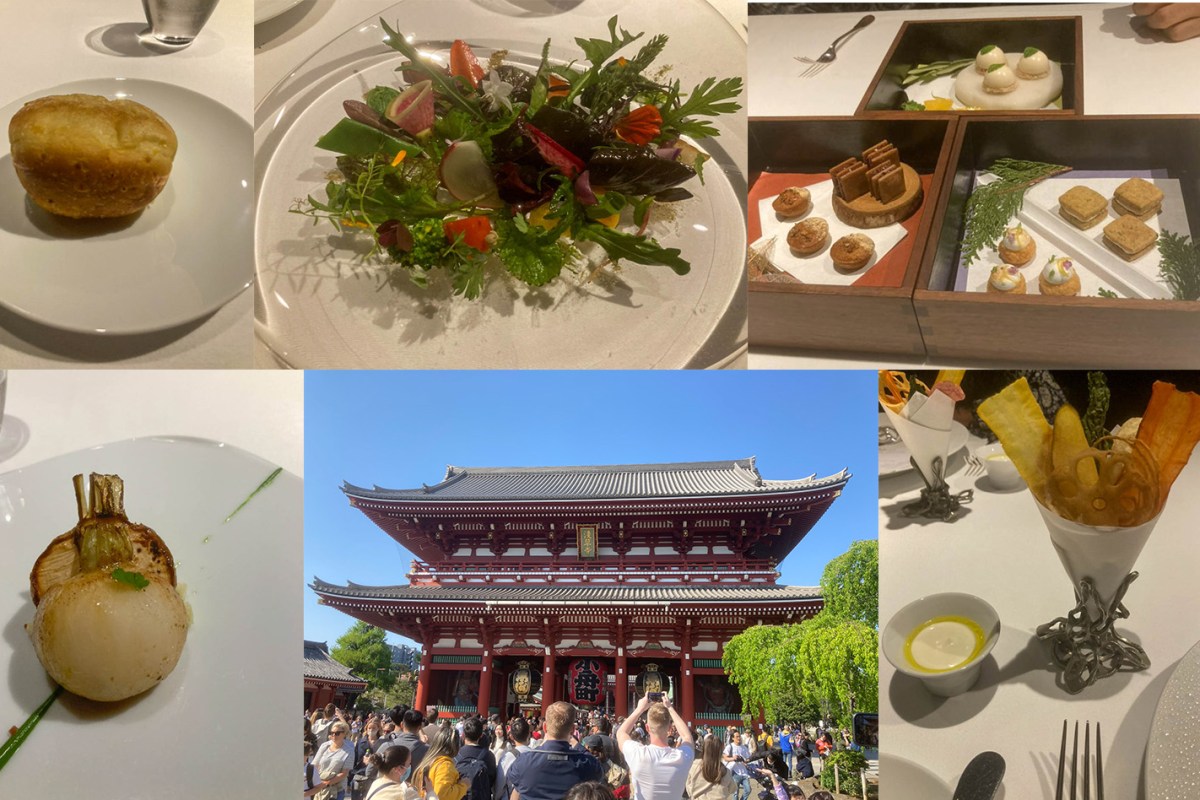
L’Effervescence is located in just outside the center of Tokyo, in the city of Shibuya. Upon arrival, you are greeted outside the restaurant and led in by the staff. The restaurant has a classic French fine dining atmosphere, with a white tablecloth, fancy cutlery, and dark lighting. We were led to our table, and given a copy of the tasting menu. The tasting menu had 8 courses, each with a unique name that encapsulates the meaning of the dish. The first course is Welcome, followed by Underwater Forest, Genesis of Civilization Ars longa Vita brevis, Fixed Point, Ocean, Forest, and New Chapter. After reading over the menu for a few minutes, the first bites of food arrived at our table, and the dinner began. 

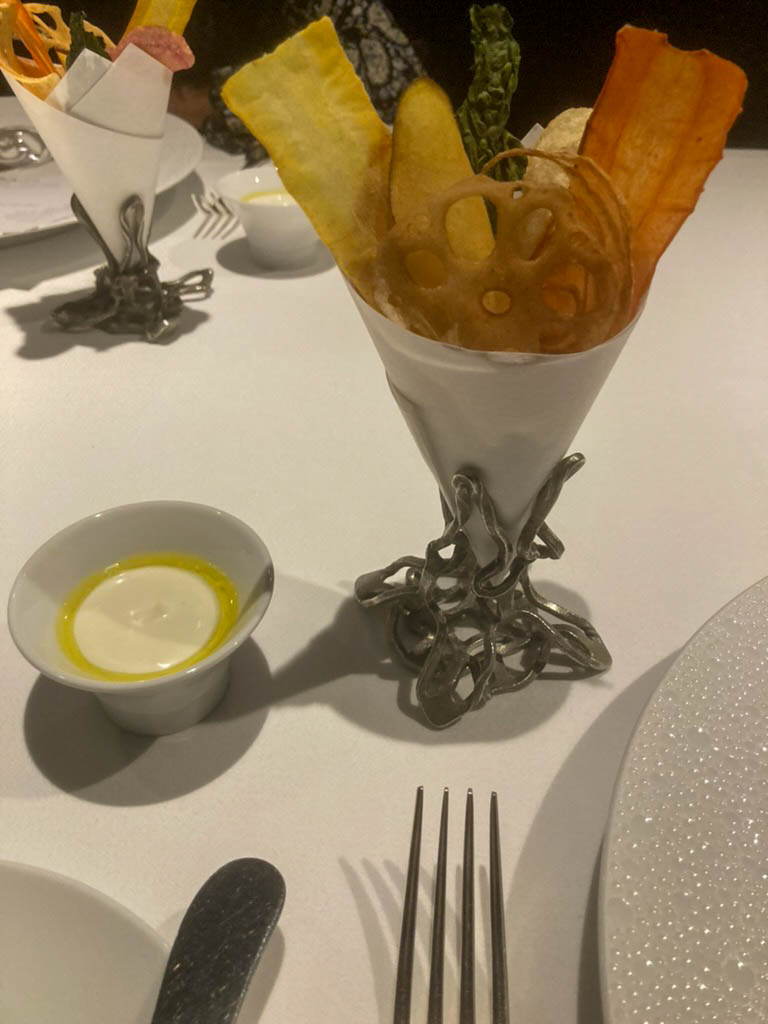
For the first course (welcome), we were served a bouquet of vegetable crisps and a tofu sour cream. The vegetable crisps were so colorful and were very visually appealing. They were super crunch and crisp, with hints of vegetable flavors. The crisps had the perfect amount of salt, which made the flavors tastier. I really enjoyed how the crisp wasn’t too oily, even though it had just come out of the oil. The tofu sour cream was rich and had a nice tang, which paired well with the crunchiness of the vegetable crisps. Overall, this was the first course that was super simple, yet still very tasty, and not too filling. 


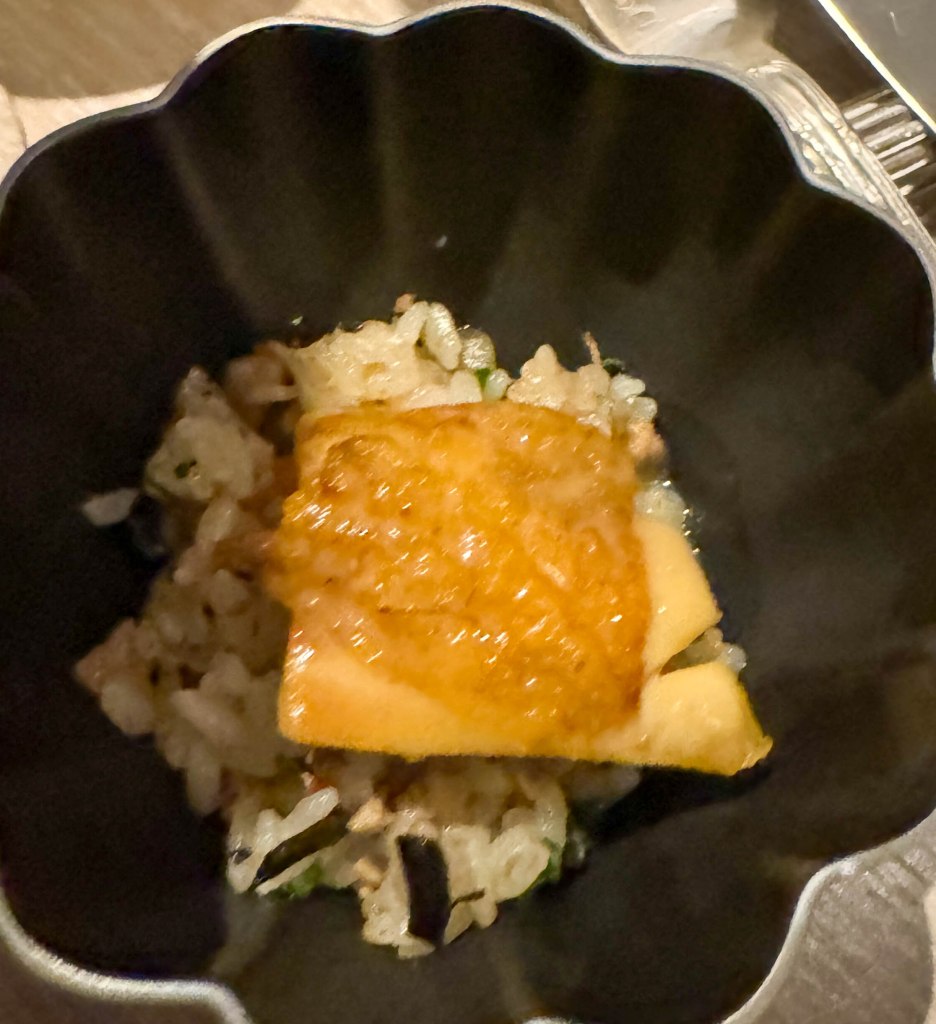
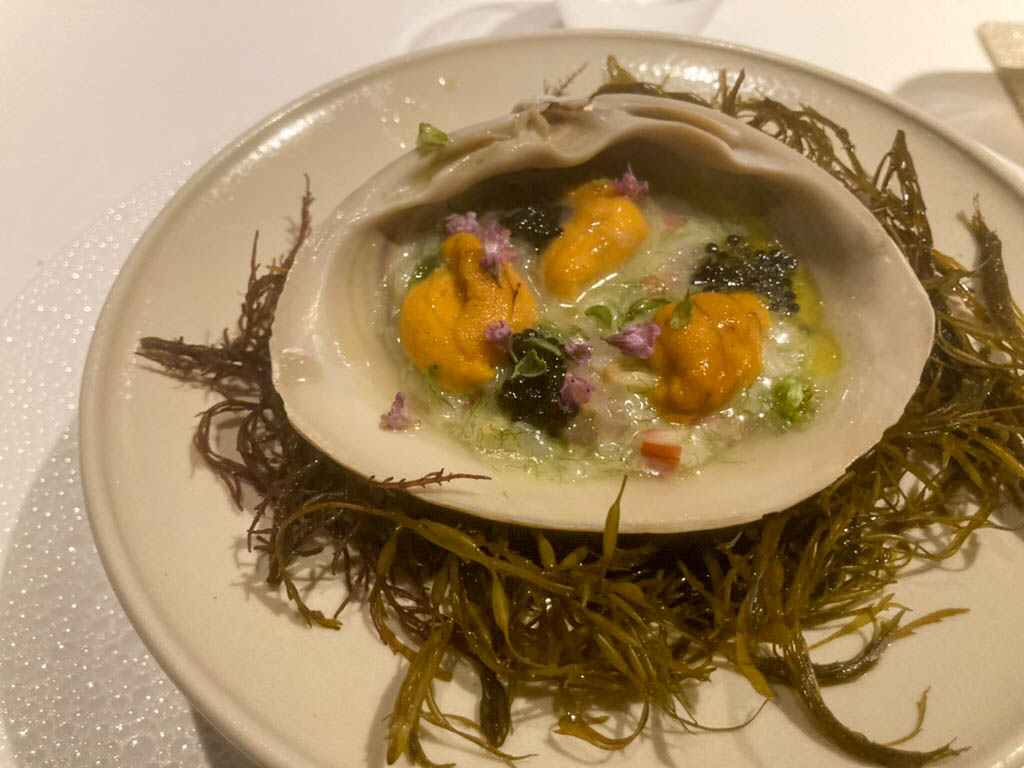
For the second course (underwater forest) Sasanishiki risotto with sea lettuce and hokki-clam, sea urchin, housemade caviar, and shiso flowers. The dish was presented beautifully, with the sea lettuce on the plate, and the risotto in a shell-like dish. The risotto was the perfect consistency and was very flavorful. The clams and sea urchin added added a delicate oceany flavor to the risotto. The caviar gave the dish a hit of saltiness, which added to an undertones of underwater flavor. This dish used so many different ingredients, but they all worked together perfectly and were so delicious. 


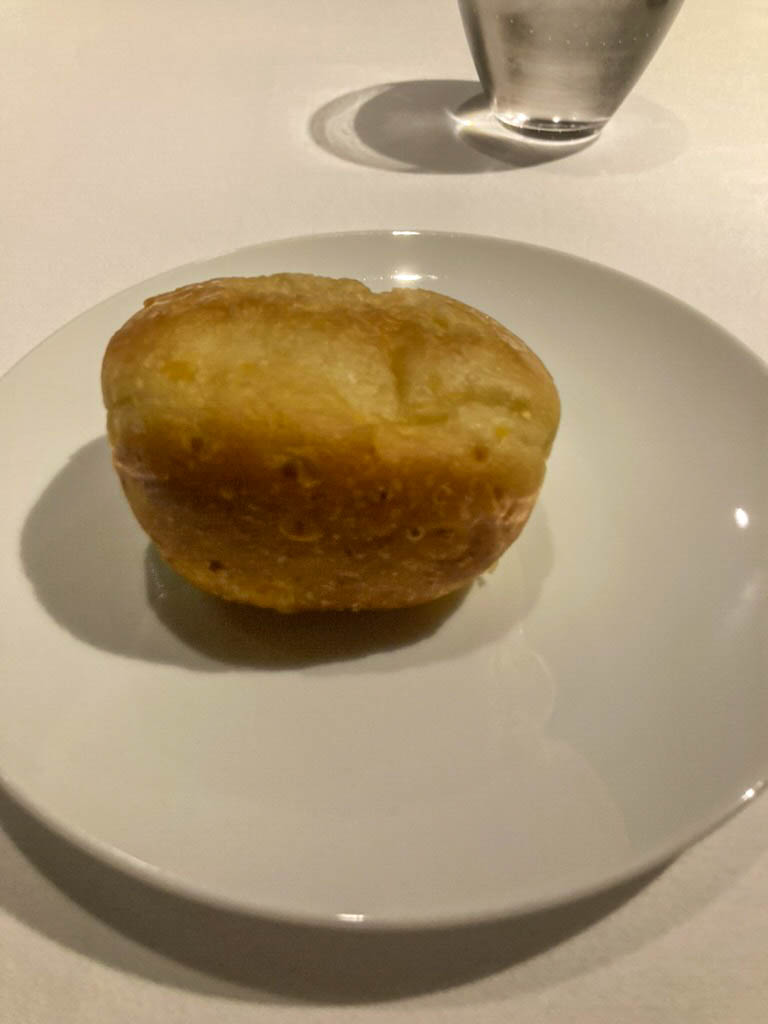
For the third course (Genesis of Survival), we were served potato focaccia bread. The bread was fresh out of the oven and still steaming as it was brought to the table. The bread had a very nice potato flavor, with hints of rosemary and thyme, which made it taste like focaccia. This dish was super simple but was still really delicious, and one of the best bread rolls I have ever had. 


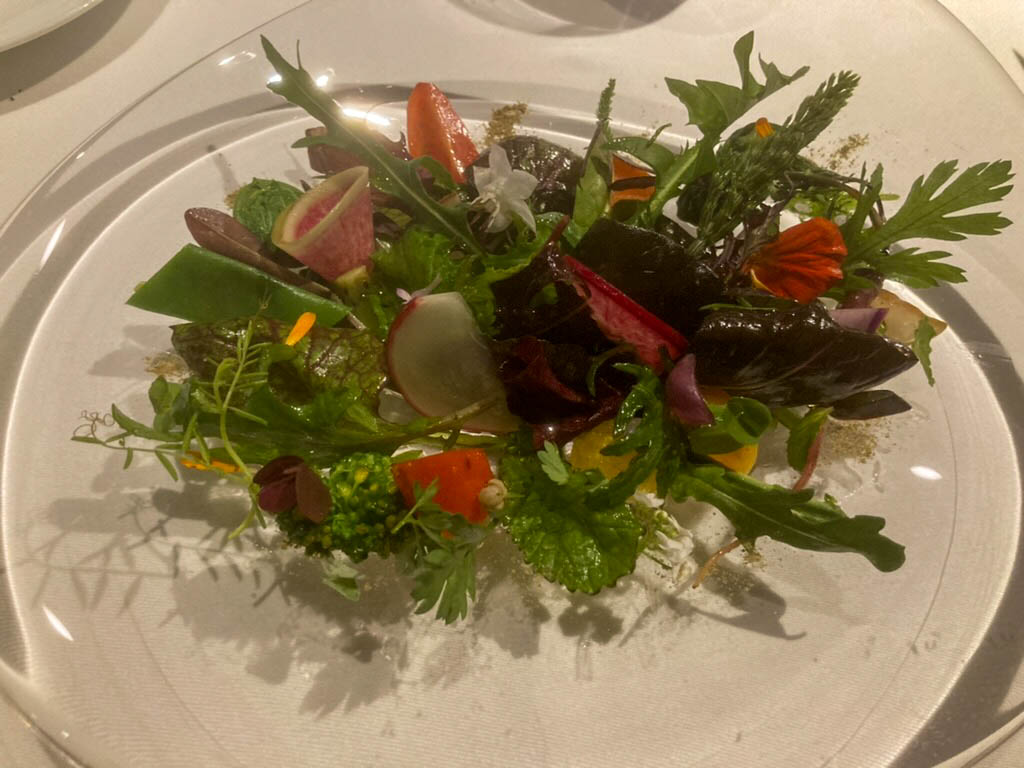
For the fourth course (Ars longa, Vita brevis) we were served artisanal vegetables. The vegetables were brought to our table, and shown to us, then made into a salad. In the salad, the chef used over 40 different vegetables that are native to the islands of Japan. The salad was presented beautifully on a glass plate and was super colorful. There were so many unique earthy tastes from each ingredient, and it was so delicious. There were different types of radishes, carrots, flowers, and many other vegetables. this was truly one of the most amazing dishes I have ever had.


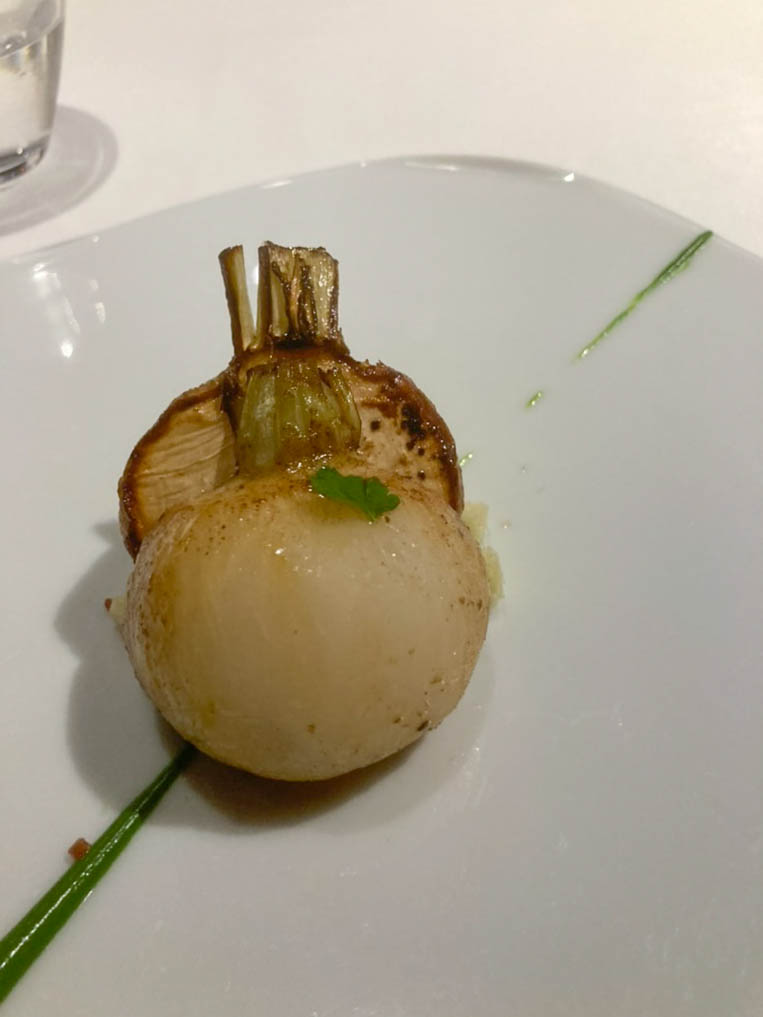
For the fifth course (fixed point) we were served Tokyo turnip, complex and simply. The turnip was presented elegantly and looked delicious. The turnip had a very earthy flavor, with hints of mint laced throughout. The char on the sides of the turnip added another layer of complex flavor, which made the turnip even more enjoyable. This dish was super simple, but had such complex flavors, and was delicious. 


For the 6th course (ocean), we were served grouper gently poached in whey, bamboo shoots, green asparagus, and sakura flower beurre blanc sauce. The grouper has a great flavor that wasn’t too fishy but still had a slight ocean flavor. The whey, bamboo shoots, and asparagus gave the grouper an earthy and hearty flavor. The beurre blanc sauce was silky, and creamy, and tied the dish together perfectly. This dish used some very unique ingredients that I would never have thought to put together, like whey and bamboo shoots, but it worked out very well. This dish was super complex and had so many layers of flavors in each bite.

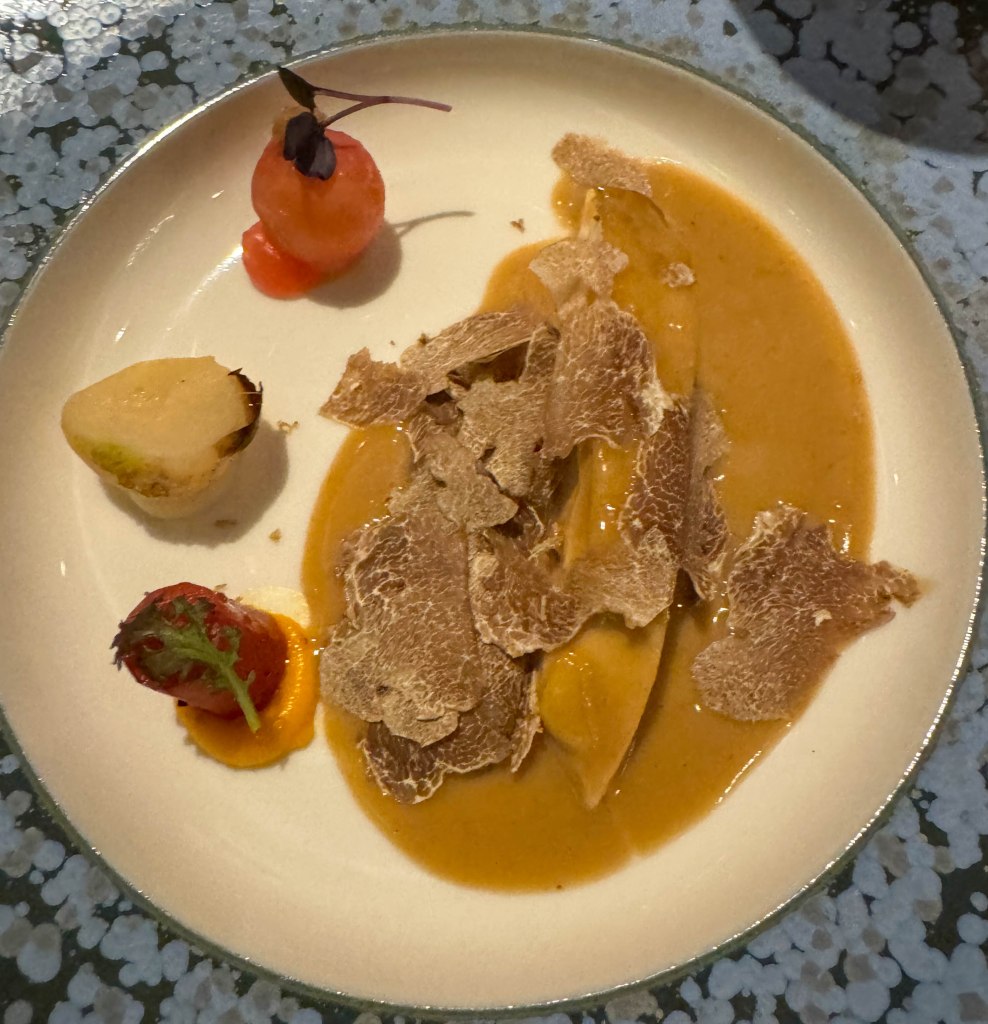
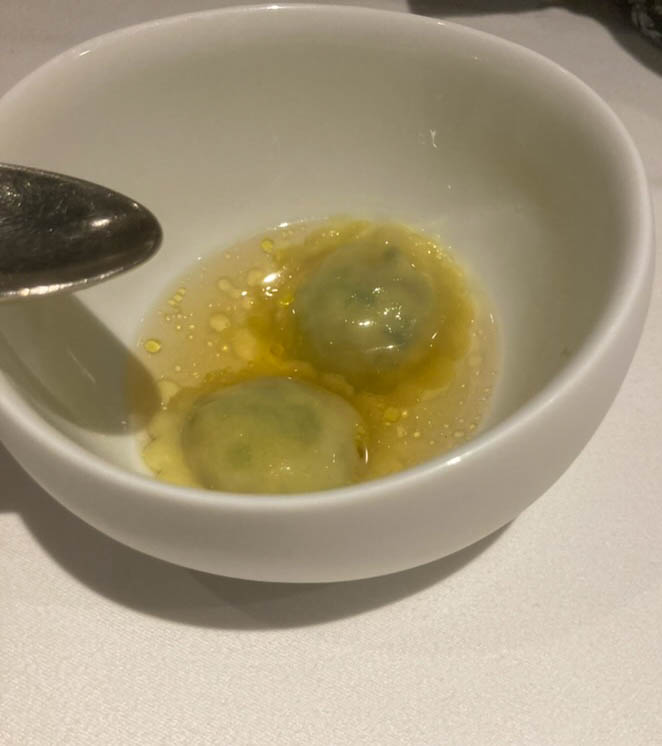
For the 7th course (forest), we were served dessert, which was Kyoto duck wood-fired over local mizunara oak from Hinohara Village in Tokyo, port sauce, beets, spinach, Duck thigh and butterbur shoot ravioli, and duck consommé. The duck inside the ravioli was so tender and juicy and had great flavor. The wood-fired accents gave the ducks a much deeper and complex flavor that I really enjoyed. The beets, spinach, and shoots inside of the ravioli added a bit more earthiness and crunchy texture. The crunchy texture contrasted with the soft exterior of the ravioli and tasted super delicious. Overall, this was a delicious dish with multitudes of complexity sprinkled throughout it.


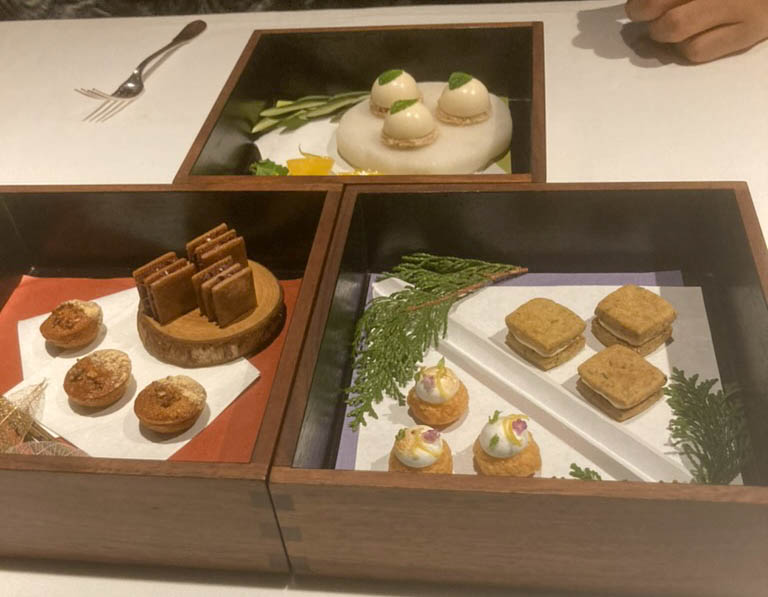
For the 8th course, we were served dessert (new chapter), which was three boxes of sweet bites. Each bite has a unique taste and texture to it. Some were flavored simply with lemon and chocolate, while others had very complex tastes, like matcha, and rosemary. Each bite was unique and flavorful and was a great way to end off a fantastic meal. Our favorite bit was definitely the rosemary cream sandwich, which was earthy, sweet, and refreshing. Overall this was a delicious way to end the meal. 

Overall, the dishes at L’Effervescence were extraordinary. They were super delicious and so unique, as well as plated and presented beautifully. If you are in Tokyo, I would highly recommend going to L’Effervescence, which definitely lives up to the 3 Michelin star hype.

Enyuan Kobayashi

Enyuan Kobayashi is a Michelin-starred traditional kaiseki restaurant located in the Gion district of Kyoto. Enyuan Kobayashi is very unique and is renowned for its tempura. The building is very traditional, with wood walls, floors, and ceilings, as well as being adorned with many types of plants and flowers. Enyuan Kobayashi boasts an open kitchen, in which you can watch the chef fry the tempura and cut the sashimi right in front of you. There are two places you may be seated in the restaurant: the high top, which has eight seats, or the private dining room, which has four seats. The high-top seating wraps around the open kitchen, where you can watch your food being prepared, while the dining room is more private and personal.

Enyuan Kobayashi is a kaiseki restaurant, which means that the chef chooses what you eat based on what is fresh. The menu changes with the seasons to ensure they use the freshest fish, vegetables, and meats.

When we entered the restaurant, we were greeted warmly by the kind staff, who escorted us to our seats at the high top. Upon sitting down, we were given a drink menu and told that the chef would prepare our meal with the finest ingredients. Soon after sitting down, the chef started preparing the tempura batter and cutting the vegetables. We were able to watch his precision and skill as he masterfully fried the tempura and served us our first dishes.

On this night, the chef prepared many different tempura dishes. Each was served with soy sauce, lemon, salt, and daikon radish as a palate cleanser. Some of these dishes included tempura asparagus, shrimp, onion, taro, sweet potato, and white fish.

Asparagus:
The asparagus was cut by the chef, then dunked in the tempura batter and deep fried. The asparagus was coated just enough so that you could see the green from the outside, but not too much, which would have made it too oily and greasy. There was a nice crunch when biting into it, and the asparagus flavor wasn’t overpowered by the tempura, which was very nice and refreshing. The added saltiness and acidity of the lemon, salt, and soy sauce brought out the delicious flavors of the asparagus.


Shrimp:

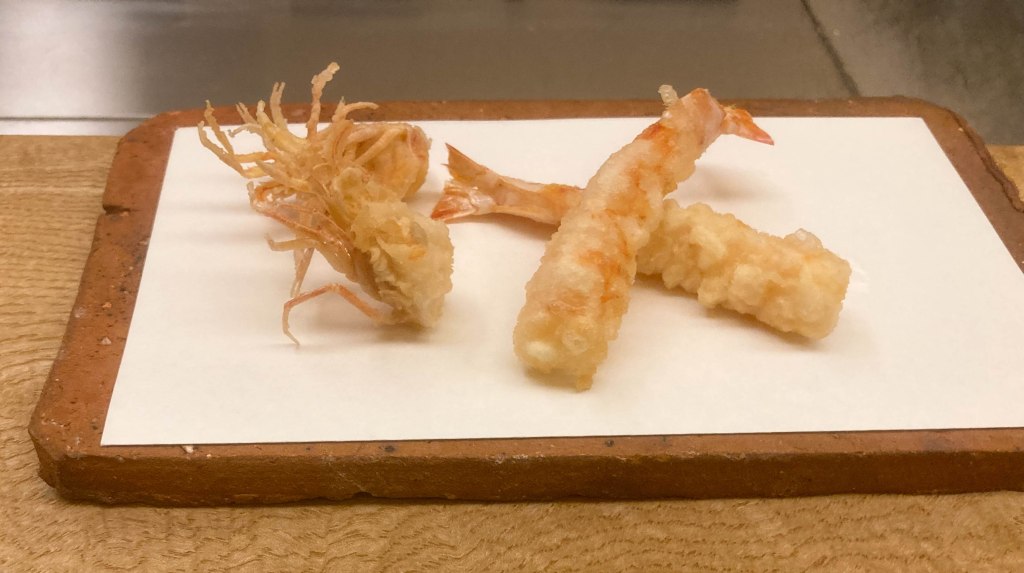
The shrimp was fried up and served with the head and legs still attached, which was very cool (and a bit creepy). Once you remove the head and legs, you can see the red and pink inside of the shrimp, and the smell wafts out from the inside. The tempura was nice and crispy, and the shrimp was perfectly chewy and flavorful. The textures worked very well together, and so did the mild flavors that came from the tempura batter and the shrimp.


Onion:

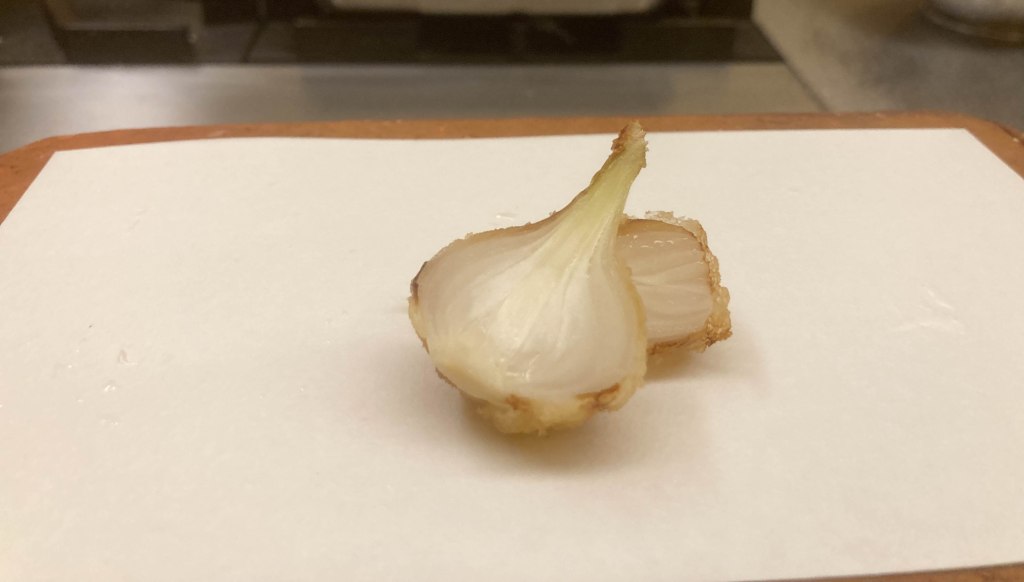
The onions that were used were very petite, almost like babies, which allowed for a better onion-to-tempura ratio. The tempura was crispy, and the onion had great flavor. The layers of the onion separated upon biting it, allowing more flavor to burst inside your mouth. The onion paired very well with the saltiness and acidity of the lemon and soy sauce that accompanied it.

Taro: 

The taro was freshly cut right in front of us, then battered and fried into perfect tempura discs. The taro had a nutty and earthy flavor to it, like a potato, and held its shape very well during frying. The tempura was crispy on the outside and warm on the inside. The ratio of tempura to taro was perfect, which allowed the delicate flavors of the taro to stand out and not be masked by the tempura.


Sweet potato:

The chef peeled and cut the sweet potato into discs, then battered, fried, and served them to us. The tempura on the outside was crispy, but the sweet potato on the inside was soft and smooth, making for a great contrast in textures. The sweetness that came from the sweet potato and the acidity and saltiness of the soy sauce made for a unique and surprisingly tasty combination.


White fish: 

The chef cut, battered, and fried the fish, then served it to us as our final tempura dish of the night. The fish smelled amazing, and the tempura was so crispy. Biting into it, you feel the crunch of the tempura, then the soft, tender, pillowy texture of the fish. The combination of crispy and soft adds so much depth to the dish. The tempura fish almost tasted like a Japanese version of fish and chips, but when you add the lemon and soy sauce, it makes the tempura feel so much more fancy and elegant.


Sashimi: 

Sashimi is a staple in kaiseki meals and is served just after finishing the tempura dishes. The sashimi was fresh and very delicious, pairing very well with lemon and soy sauce. Even though Enyuan Kobayashi doesn’t specialize in sashimi, the chef is still very skilled at making it.


Veal: 

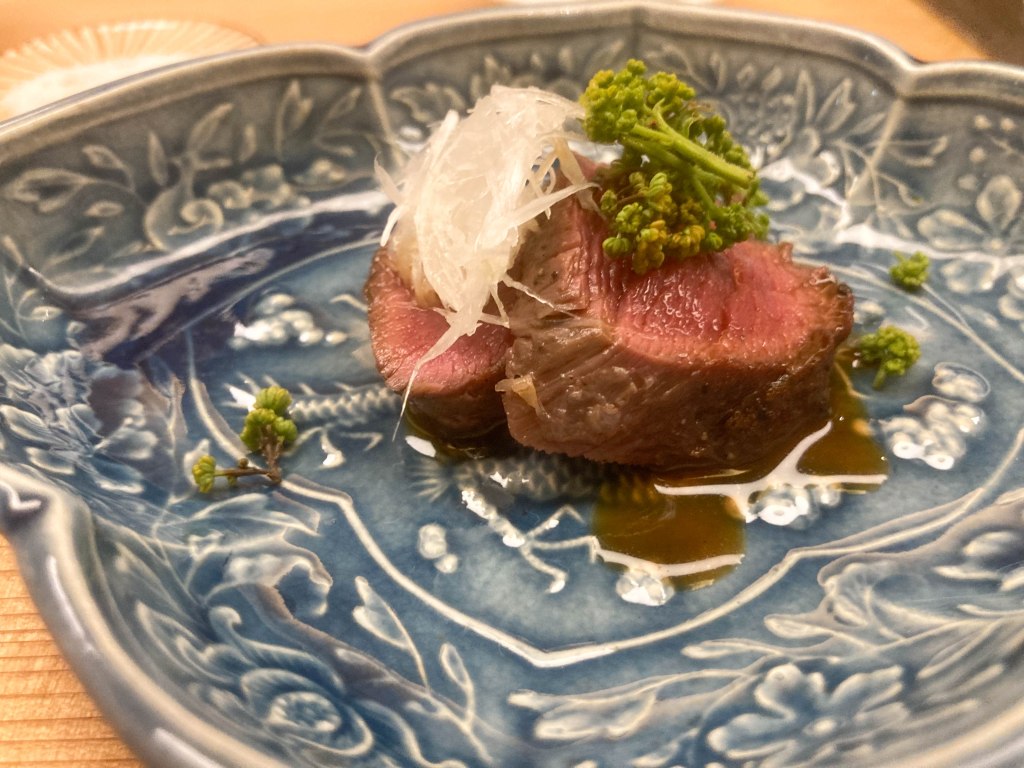
The final dish of the night was veal, served with daikon radish and accompanied by lemon, salt, and soy sauce. The veal was cooked to a perfect medium rare and bursting with juices and flavor. The daikon complimented the very meaty veal with hints of earthiness and freshness. Overall, Enyuan Kobayashi lives up to the hype and deserves their Michelin star for their professional quality of food. If you ever visit Kyoto, Enyuan Kobayashi should definitely be on your bucket list.

Ristorante Local

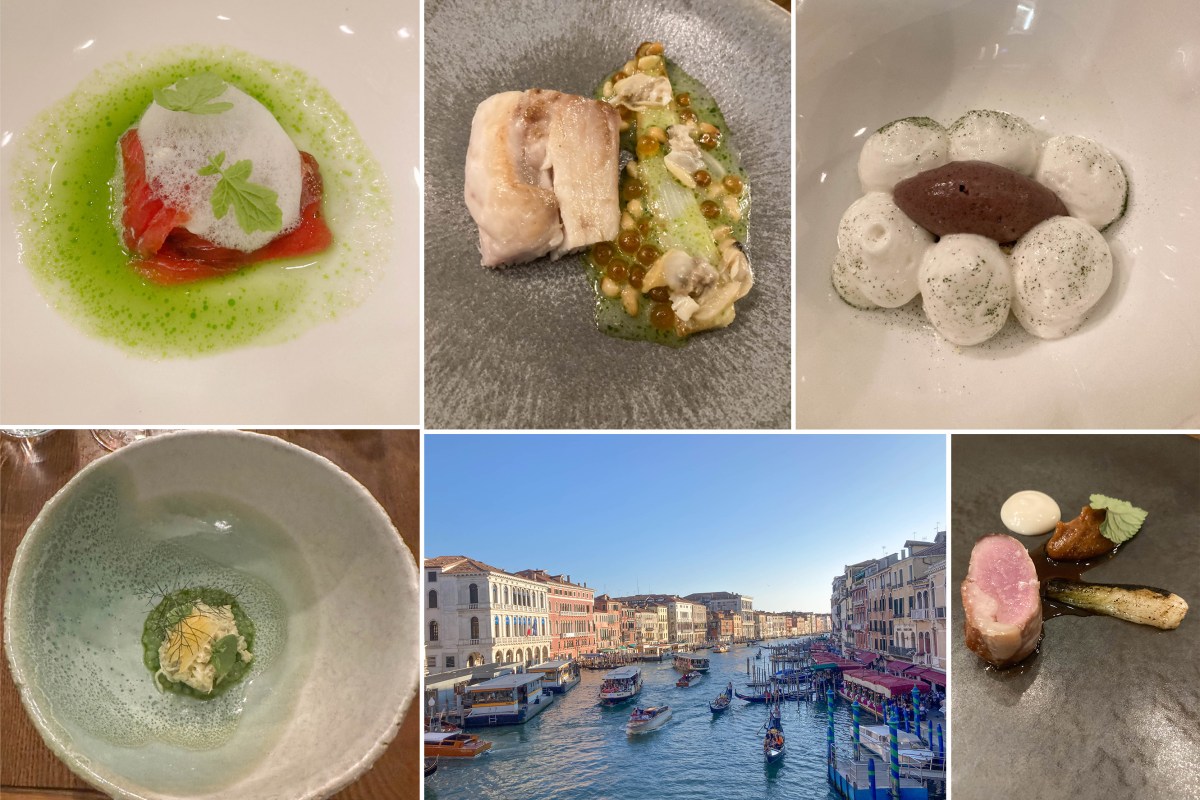
Ristorante Local is a Michelin-starred restaurant located along the quaint streets of Venice, Italy. Situated among the canals, Local sits in one of the most unique locations in the world. Local opened in 2015 and serves New Venetian cuisine under the executive chef, Salvatore Sodano. In 2022, just 7 years after opening, they were awarded their first Michelin star. The restaurant boasts very unique interior design, with an open kitchen, which guests can look into. In addition, some of the glassware is Murano glass, from the island of Murano, which is just a few miles north of Venice. Ristorante Local lives up to its name, as ingredients are locally sourced, and made into gourmet dishes using local techniques and traditions. 
After walking through the beautiful streets, and over the canals of Venice, you will arrive at Ristorante Local, where you will be greeted by the hostess, who will take you to your table. The table we were given was in the back of the restaurant, right next to the dry aging refrigerator, which was full of gigantic tuna, lamb, and many other assortments of meat. Above the dry ager, there were shelves of fermenting vegetables, in jars, which was very unique decor. 

Once we were seated, we were given the option between the 7 and 9 course dinner. After looking at the menu, we couldn’t resist choosing the 9 courses. Soon after ordering, the first course arrived from the kitchen. 

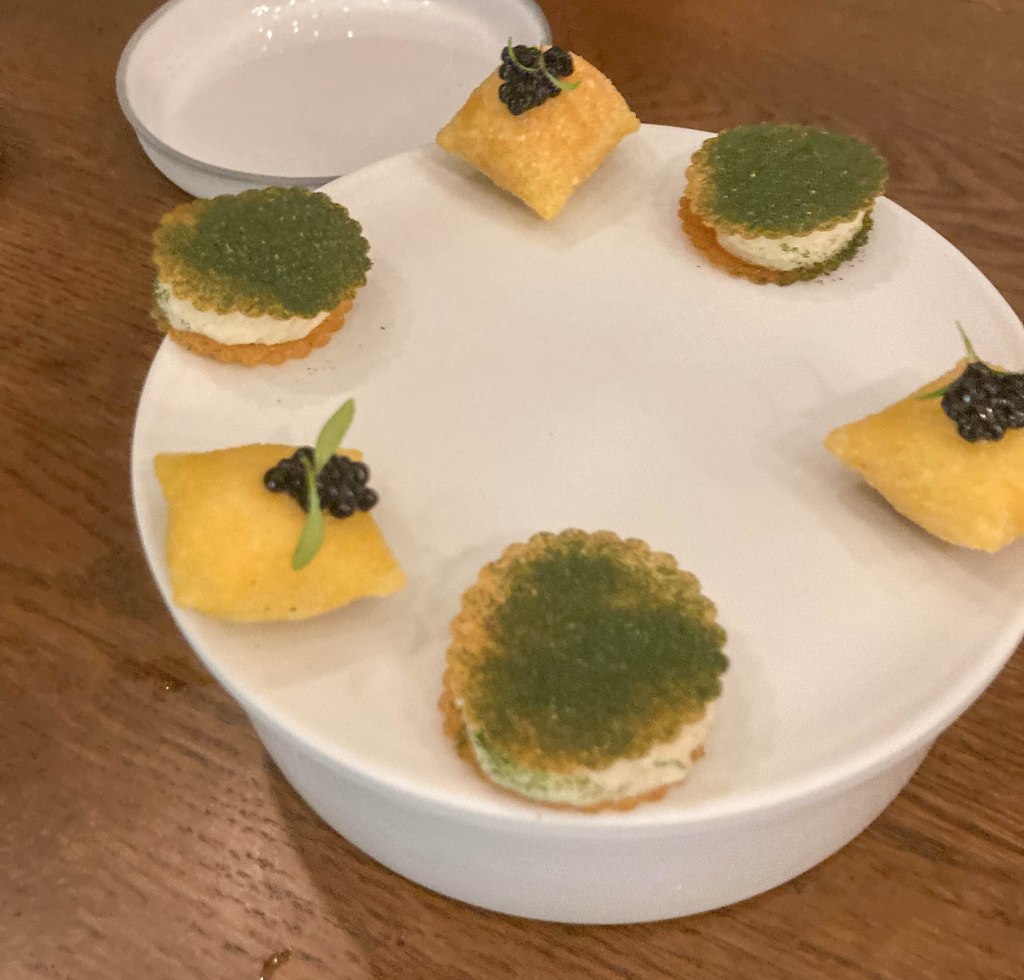
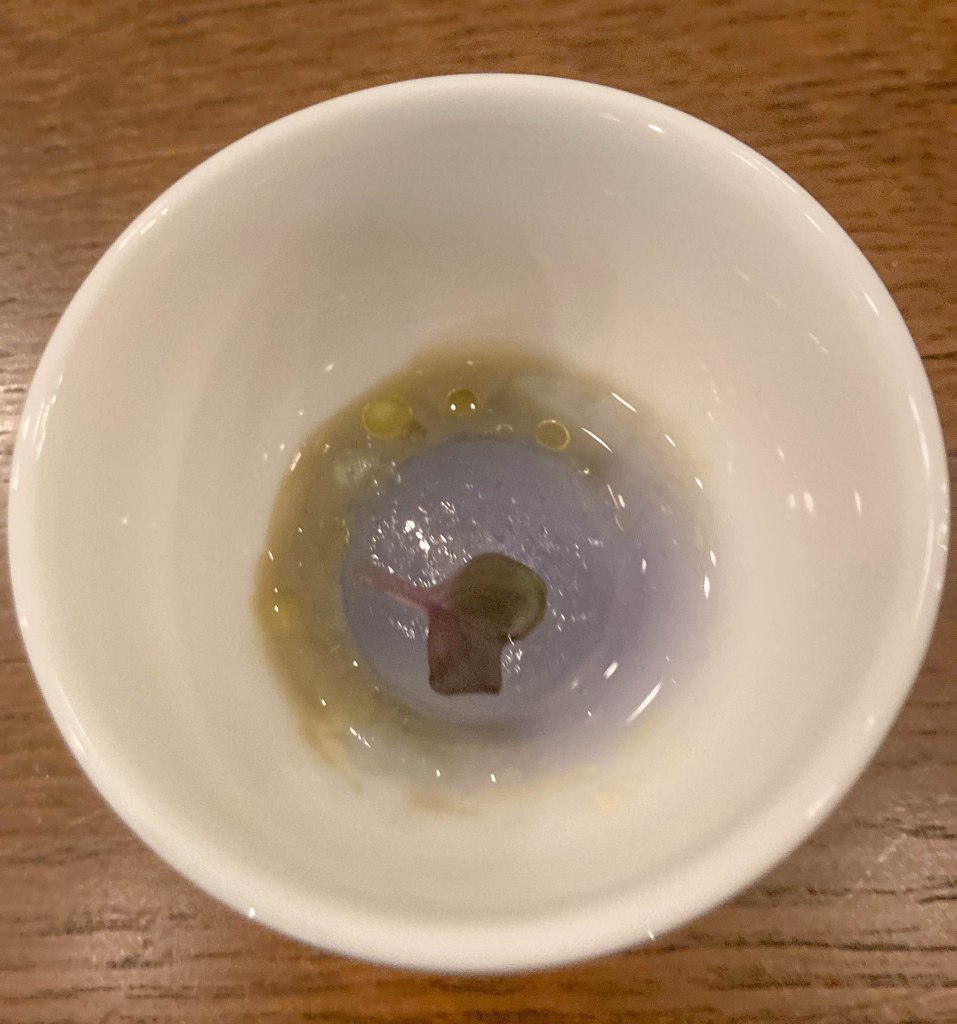
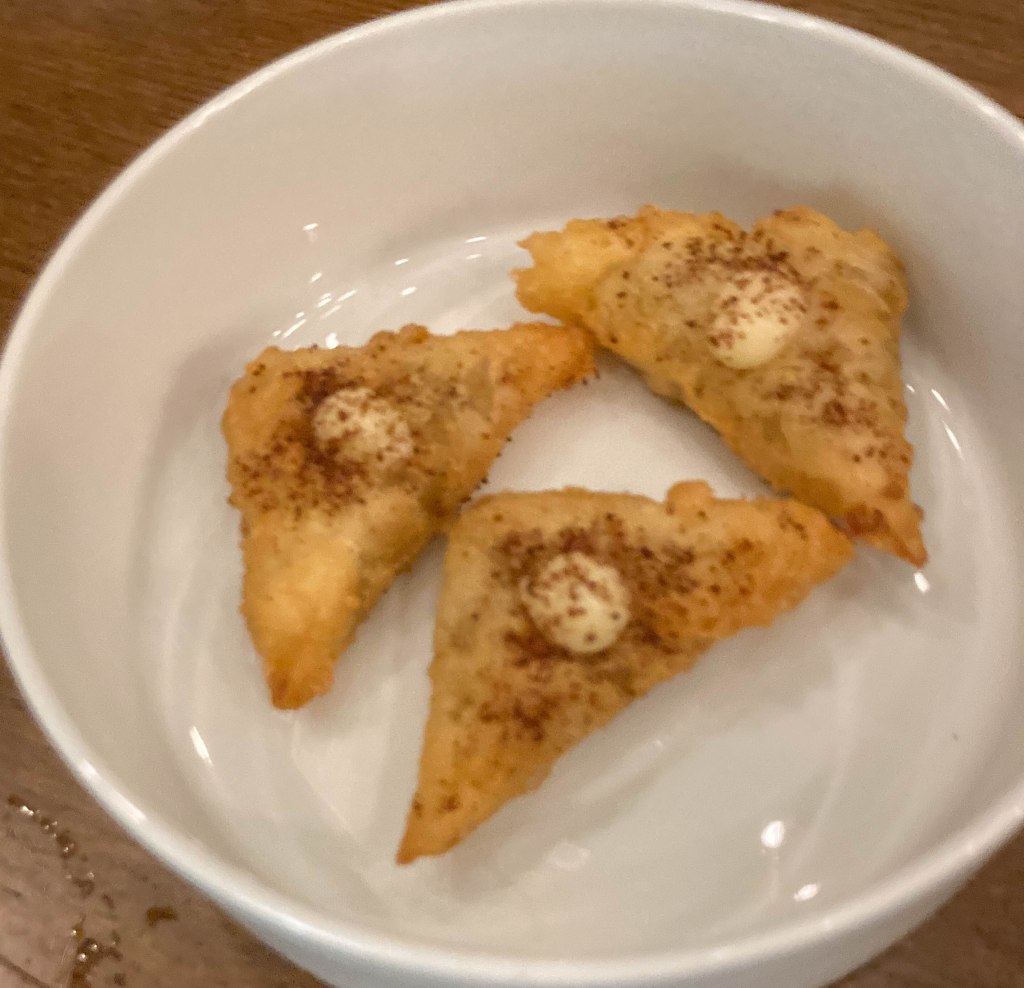
For the first course, we were served cicchetti, which are small amuse-bouche-sized portions of food, which are served with aperitifs, to avoid drinking on an empty stomach. We were not told exactly what was in them, because the chefs rotate between options based on what is fresh that day. The first cicchetti was a bright yellow square with a type of fish with caviar on top. It tasted very good, and the caviar on top added a nice saltiness to the bite. The second cicchetti was a thin green cracker filled with cheese filling. The cracker was thin but still crispy, and the cheese filling was smooth and cold. The third cicchetti was triangles that were reminiscent of Indian samosas. Although we were unclear what was in them, they were very warm and delicious and were filled with delicious spices. The final cicchetti was a gelatinous blue orb. It had an ocean-like smell and tasted like seaweed and fish. It was very savory, salty, and fresh, which was a great way to end the course. Overall, the cicchetti was a very unique and delicious start to the evening and gave us a teaser of the meal ahead.


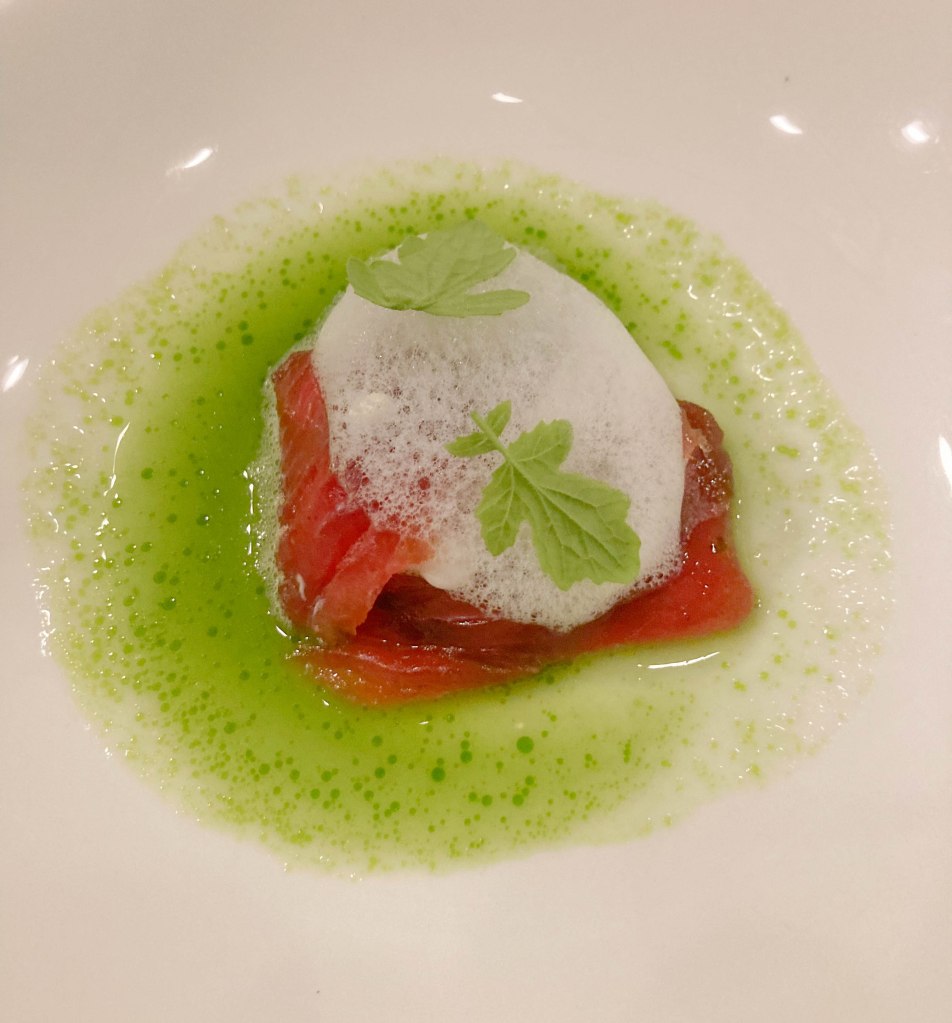
For the second course, we were served tuna, cucumber, and nervetti. Nervetti is a cartilaginous part of a calves leg and is a traditional staple in Venetian cuisine. The tuna was freshly caught, dry-aged, and had a great flavor that wasn’t too fishy. The cucumber, which was made into the green sauce, was fresh and fragrant, Pairing very well with the meaty tuna, and the nervetti. This was a delicious, super fresh, and well thought out dish with flavors that complement each other brilliantly.


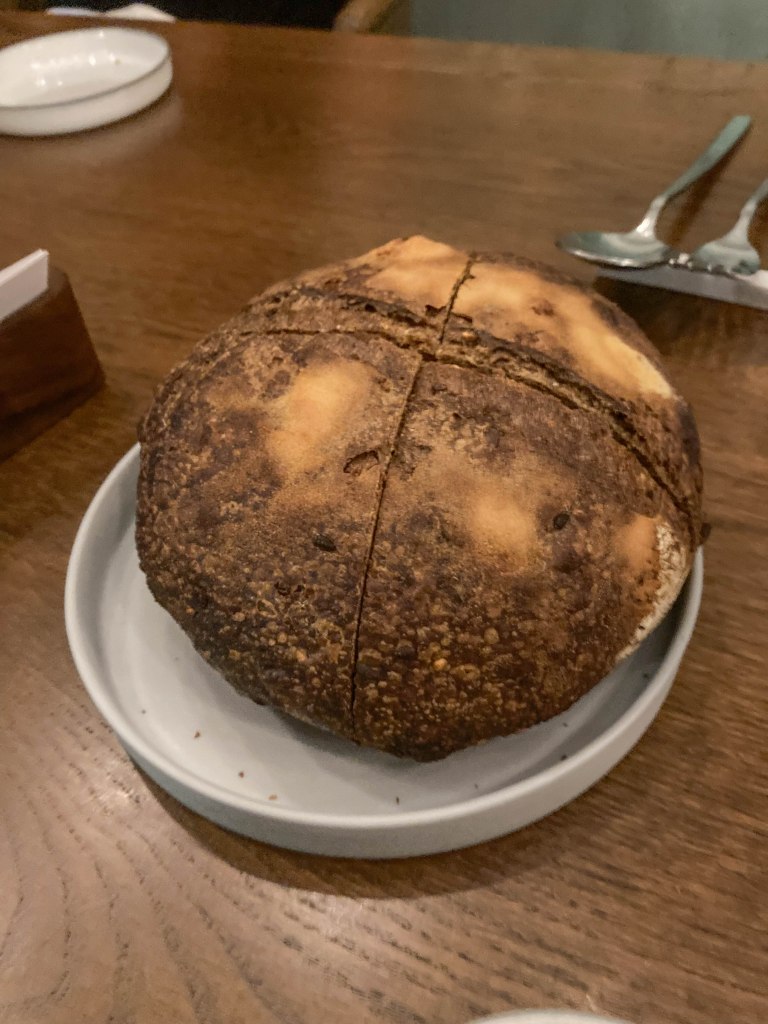
The third course of the night was bread and olive oil. The bread was fresh out of the oven and still bursting with steam. The bread was sourdough, but also had rye and spelt flour in it. The rye and spelt gave the bread a slight nuttiness, which was really unique. Even though the bread was delicious, the star of the show was the olive oil. Fresh, authentic olive oil from the Tuscan countryside. The oil was extremely high quality and had an amazing flavor that is so different from olive oil at a grocery store. Pairing the bread and olive oil created the perfect combination of warm, nutty, and salty flavors. Overall this was an amazing course and made me realize how amazing olive oil can be, especially with good bread.


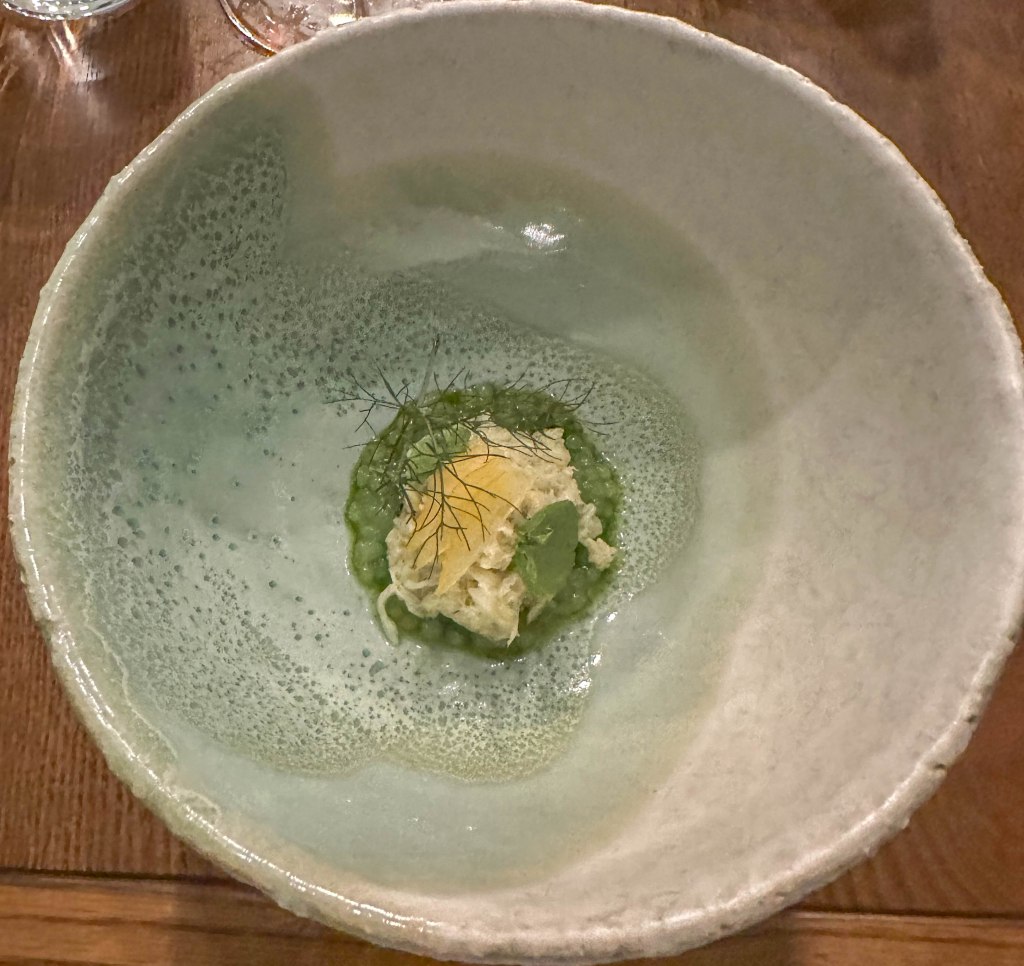
For the fourth course, we were served fresh blue crab. Blue crab is an invasive species to the Adriatic Sea, off the coast of Venice, and therefore is eaten in abundance. The crab was prepared very simply, with only a few ingredients served with it. The crab was super moist and tender and had so much salty flavor. There were some green pearls on the bottom, which added some nice freshness to the dish. The crab was seasoned just enough to bring out the subtle flavors, but not be overpowering, which was a great balance. Overall this was a great dish, that was simply yet very elegant and delicious. 


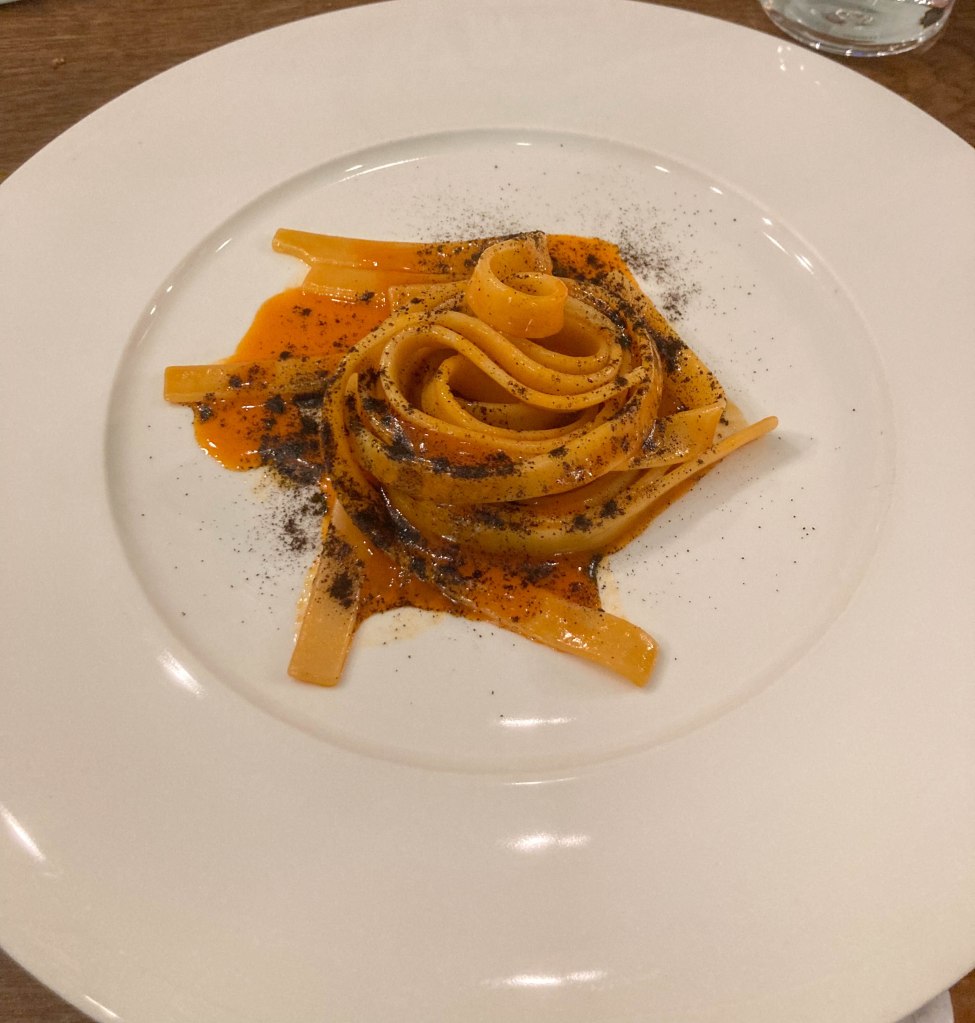
For the fifth course, we were served pelusiello (the pasta), with red pepper and black lemon. The pasta was arranged in a pinwheel shape, which was very unique. As we expected, the pasta was perfectly al dente, with a great bite and chew. The red pepper and black lemon sauce has a nice acidity, whilst also having hints of sweetness, which paired very well with the pasta. The sauce was very strong, but not overpowering, because of the perfect quantity of pasta on the plate, which created a nice balance of flavors. Overall, this was a very simple dish with simple ingredients, but still had a wonderful taste and was perfectly executed by the chef. 


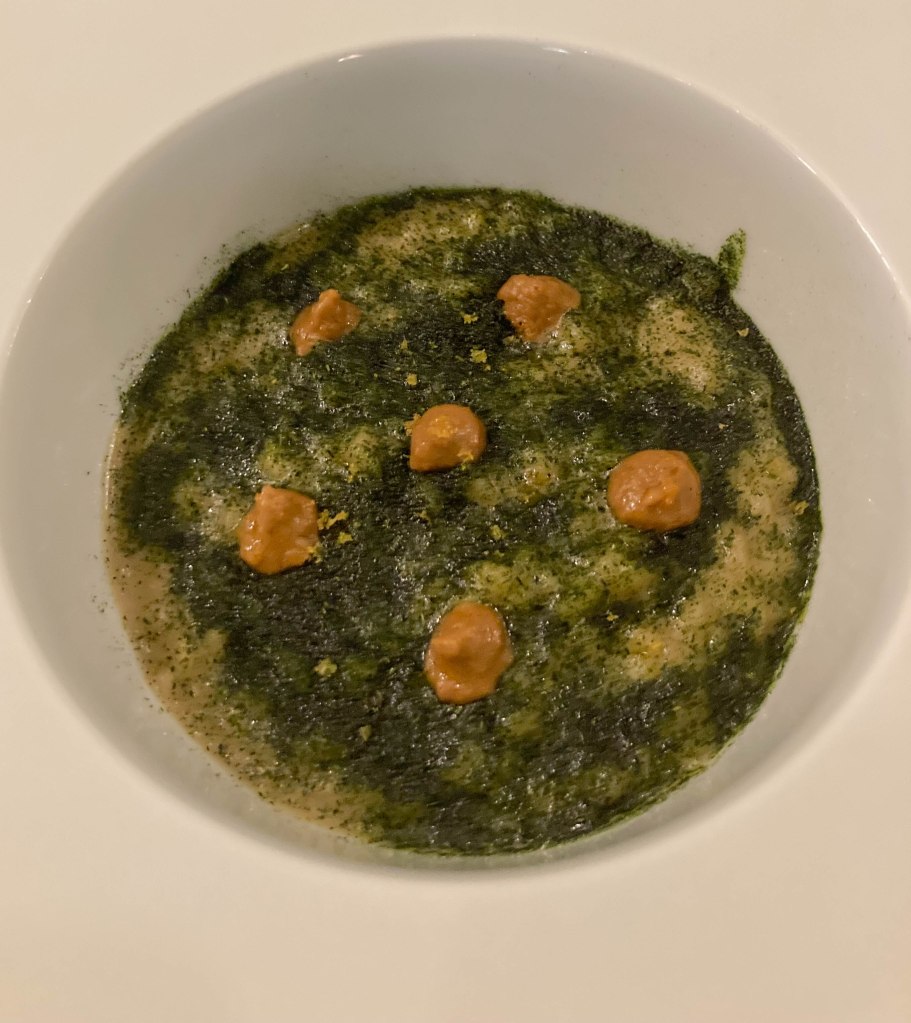
For the sixth course, we were served a seafood risotto, made of mantis shrimp and seaweed. The dish was very elegantly plated, with six mounds of sea urchin on top. The risotto was perfectly creamy and had a great seafood flavor. The seaweed and spices added a great peppery and salty flavor to the dish. the sea urchin was soft and delicate, with a nice meaty flavor. All of the seafood had many fo the same types of flavors, which helped them create a very cohesive dish. Overall this was a delicous course that had very unique flavors that worked together perfectly. 


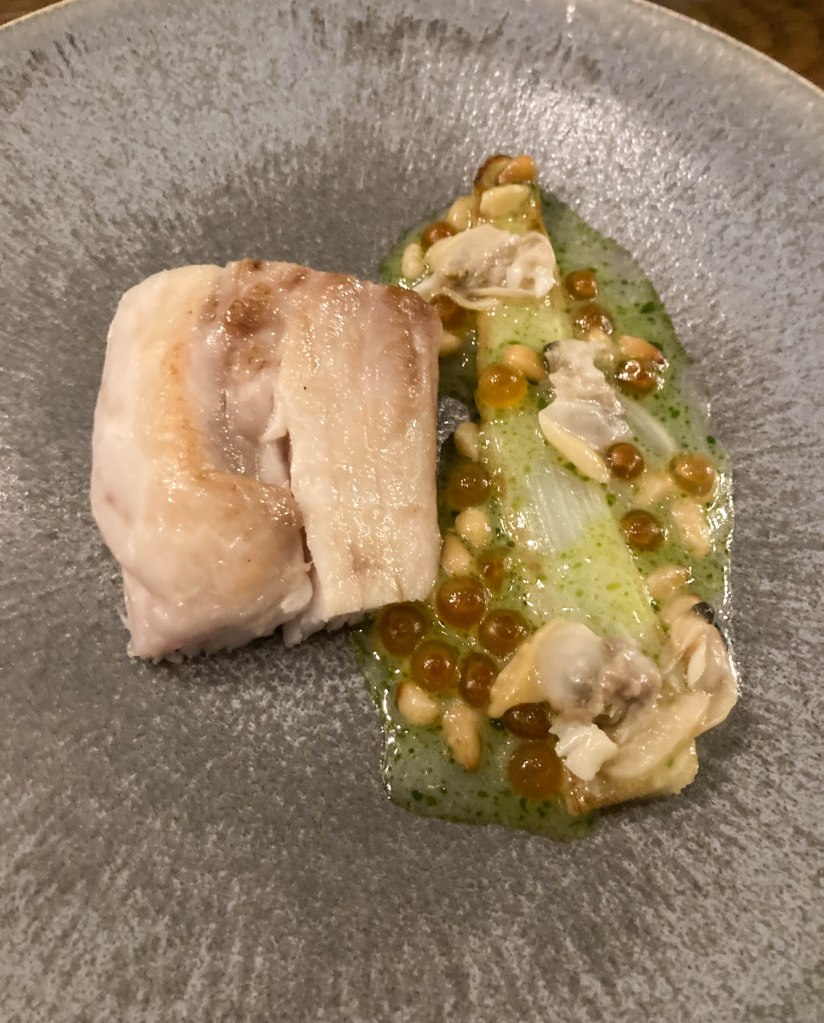
For the 7th course, we were served the catch of the day, which was a type white fish (it was not specified which type), served with a green sauce. The fish was so tender and flavorful, and the inside was so juicy that it would flake apart every time you tried to eat it. The green sauce was fresh and complimented the meatiness of the fish very well. Overall this was a very delicious dish using very simple ingredients, yet was prepared very professionally and tasted amazing. 


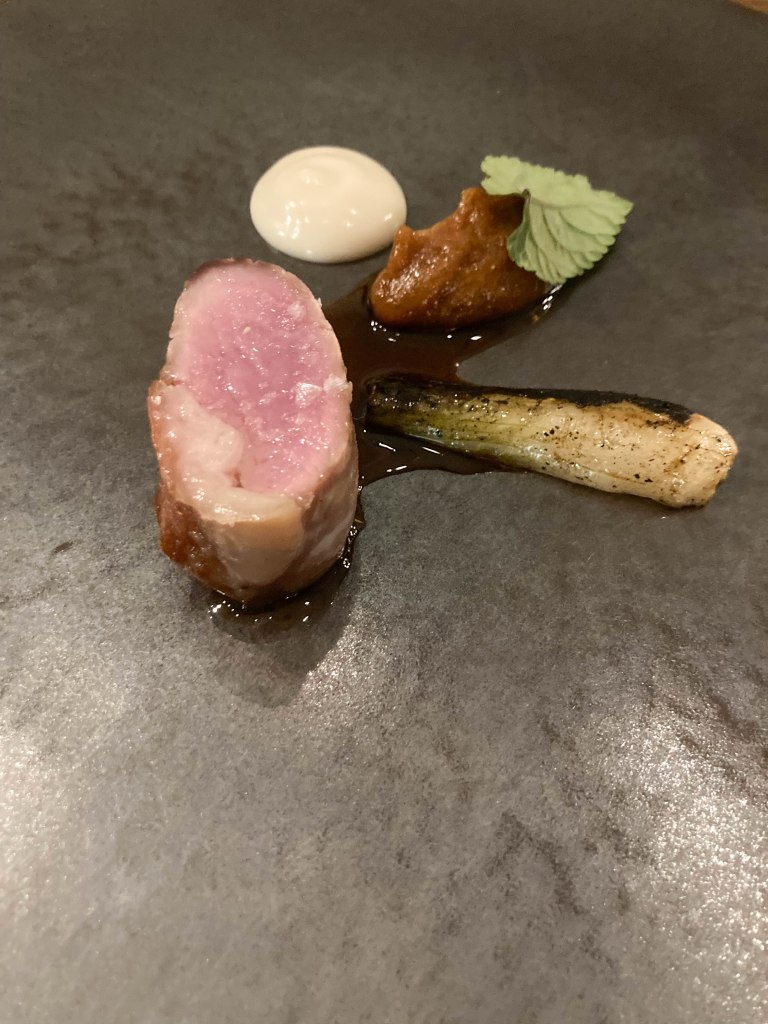
For the 8th course, we were served lamb with onion, which was accompanied by tofu, and medlars sauces. The lamb was perfectly cooked and was tender and juicy. The ratio of fat to meat was perfect and provided a very balanced bite every time. The onion had a great crunch and paired perfectly with soft and tender lamb. Both of the sauces were delicious and complimented the meaty flavors of the lamb. Overall, the flavors and textures in this dish were extraordinary, making this by far my favorite dish of the evening. 


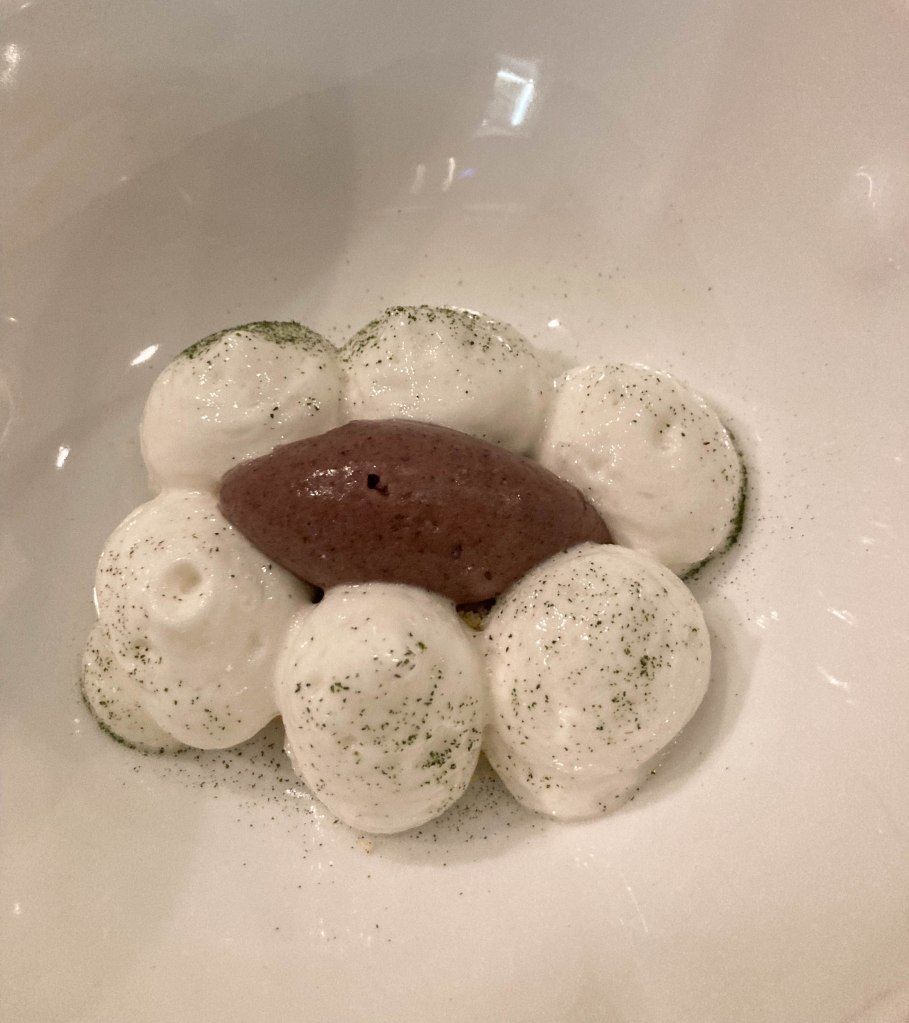
The 9th and final course was dessert, which was Venere rice, oxidized banana, and amaro. This dessert was unlike any other I had tasted before because the banana had been oxidized. When eating everything all together it almost tasted like a mixture between a banana split, and freeze-dried banana. It was very airy and smooth, and the flavors burst in your mouth. It is very hard to give it justice by just explaining it, you must go and try it for yourself. This was one of the most unique desserts I have ever had and tasted delicious as well. Ristorante Local thoroughly impressed us with the quality and taste of the food, as well as excellent service, which made for a night that I will never forget. Ristorante Local is one of the finest restaurants in Venice, and should definitely be on your bucket list.

Aroma Review

Aroma is a Michelin-starred Italian restaurant, serving classic and refined Italian cuisine. Aroma is located on the top floor of the Palazzo Manfredi, a five-star luxury hotel in Rome, Italy. The executive chef, Giuseppe Di Iorio, has cooked at the restaurant since its founding in 2013. In 2015, just two years after opening, he helped the restaurant earn its first Michelin star. What separates Aroma from the 16 other Michelin-star restaurants in Rome is the view. Located less than 500 feet from the Roman Colosseum, Aroma has an unparalleled view that you cannot find anywhere else in the city. The tables are perfectly situated for everyone to have a view while they eat. In addition, because the restaurant is facing west towards the Colosseum, the sun perfectly sets behind it, adding to the already impressive view.

To get to the top floor of Palazzo Manfredi, you can either take the elevator, or there is a spiral staircase, that is adorned with pictures of famous people who have visited Aroma. Once at the top, the staff warmly greets you, and leads the way to your table on the terrace. There are five tasting menus to choose from at Aroma: Corinzio, Ionico, Dorico, Colle Oppio, and SmartMenu. When my family visited Aroma, we decided to do the Ionico, so that is the tasting menu that I will be talking about in this blog post.

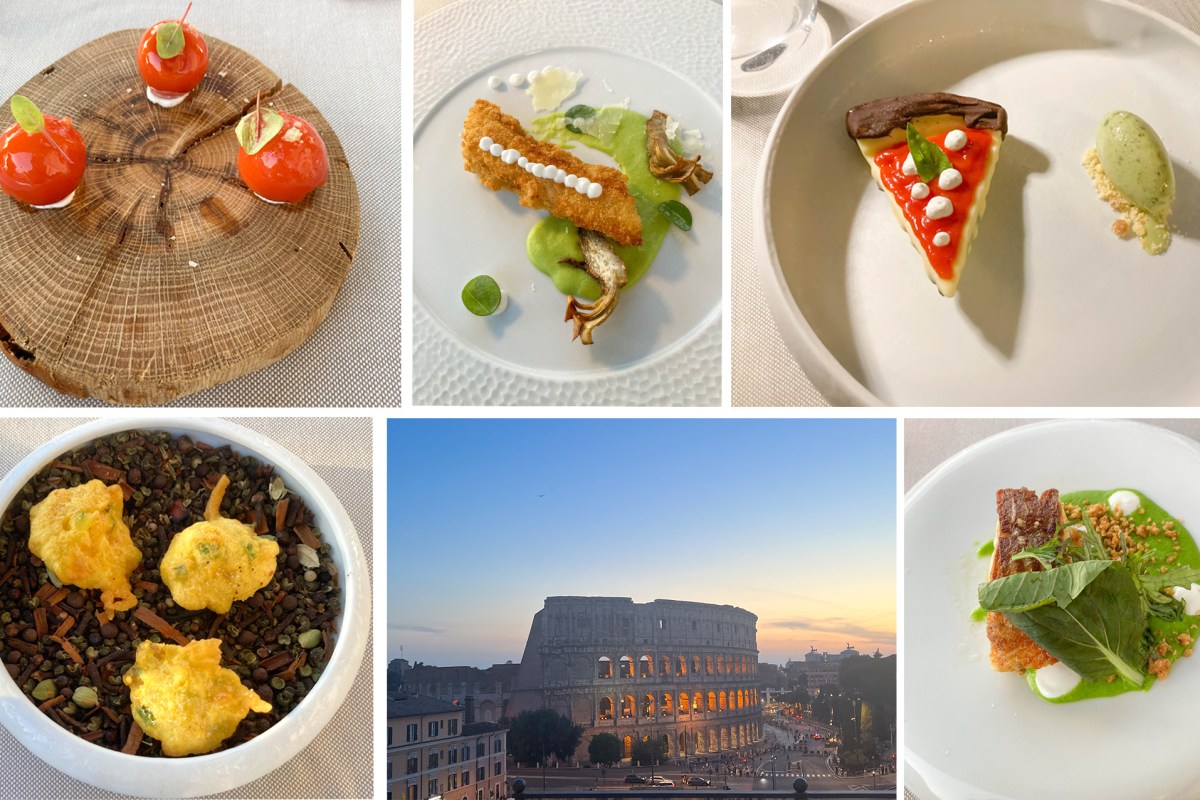
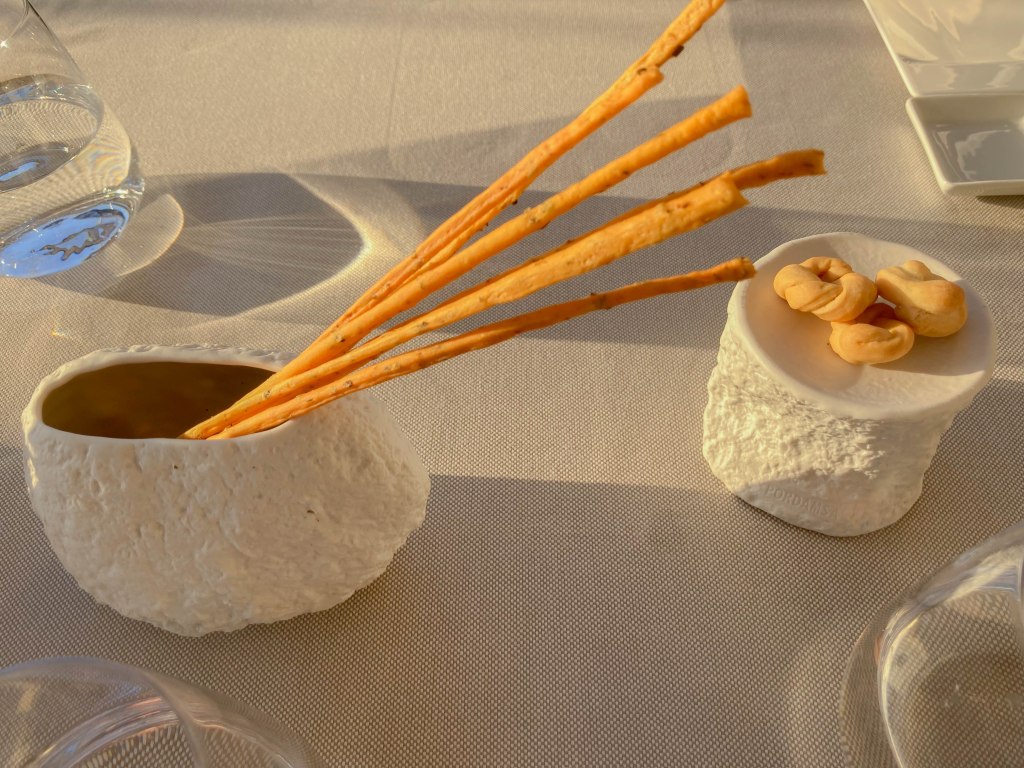
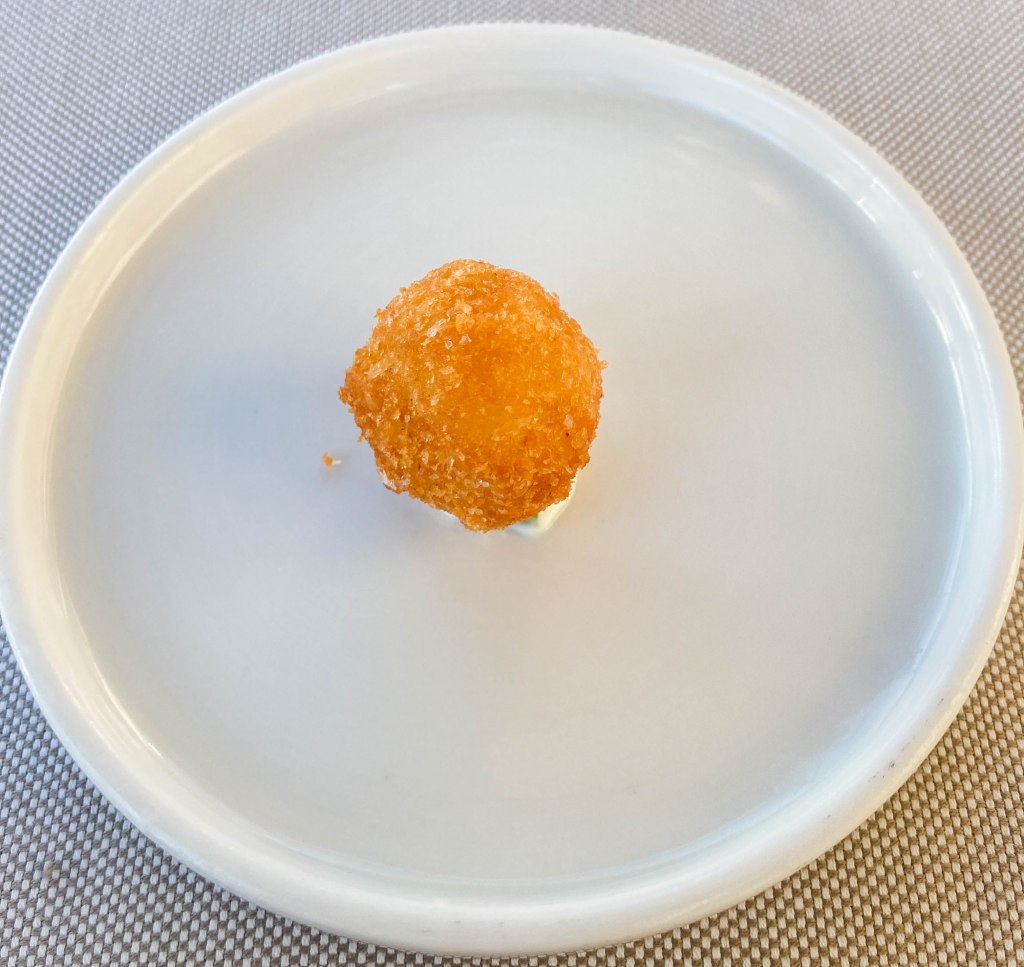
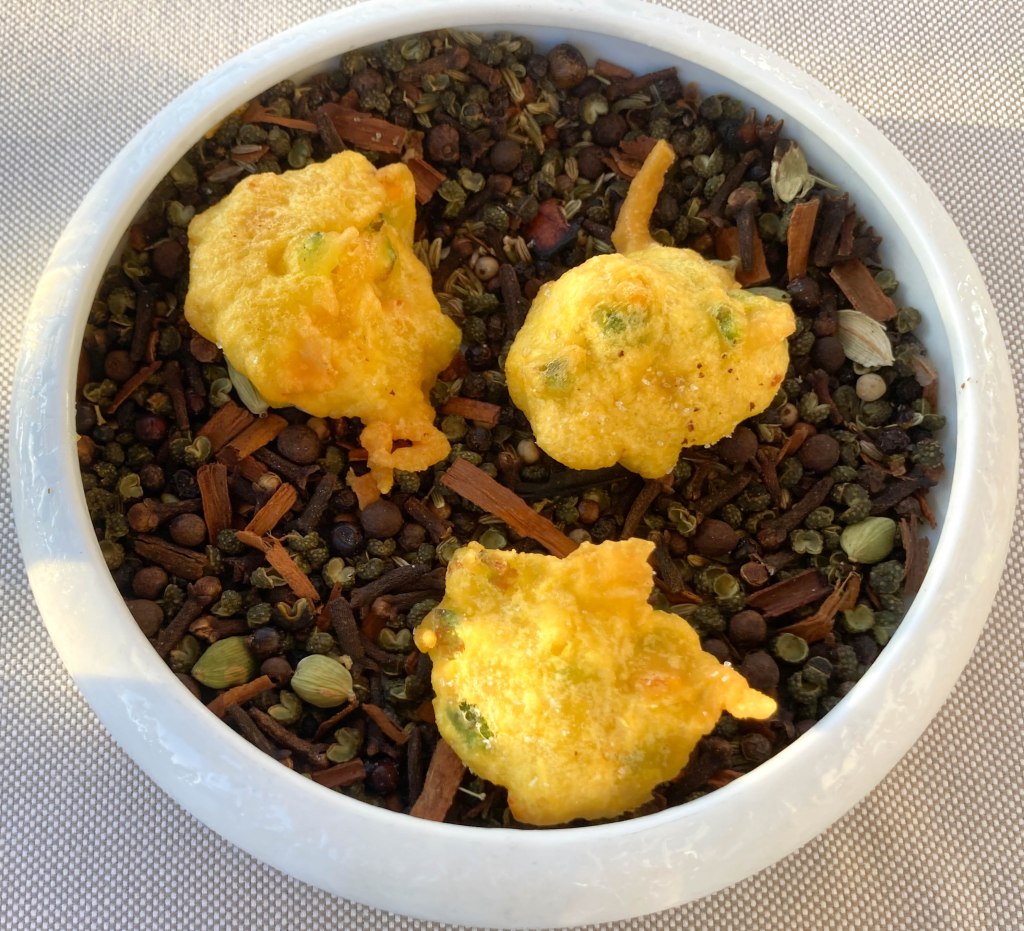
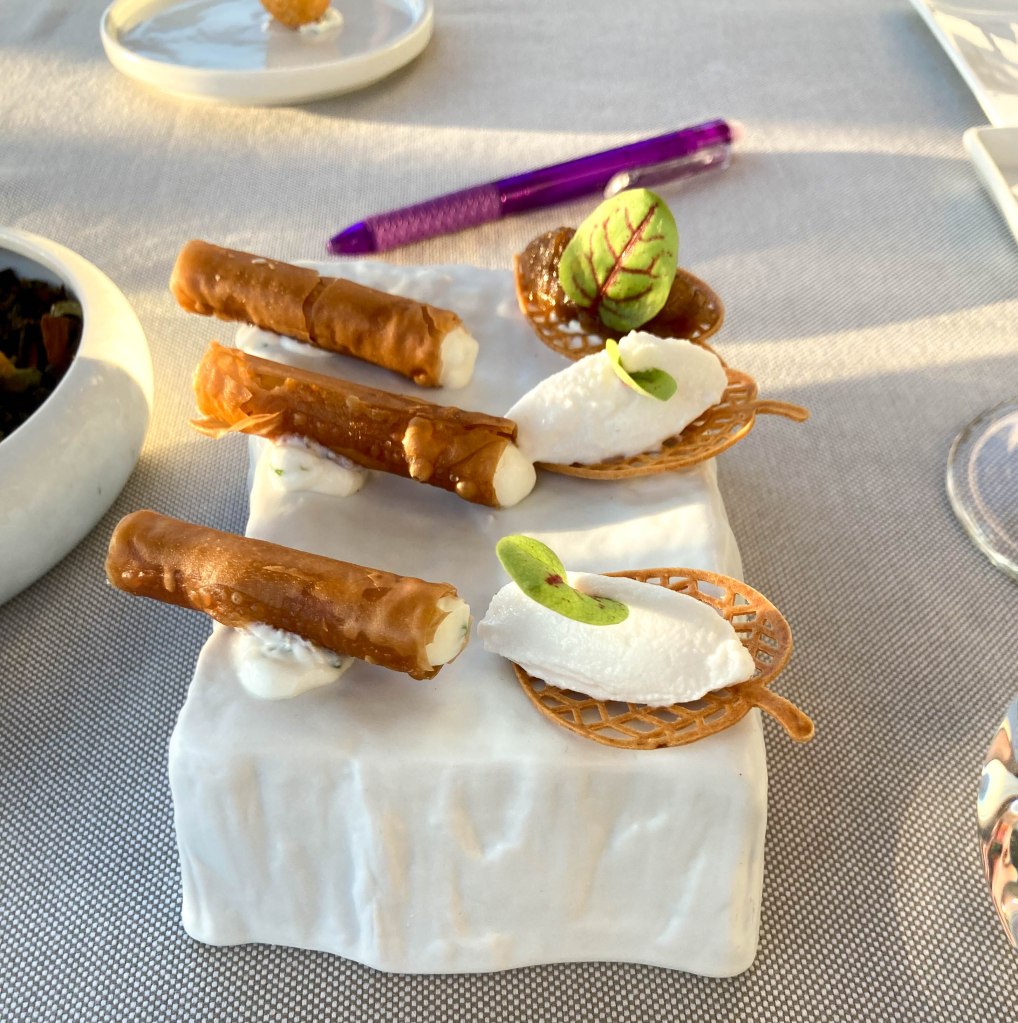
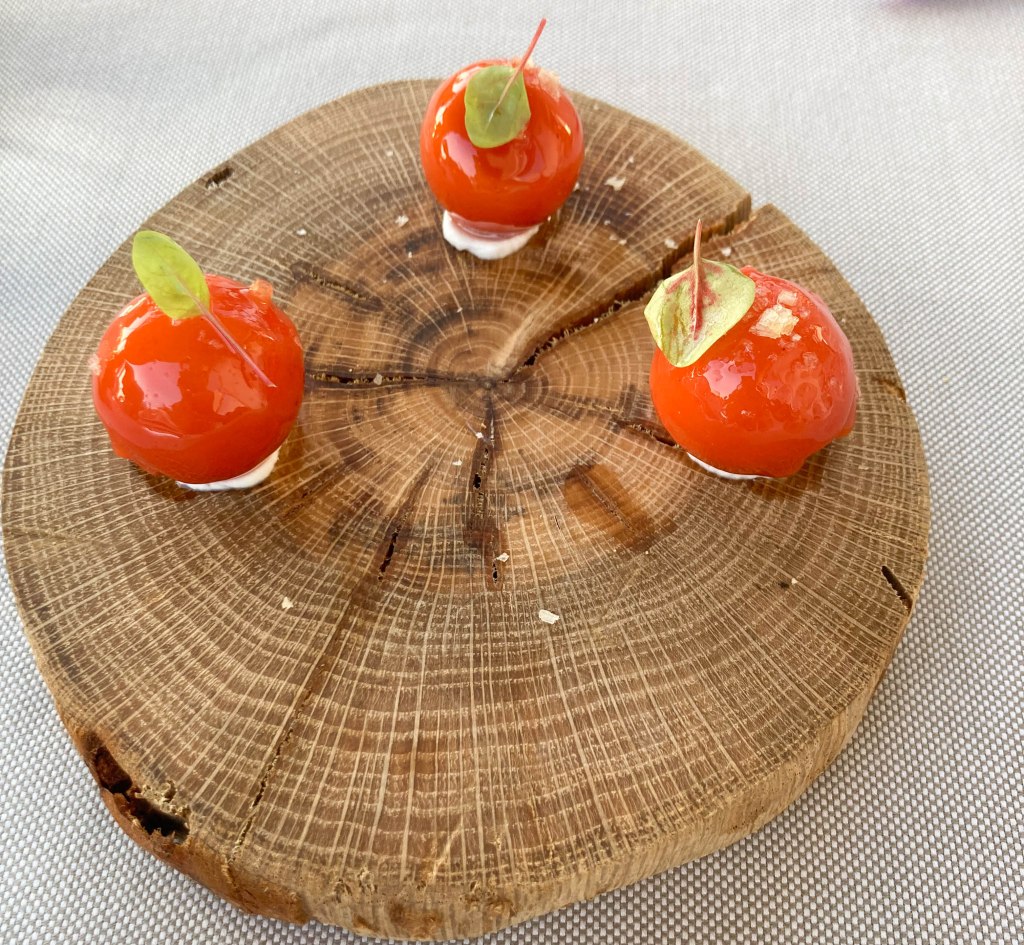
A few minutes after deciding on our tasting menu, the servers brought the amuse bouches to the table. There were seven unique amuse bouches, all beautifully plated and presented. The first amuse was a very thin breadstick with flaky salt and Italian seasonings. The breadstick was very thin and crispy, and the salt enhanced the Italian flavors from the seasonings. The second amuse was a mini braided cracker, shaped like a mini bread roll. The shape of the cracker was very unique and differentiated it from crackers you would buy at a store. The third amuse was a arancini, which is a Sicilian fried rice ball with mozzarella cheese. The outside was perfectly crispy, with a great breaded flavor, while the inside was warm and cheesy, and added perfectly contrasted the outside. There was also a white, yogurt and basil-based sauce on the bottom, which added some freshness and coldness. The fourth amuse-bouche was a pakora, which is an Indian-style fried batter and zucchini ball. The pakora was sitting on a bed of cinnamon sticks, cloves, nutmeg, and cardamom pods, which gave it a very autumn-like smell. The pakora with very moist and soft, and had a very earthy taste from the cloves and nutmeg. Even though it didn’t fit in with the theme of Italian cuisine, it still tasted amazing and was definitely worth putting on the menu. The fifth amuse was a fried pasty filled with a cheese-type filling, almost like a savory cannoli. The outside pastry had a very nice crunch and buttery flavor, while the inside filling was smooth and savory, providing wonderful contrast, and a perfect bite. The sixth amuse was a leaf-shaped cracker with cod foam on top. The leaf cracker had a great crunch and paired perfectly with the cod foam, which was cold and soft. The 7th, and my favorite amuse was cherry tomato stuffed with buffalo mozzarella. On the outside, it looked like a regular tomato, but when you bite into it, it was like an explosion of creaminess, which was delicious. 


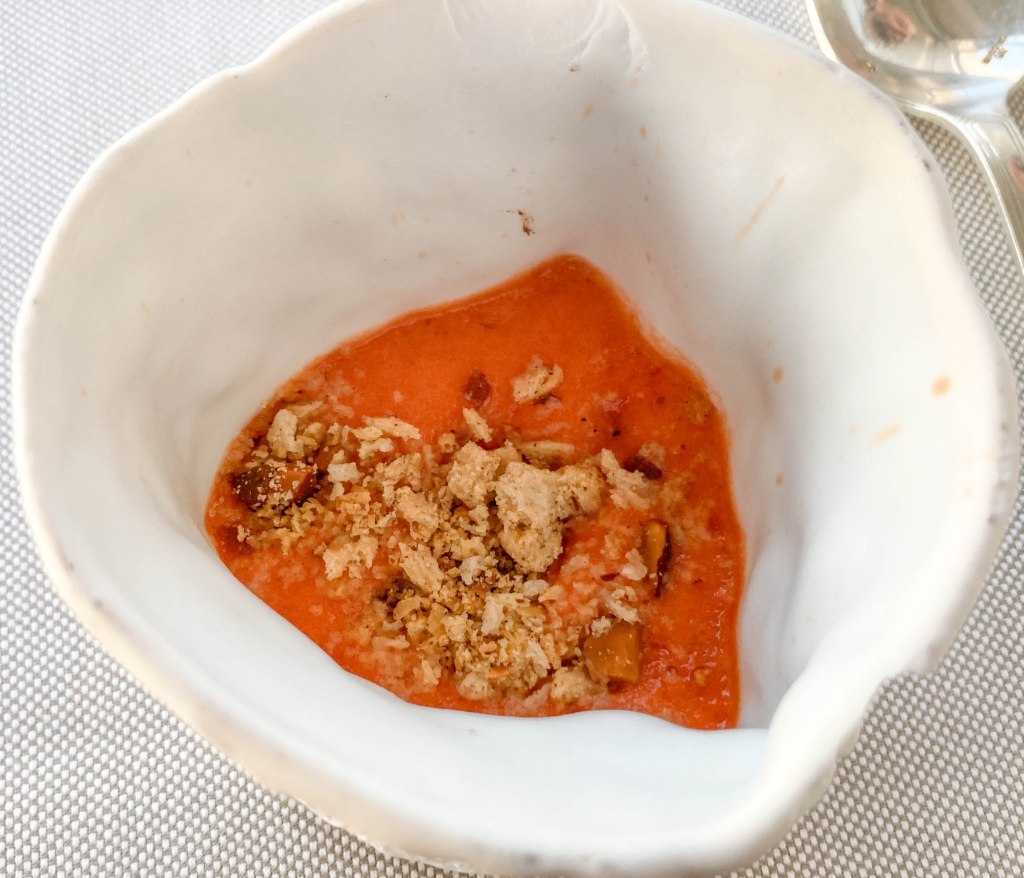
After the delicious amuse’s, the first course was brought out, which was  Marinated “scapece” char, velvety peas, and nut crumble. The dish was served in a very uniquely shaped bowl, which was very twisty. The scapece char was very smooth and was served at the perfect temperature, while the peas and nut crumble added a change of texture, and were crunchy. Overall this dish was perfectly balanced and had great texture and flavor. After finishing the first course, the servers whisked away our bowls, and soon after, our second course came.  


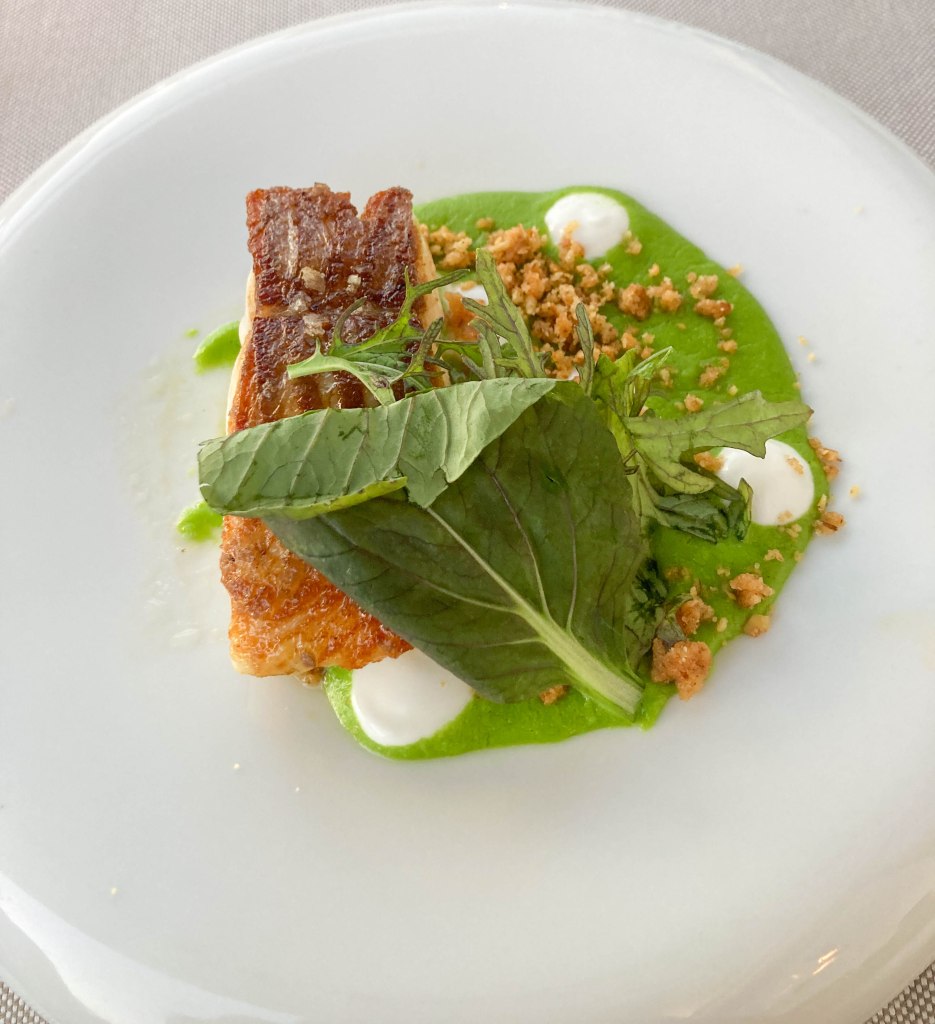
For the second course, there was Mullet stuffed with broad beans and pecorino cheese, all plated beautifully with green sauce and basil. The mullet was like butter, and melted in your mouth, while the skin was crispy and had a crisp crunch. The broad beans were excellent and added another layer of contrasting textures. One of my favorite parts of the dish was the sauce, which had a distinct basil flavor and was really fresh. This dish was plated very elegantly and tasted even better, with complex layers of flavors, and textures. 


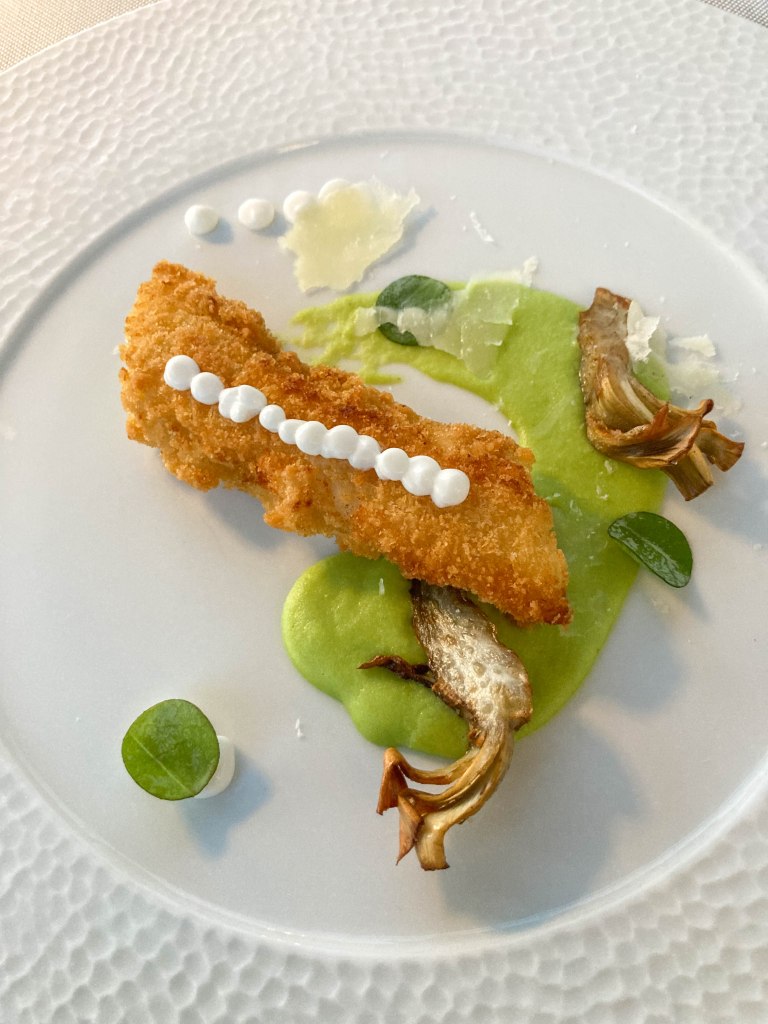
 For the third course we were served battered and fried sea bass, with fried artichokes, cheese, and basil sauce. The entire dish was plated with precision and looked very professional. The batter on the outside of the sea bass was crispy, while the inside was soft and warm. The basil sauce cut through the fried flavors in the dish, and added notes of earthy and freshness. The fried artichokes were crispy, and combined with the cheese and sauce, were an excellent combination. This dish was a contrast of fried and earthy flavors, but in the end was balanced perfectly, and made for one of the best dishes of the night. 


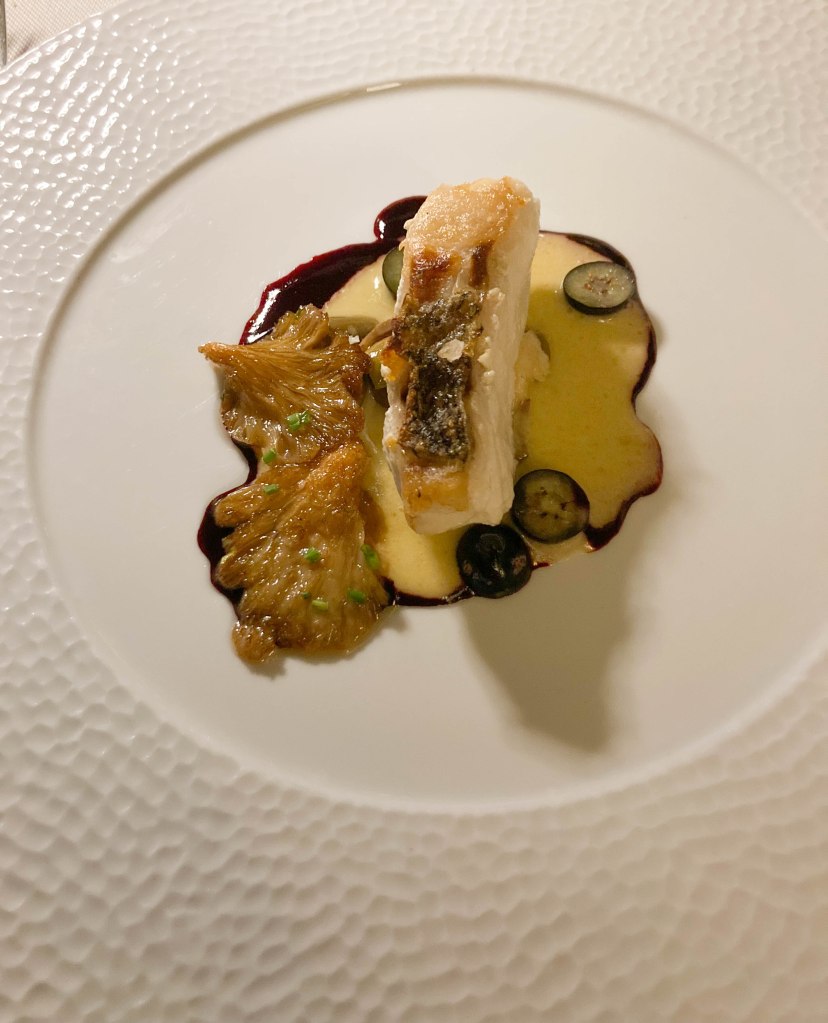
The fourth course was white fish (I could not find which type), with roasted artichokes, and a rich blueberry sauce. The fish was very tender and juicy and would be so soft and melt in your mouth. The artichokes added a bit of crunch, which added to the complexity of textures. The blueberry sauce was rich and tangy and combined well with the light and simple flavor of the fish. The fish was not seasoned a lot, which allowed the blueberry sauce to stand out, and exert its flavors across the dish.


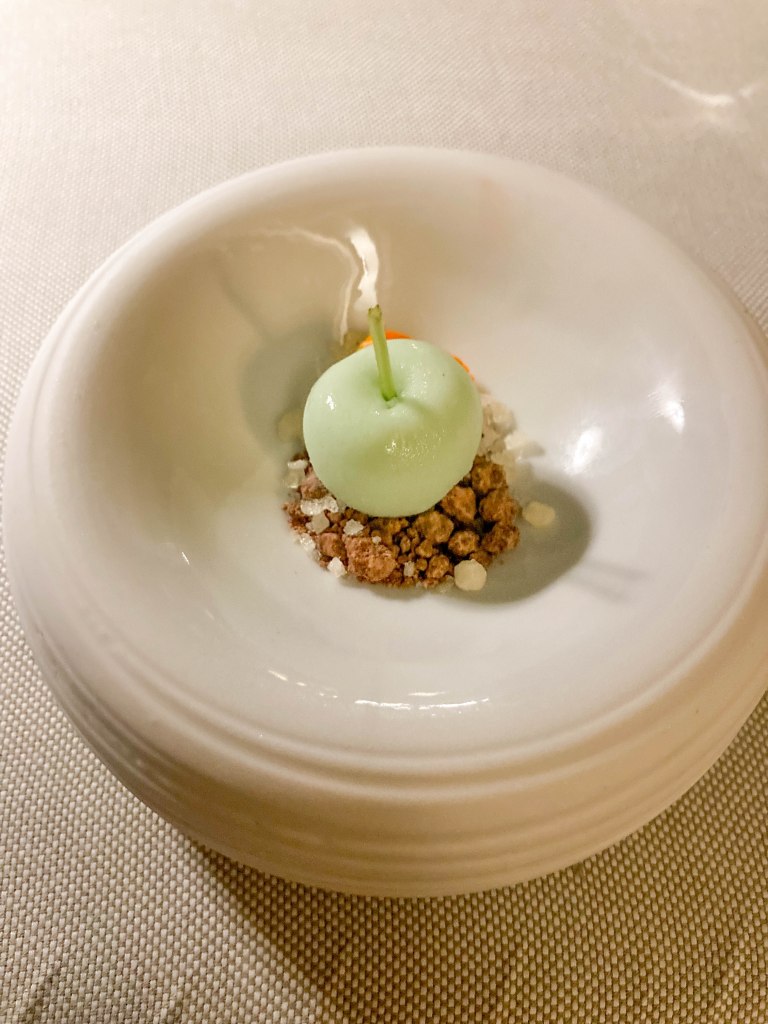
In between the fourth and fifth courses, there was a palette cleanser, which was sorbet in the shape of a green cherry. The sorbet was light and cold and cleansed the palette very nicely. It was very unique that the sorbet was shaped like a cherry, which shows the creativity and ingenuity of the chef. Underneath the imposter cherry was a bed of pop rocks. The pop rocks added a perfect crunch and made it very fun to eat. This was a very fun, yet also effective palette cleanser, that readied up for the final course.


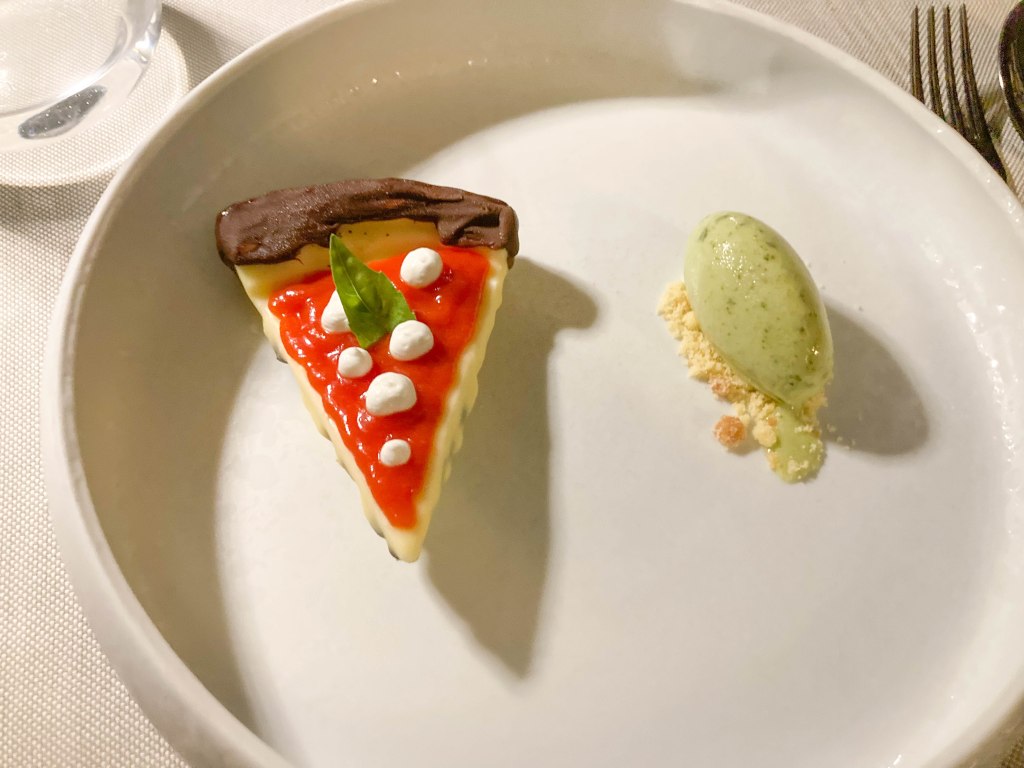
The last course of the day was dessert, which was white chocolate “pizza dough” with tomato jam “sauce”, some white chocolate “cheese” dollops, and a chocolate crust, which was served with basil sorbet. The white chocolate and tomato jam paired well, and added a lot of sweetness and texture. The Tomato jam was sweet and had a tomato essence that was very good, but not too overpowering. The basil sorbet was also very cold and smooth and had a very nice basil flavor. It was a very nice contrast to the “pizza”, because it wasn’t too sweet, and instead had a somewhat savory taste from the basil. I really liked how the dessert looked like a pizza, but instead was sweet, which was a very creative move by the chef. Aroma is truly one of the finest restaurants in Rome, and should definitely be on your bucket list, not only for the food, but also for the spectacular views and memories that you will never forget.

Le Jules Verne Review

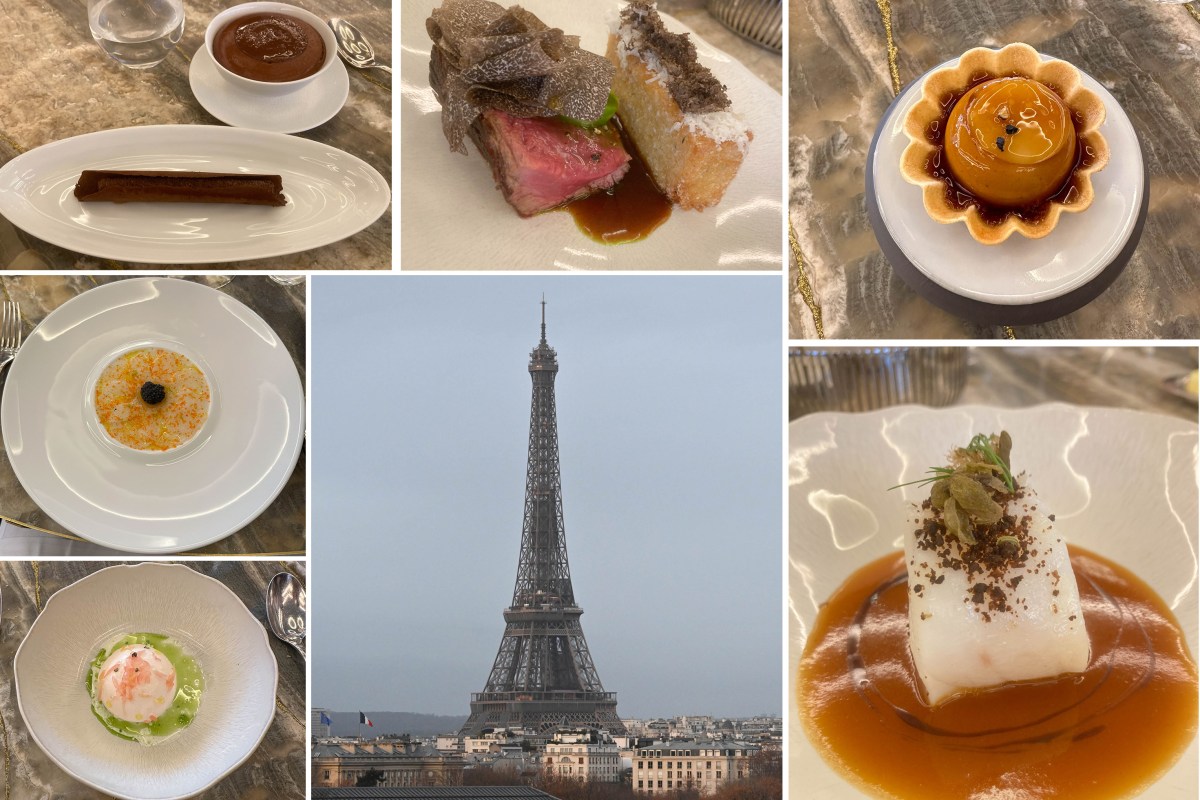
Of all the Michelin-starred restaurants in Paris, Le Jules Verne is one of the most unique and picturesque. Le Jules Verne is located on the second floor of the Eiffel Tower, 125 meters above the city streets. The restaurant offers unobstructed sweeping views of the city, and famous sites like Notre Dame, Montmartre, and the Musse d’Orsay. In order to access Le Jules Verne, you will ride in a private elevator up to the restaurant, where you will be led to your table. The interior is very modern, with floor-to-ceiling windows allowing you to see the view from wherever you sit. 

Frédéric Anton is the head chef at Le Jules Verne and holds three Michelin stars. Anton is a master of Gastronomic french cuisine, focusing on the intricate details of every dish. Like the chefs, the waitresses and hostesses at Le Jules Verne are very attentive and focused. Every time your water glass isn’t full, they will come over and top it off. In addition, if you ever need to visit the restroom, you will be escorted by the designated staff. 

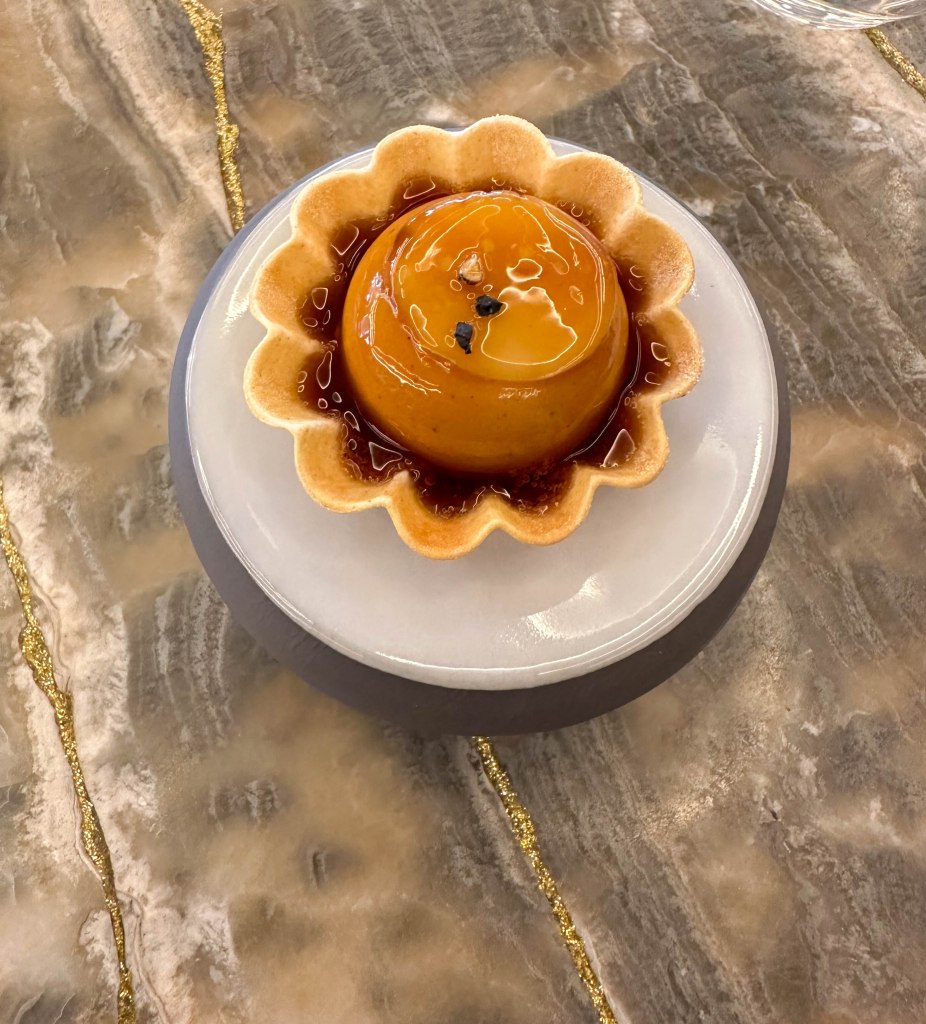
As you get settled in, the staff will bring the menu, detailing the 5 or 7-course menu. The menu changes seasonally, and you can also request alternative tasting menus based on your dietary preferences. We decided to go for the 5-course menu, which was plenty of food. Promptly after we put in our order, the waiters brought the amuse bouche, which was a roasted chestnut tart. The chestnut was very creamy, and salty. It contrasted nicely with the sweet sugary sauce that was poured over the chestnut. The crust was also very elegant and added a flaky texture that complimented the creamy and smoothness of the tart. This was a great start to the meal and readied our tastebuds for the first course. 


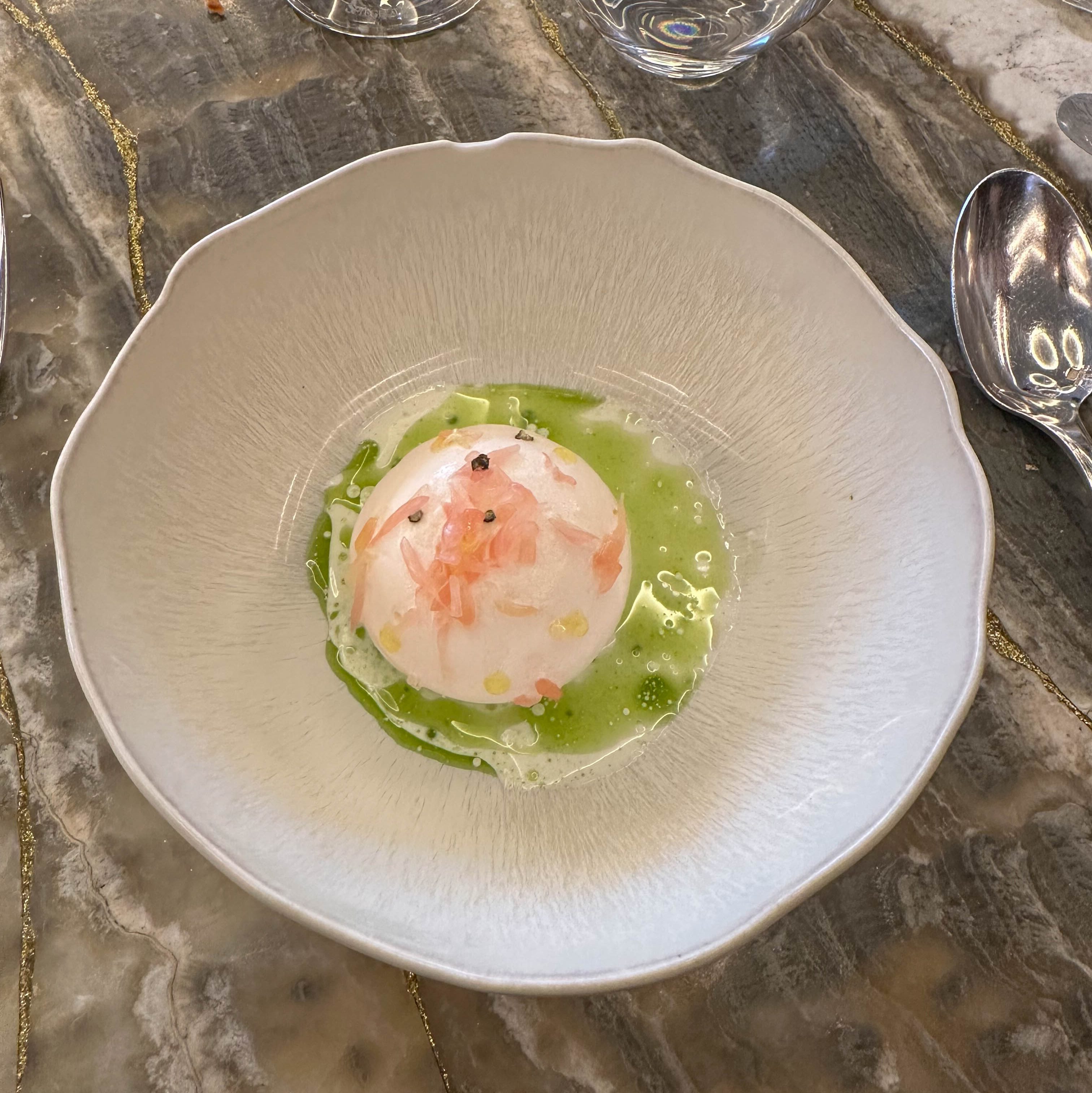
After finishing the amuse-bouche, the waiters swiftly removed our plates and brought the first course, which was crab with tarragon, grapefruit, and creamy burrata. The crab was cooked perfectly and was very juicy. The burrata on top of the crab had a citrusy and earthy taste from the grapefruit and tarragon, and paired very well with the crab. This dish was especially interesting because the crab was hot, and the tarragon and burrata were cold. This made the dish very refreshing, but still gave you a warm comforting feeling every time you bit into the crab.


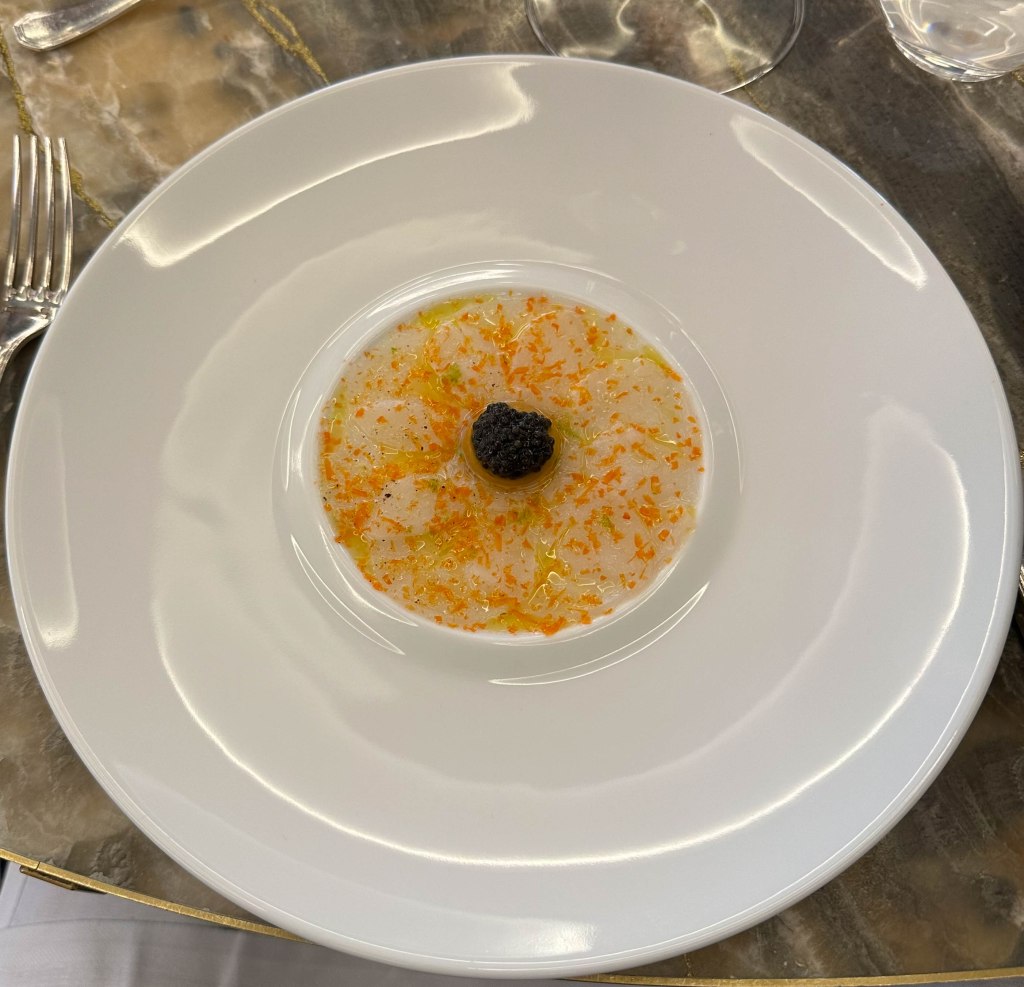
The second course was scallops two ways. The hot scallops were cooked very simply, with aromatics and spices like chives and lemon. This dish was very warming and comforting, and the scallops were cooked perfectly, with just the right balance of tenderness and chewiness. The second way was scallops with lemon, sea urchin, and caviar. This dish was served cold, and very fresh. The acidity of the lemon and the saltiness of the caviar was a great combo and helped give the sea urchin an ocean-like taste. The scallops were so fresh and delicious, and the flavors of the other ingredients brought out the flavor of the scallops. This was truly one of my favorite scallop dishes I have ever had! 


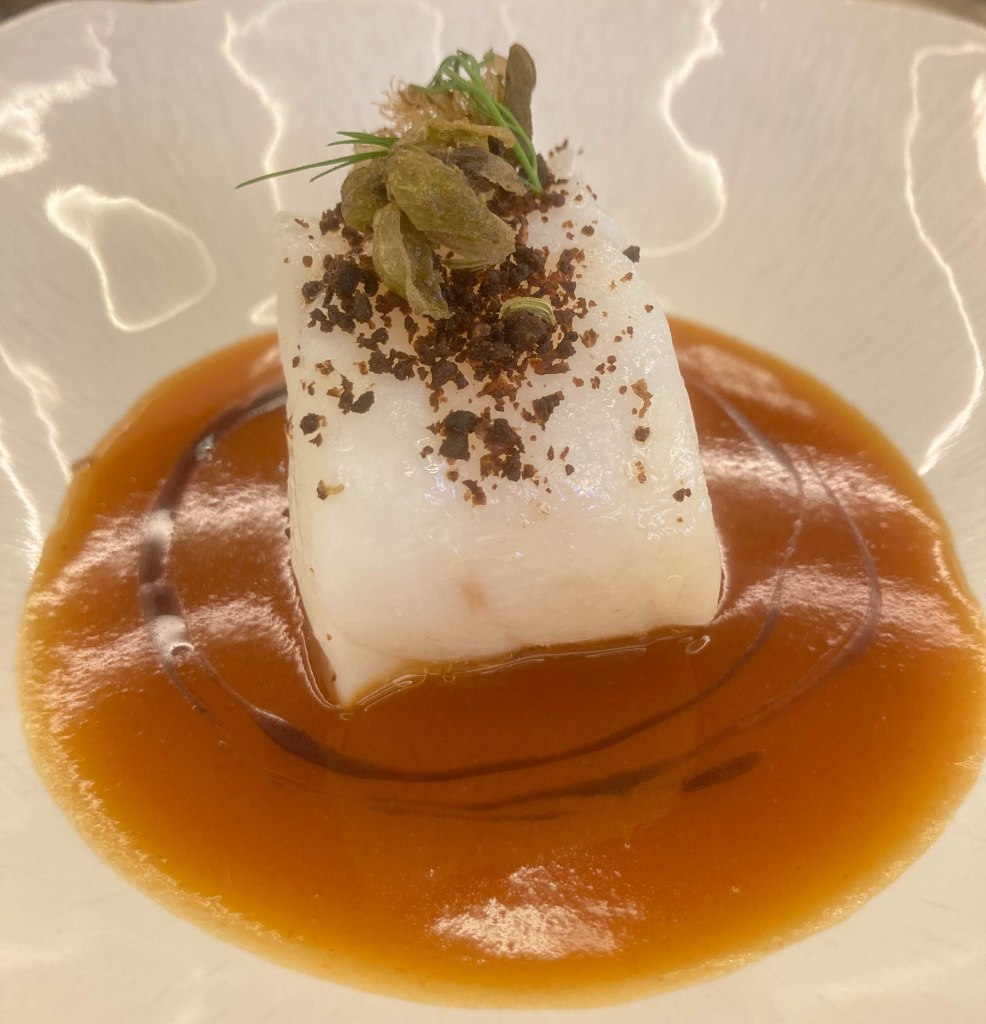
After devouring both scallop dishes we moved on to the third course, which was simply cooked cod. The cod was plated with Kalamata olive powder, capers, and a bouillabaisse, which is a fish soup. The cod was plated beautifully and was super fresh and tender. The olive powder and capers added some acidity, and the bouillabaisse added lots of salty, and ocean-like flavor, which complemented the very simple cod. This was a very balanced dish, that wasn’t too overpowering, and tasted very good. 


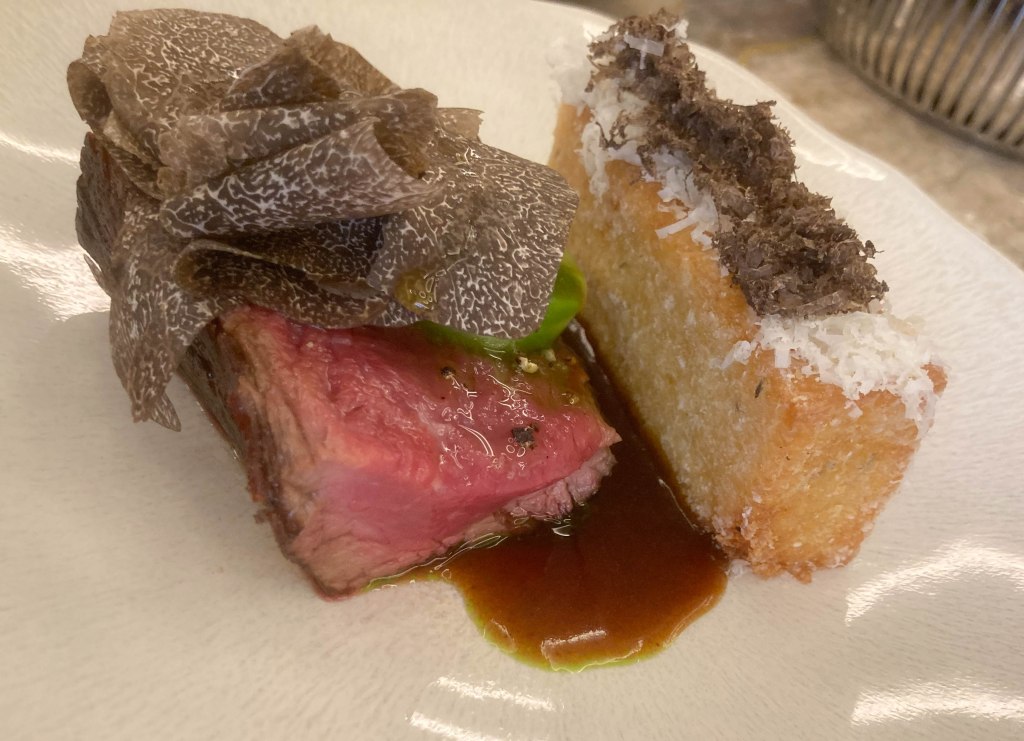
For the fourth course we were served, steak with black truffles, and polenta, topped with parmesan and black truffle topping. The course was plated beautifully, and there was a very generous portion of black truffles on top. The steak was extremely tender and cooked to a perfect medium rare. This paired very well with the subtle earthiness of the truffles on top. The polenta was perfectly seasoned, which went nicely with the parmesan. This dish was very filling, and a very nice way to end the savory portion of the meal. 


The final course served was the dessert course, consisting of a chocolate soufflé with cacao nib ice cream and a crispy gavotte. The soufflé was very rich and had a deep chocolate flavor. The warmth of the soufflé contrasted with the cold ice cream, which created the perfect balance. The cacao nibs in the ice cream made it less sweet and overpowering, allowing the soufflé flavors to shine through. The crispy gavotte was great to nibble on between bites of soufflé because it provided a contrasting texture. After finishing this final course, we were completely satisfied and stuffed. Le Jules Verne is definitely one of my favorite restaurants in Paris, and should be on your bucket list.